Coding Toys vs. Robot Toys: Which One Builds Better Future Skills?
—
Introduction
In the rapidly evolving landscape of childhood education, technology has become an inseparable companion. Parents, educators, and toy manufacturers are constantly seeking the most effective tools to prepare children for a digital future. Among the most popular categories are coding toys and robot toys. Both promise to teach logic, problem-solving, and creativity, yet they approach these goals from different angles. The question “Which is better?” is not a simple one, because the answer depends on a child’s age, learning style, interests, and the specific outcomes we hope to achieve. This article provides a comprehensive comparison of coding toys and robot toys, examining their strengths, limitations, and ideal applications, to help you make an informed decision.
—
Understanding Coding Toys
Coding toys are designed to teach the fundamental principles of computer programming without necessarily involving physical movement or mechanical construction. They range from screen-based apps like ScratchJr and Tynker to tangible, screenless devices such as Code-a-pillar, Cubetto, and Osmo Coding. The core purpose of these toys is to introduce concepts like sequences, loops, conditionals, and debugging in an engaging, often gamified way.
Key Features of Coding Toys
- Abstract Thinking: Coding toys emphasize logical sequencing and algorithmic thinking. Children learn to break down a problem into small steps and order them correctly.
- Visual Feedback: Most coding toys provide immediate visual or auditory feedback when a command is executed correctly or incorrectly. This reinforces cause-and-effect reasoning.
- Low Barrier to Entry: Many coding toys require no reading or advanced math skills. For example, Cubetto uses colored blocks that represent commands, making it accessible to children as young as three.
- Focus on Programming Logic: Unlike robot toys, coding toys often stay in the digital or symbolic realm. They may control a character on a screen or a simple wooden robot on a mat, but the emphasis is on the code itself, not on mechanical engineering.
Strengths of Coding Toys
- Development of Computational Thinking: Research consistently shows that early exposure to coding concepts enhances a child’s ability to think systematically and solve problems across disciplines.
- Independence from Hardware Complexity: Because coding toys do not require assembly of gears, motors, or sensors, they are less likely to cause frustration due to mechanical failures.
- Cost-Effective: Many coding toys are relatively inexpensive, especially app-based ones. This makes them accessible to a wider range of families and classrooms.
- Safe for Younger Children: Screenless coding toys are particularly safe for toddlers and preschoolers who might put small parts in their mouths.
Limitations of Coding Toys
- Lack of Tangible Output: Some children find it difficult to stay engaged when the result of their code is merely a light blinking or a character moving on a screen. They crave physical interaction.
- Limited Mechanical Understanding: Coding toys do not teach how motors, gears, or sensors work. A child might master loops and conditionals but have no idea how a robot actually moves.
- Potential Screen Time Concerns: Many coding toys require tablets or computers, which can add to a child’s daily screen time and raise concerns among some parents.
—
Understanding Robot Toys
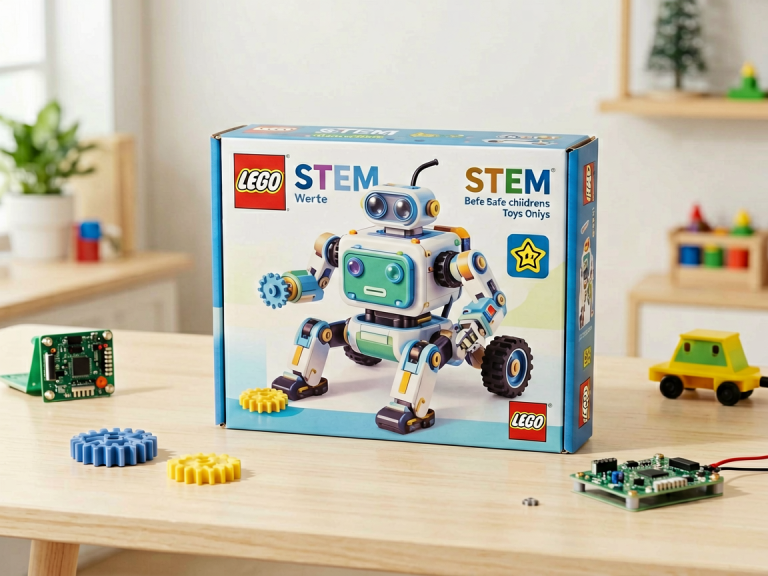
Robot toys, on the other hand, combine programming with physical construction and motion. Products like LEGO Mindstorms, Sphero, Anki Cozmo (now out of production but still influential), and Botley the Robot offer children the chance to build a robot and then program it to perform real-world actions. The learning experience is hands-on, multidisciplinary, and highly motivating for many kids.
Key Features of Robot Toys
- Physical Building and Design: Robot toys often require assembling parts – wheels, arms, sensors, and microcontrollers. This introduces basic engineering and spatial reasoning.
- Real-World Interaction: Once programmed, the robot moves, speaks, lights up, or interacts with its environment. This tangible feedback is extremely satisfying.
- Sensor Integration: Many robot toys incorporate sensors (ultrasonic, infrared, touch) that allow the robot to react to obstacles, colors, or sounds. This teaches children about input and output in a concrete way.
- Advanced Programming Options: High-end robot toys support multiple programming levels, from block-based coding to Python or C++. They can grow with the child.
Strengths of Robot Toys
- Multidisciplinary Learning: Children learn not only coding but also mechanics, electronics, and sometimes even physics (e.g., gear ratios, torque, friction).
- High Engagement and Motivation: Building a robot that moves or completes a task is inherently gratifying. This can sustain interest over a longer period.
- Collaborative and Competitive Potential: Many robot toys are used in competitions like FIRST LEGO League, which fosters teamwork, project management, and resilience.
- Better for Older Children and Teens: Robot toys provide a natural progression from visual coding to text-based programming, making them suitable for ages 8 and up.
Limitations of Robot Toys
- Higher Cost: Quality robot kits can be expensive, with LEGO Mindstorms costing several hundred dollars. This limits access for some families.
- Complexity and Frustration: Building a robot from scratch can be daunting for a young child. If a part breaks or a motor fails, the entire project may stall, leading to disappointment.
- Require More Adult Supervision: Younger children often need help with assembly and troubleshooting, which can be time-consuming for parents.
- Not Ideal for Very Young Children: Most robot toys are recommended for ages 7 or 8 and up, leaving a gap for preschoolers.
—
Comparative Analysis: Which Is Better?
To answer the question “which is better,” we must consider several dimensions: learning objectives, age appropriateness, cost, and long-term skill development.
Learning Objectives
- If the goal is to teach pure computational thinking and programming logic early on, coding toys have a clear edge. They strip away mechanical distractions and allow children to focus on abstract concepts. For example, a child using Code-a-pillar will learn sequencing and debugging without worrying about wheel alignment.
- If the goal is to develop a holistic understanding of technology – including engineering, programming, and system integration – robot toys are superior. A child who builds and programs a LEGO Mindstorms robot gains insight into how software and hardware work together, which is closer to real-world engineering.
Age Appropriateness
- Ages 3–6: Coding toys are the clear winner. Screenless options like Cubetto and Code-a-pillar are designed for fine motor skills and cognitive levels of preschoolers. Robot toys at this age are mostly pre-built (e.g., remote-controlled cars) and offer little programming.
- Ages 7–10: This is a gray zone. Both categories work well. A child can start with app-based coding toys like ScratchJr or use a robot like Sphero Bolt, which offers block coding. However, robot toys may require more patience for building. Many experts recommend starting with coding toys and transitioning to robot toys around age 8.
- Ages 11 and up: Robot toys become increasingly valuable. Advanced kits like VEX Robotics or LEGO Spike Prime allow for complex programming and mechanical design, preparing teens for STEM careers. Coding toys for this age group (e.g., Python on Raspberry Pi) are also excellent but often used in combination with hardware.
Cost and Accessibility
- Budget-conscious families will find coding toys more affordable. Free apps like Scratch and Blockly are zero-cost, and physical coding toys like Botley (around $50) are reasonably priced.
- Families with a larger budget may invest in robot toys that offer deeper, more engaging experiences. However, it is worth noting that many coding toys also have expansion packs that can increase cost.
Long-Term Skill Development
- Coding toys build a strong foundation in logic and abstraction. These skills are transferable to any programming language and even to non-computing fields like mathematics and music.
- Robot toys build systems thinking and hands-on problem-solving. They also teach patience, persistence, and the ability to iterate on a physical design – skills that are invaluable in engineering, architecture, and manufacturing.
Interest and Motivation
- Children who are naturally drawn to building, mechanics, and physical play will likely prefer robot toys. For them, coding without a tangible result may feel abstract and boring.
- Children who love puzzles, patterns, and computer games may thrive with coding toys. They enjoy the intellectual challenge of getting the code right without the mess of gears and wires.
—
Conclusion: There Is No One-Size-Fits-All Answer
After examining both categories, it becomes clear that the question “coding toys or robot toys” is not about superiority but about fit. Neither is universally better; they serve complementary roles in a child’s developmental journey. The ideal approach is a blended one: start with simple coding toys for preschoolers to build foundational logic, then introduce robot toys around age 7 or 8 to connect code with the physical world. For older children, allow them to specialize based on their interests – deeper coding with tools like Python or hardware-heavy robotics with kits like VEX.
Parents and educators should also consider the child’s personality. A highly imaginative child who loves storytelling might enjoy coding interactive narratives with Scratch, while a tinkerer who loves taking apart household appliances might thrive with a robot kit. The best toy is the one that keeps a child engaged, curious, and challenged – whether it blinks on a screen or rolls across the floor.
Ultimately, the future of education lies not in choosing one over the other, but in recognizing that coding and robotics are two sides of the same coin: they both teach children to think like creators, not just consumers, of technology. So instead of asking “which is better,” ask “what does my child need right now?” – the answer will guide you to the right choice.