Coding Toys vs Robot Toys for Kids: Which One Builds Better Skills for the Digital Future?
Introduction
In today’s rapidly evolving technological landscape, parents and educators constantly search for the best tools to prepare children for a future dominated by automation, artificial intelligence, and digital literacy. Two prominent categories of educational toys have emerged as frontrunners: coding toys and robot toys. While both promise to teach valuable STEM (Science, Technology, Engineering, and Mathematics) skills, they differ fundamentally in design, learning outcomes, and developmental focus. This article delves into a comprehensive comparison of coding toys versus robot toys for kids, exploring their unique benefits, limitations, and the specific cognitive and creative skills each nurtures. By understanding these differences, parents can make informed decisions that align with their child’s age, interests, and long-term educational goals.
Understanding Coding Toys
Coding toys are specifically designed to introduce children to the principles of programming logic, sequencing, loops, conditionals, and variables without requiring a traditional computer screen. These toys often come in the form of physical blocks, cards, puzzles, or handheld devices that allow children to create “code” by arranging tangible elements in a specific order. Popular examples include Osmo’s Coding Family, ThinkFun’s Code Master, and the classic Fisher-Price Code-a-Pillar. What sets coding toys apart is their focus on abstract computational thinking: they teach children how to break down complex problems into smaller, manageable steps—a skill known as decomposition. For instance, a child using a coding toy might arrange colored tiles to guide a virtual character through a maze, learning that each tile corresponds to an instruction like “move forward” or “turn left.” This process cultivates pattern recognition, logical reasoning, and error correction in a low-stakes, playful environment.
The Cognitive Benefits of Coding Toys
One of the most significant advantages of coding toys is their ability to build foundational programming concepts without the intimidation of syntax errors or complex interfaces. Because these toys are screen-free or minimally screen-dependent, they reduce digital overload and encourage hands-on, tactile learning. Research from the Joan Ganz Cooney Center indicates that children as young as three can grasp basic sequencing through coding toys, which strengthens their executive function skills, including working memory and cognitive flexibility. Moreover, coding toys often incorporate storytelling or gamification, making abstract ideas concrete. A child might, for example, guide a wooden robot through a storybook landscape, learning that “if” the path is blocked, “then” the robot must choose an alternative route. This conditional thinking is directly transferable to real-world problem-solving. Additionally, coding toys regularly challenge children to debug their “code” when the outcome is unexpected, fostering resilience and a growth mindset.
Limitations of Coding Toys
However, coding toys are not without drawbacks. Many of them focus exclusively on the “logic” side of programming, neglecting the physical, sensory, and mechanical aspects that robot toys provide. A child may understand the concept of a loop but never see how that loop translates into a motor spinning or wheels turning. This abstraction can be a barrier for kinesthetic learners who need to see and feel the physical cause-and-effect relationship. Furthermore, coding toys often have a finite set of challenges; once a child masters all levels, the toy may lose its replay value unless it offers expansion packs or open-ended creation modes. Finally, because coding toys emphasize cognitive skills, they sometimes downplay the creative, artistic, and collaborative elements that are equally crucial in modern STEM education.
Understanding Robot Toys
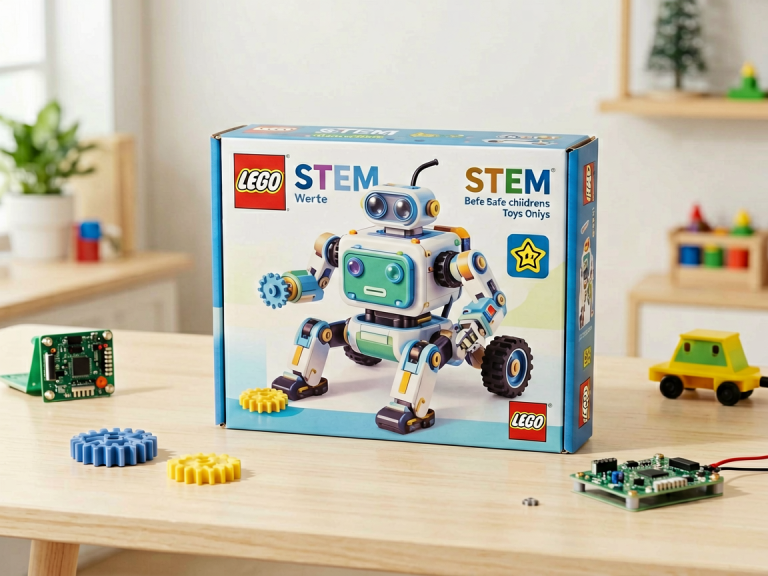
Robot toys, on the other hand, are tangible, interactive machines that children can assemble, control, and often program using visual or text-based interfaces. From simple motorized robots like Sphero BOLT to sophisticated building kits like LEGO Mindstorms or VEX Robotics, these toys integrate mechanical engineering, electronics, and coding into a single package. The core appeal of robot toys lies in their immediacy: when a child writes a program, the robot moves, lights up, or responds to sensors in real time. This instant feedback loop creates a powerful connection between the abstract code and its physical manifestation. Robot toys also encourage spatial reasoning, engineering design, and troubleshooting of mechanical failures—skills that coding toys rarely touch.
The Multisensory Learning Experience
One of the standout features of robot toys is their ability to teach multiple domains simultaneously. A child building a robot learns about gears, torque, and structural stability while also learning to program movement sequences. This interdisciplinary approach mirrors real-world engineering, where software and hardware must work in harmony. For example, the popular educational robot Dash by Wonder Workshop allows children to drag-and-drop code blocks to make it navigate obstacles, play music, or respond to voice commands. The robot’s sensors—such as infrared, accelerometers, and microphones—teach children about input and output, perception, and feedback systems. These experiences are exceptionally valuable for developing systems thinking, a higher-order cognitive skill that enables children to understand how individual components interact within a larger whole. Moreover, robot toys often support collaborative play; multiple children can work together on a single robot, learning communication, negotiation, and shared responsibility.
Challenges with Robot Toys
Yet robot toys also present notable challenges. Their complexity can be overwhelming for young children. Many robot kits require assembly, which may frustrate a four-year-old who lacks fine motor skills or patience. The cost is another factor: high-quality robot toys like LEGO Mindstorms or advanced Sphero models can cost several hundred dollars, making them less accessible than many coding toys. Additionally, robot toys tend to be more screen-dependent, as they often require a tablet or smartphone app for programming. This screen time, while educational, can conflict with parental guidelines on digital use. Another subtle issue is that children may become more focused on the “cool” behavior of the robot—making it spin or flash lights—than on understanding the underlying code. In such cases, the toy risks becoming a glorified remote-control car rather than a genuine learning tool. Teachers and parents must actively scaffold the learning to ensure children grasp the programming concepts rather than simply memorizing sequences.
Key Differences and Educational Impacts
When comparing coding toys and robot toys side by side, several critical dimensions emerge:
Learning Focus: Abstract vs. Concrete
Coding toys prioritize abstract computational thinking in isolation, whereas robot toys integrate abstract thinking with concrete, tangible outcomes. For very young learners (ages 3–6), coding toys often provide a gentler introduction because they do not require fine motor assembly or understanding of mechanical principles. However, for children aged 7 and up, robot toys can offer deeper engagement because they connect coding to the physical world, which is inherently motivating. A 2019 study published in the *Journal of Educational Computing Research* found that children who used programmable robots demonstrated significantly higher gains in systems thinking and engineering design skills compared to those who used screen-based coding apps alone.
Developmental Stages and Age Appropriateness
- Ages 3–5: Coding toys like Code-a-Pillar or tactile coding blocks are ideal. They introduce sequencing and directional language without requiring reading or fine motor manipulation. Robot toys at this age are limited to simple remote-control action figures that offer little programming depth.
- Ages 6–8: Both categories work well. Coding toys like Osmo’s Coding Awbie teach loops and conditionals through interactive tangrams. Beginner robot toys like Botley (which uses a simple remote) or Sphero Mini can spark interest. At this stage, low-stakes hands-on experimentation is key.
- Ages 9–12: Robot toys become more powerful. Kits like LEGO Spike Prime or VEX IQ allow children to build complex machines and program them using block-based or Python-like languages. Coding toys at this age can feel too simplistic unless they offer advanced puzzles (e.g., Kodable’s deeper levels). However, coding toys that focus on text-based programming (like micro:bit) can bridge the gap.
- Ages 13+: Serious robot kits (e.g., Arduino-based or Raspberry Pi) provide authentic engineering experiences. Coding toys are essentially replaced by full-fledged coding platforms like Scratch or Python IDEs. The line between toy and tool blurs.
Skill Development Spectrum
Coding toys excel at developing:
- Logical sequencing and algorithmic thinking
- Pattern recognition and abstraction
- Debugging and error analysis (mental simulation)
- Persistence in solving non-physical problems
Robot toys excel at developing:
- Mechanical design and spatial reasoning
- Sensor integration and feedback analysis
- Troubleshooting hardware-software interactions
- Collaboration and project management
- Creative expression through physical movement (e.g., choreographing a robot dance)
Critically, the most effective learning happens when children combine both experiences. A child who first masters coding concepts with a coding toy can later apply those concepts to program a robot, seeing how the same “if-then-else” logic controls a motor’s speed. Conversely, a child who starts with a robot may become frustrated by its complexity and benefit from a coding toy that isolates the logical elements.
Which One Should You Choose?
Selecting between coding toys and robot toys depends on several factors:
Child’s Interest and Temperament: Is your child naturally drawn to building things, taking apart gadgets, and observing how machines work? Then a robot toy will likely captivate them. Do they enjoy puzzles, board games, and logical challenges? A coding toy may be more engaging.
Learning Environment: In a classroom setting, robot toys offer more collaborative potential, as children can form teams to design and test robots. Coding toys are easier to implement in individual or quiet-time settings. For homeschooling, a combination of both is ideal.
Budget: Coding toys tend to be more affordable (ranging from $20 to $80), while elaborate robot kits can cost $150–$500+. However, many robot toys have expandable components that grow with the child, offering longer-term value.
Screen Time Preferences: If you aim to minimize screen exposure, choose screen-free coding toys and simple, app-free robot toys (like Botley). If you are comfortable with guided screen use, interactive robot toys with educational apps can be highly productive.
Long-Term Goals: If your primary objective is to prepare a child for a career in computer science, focusing on coding toys initially and then moving to advanced programming platforms (like Python on a robot) is effective. If you want to foster engineering, physical creativity, and hands-on problem-solving, robot toys should be the priority.
Conclusion
Neither coding toys nor robot toys are inherently superior; each offers a unique and valuable learning pathway. Coding toys build the mental discipline of computational thinking in a pure, accessible form, while robot toys ground that thinking in the physical world, adding dimensions of engineering, design, and real-time feedback. The ideal approach for most children is a balanced, progressive journey: start with simple coding toys to build foundational logic, then introduce beginner robot toys that combine coding with construction, and finally move to advanced robotic kits that integrate multiple disciplines. This sequence mirrors the natural development of a child’s cognitive abilities—from abstract pattern recognition to complex systems thinking. In an age where technology permeates every aspect of life, the goal is not to choose one category over the other, but to use both to cultivate a generation of learners who are not only programmers or engineers, but creative problem-solvers comfortable with both the software and the hardware of the future. By thoughtfully selecting toys that match a child’s stage and passions, we can turn play into a powerful engine for lifelong learning.