Screen-Free Toys vs. App-Based Toys: Reclaiming Childhood in a Digital Age
Introduction
In an era where toddlers swipe before they speak and preschoolers master touchscreens faster than they tie their shoelaces, the debate over children’s playthings has never been more urgent. On one side of the playroom lies the nostalgic charm of screen-free toys—wooden blocks, crayons, dolls, and puzzles that require nothing more than imagination and a gentle hand. On the other side gleams the sleek promise of app-based toys—interactive robots, augmented-reality games, and smart tablets loaded with educational applications. Parents, educators, and child development experts are caught in a crossfire of competing claims: Do digital toys accelerate learning or stifle creativity? Do old-fashioned toys foster connection or breed boredom? This article dives into the core differences between screen-free and app-based toys, examining their psychological, social, and cognitive impacts on children, and ultimately asking whether we must choose one at the expense of the other—or if a thoughtful blend can offer the best of both worlds.
The Enduring Appeal of Screen-Free Toys
*Fostering Open-Ended Creativity and Imagination*
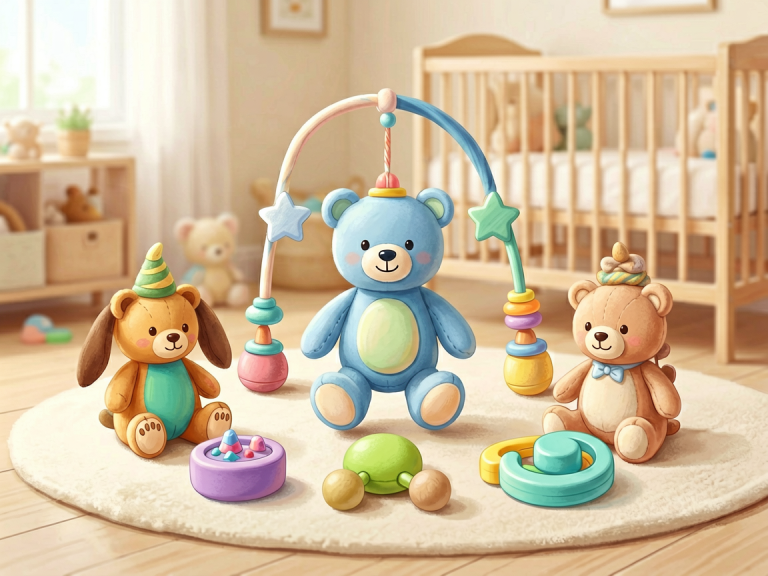
Screen-free toys are, by definition, unscripted. A set of wooden building blocks has no pre-programmed outcome; a child can turn them into a castle, a spaceship, or a dragon’s lair. This open-endedness is a cornerstone of healthy cognitive development. According to research in developmental psychology, when children engage in unstructured play, they exercise executive functions such as planning, self-regulation, and problem-solving. A cardboard box becomes a car, a blanket becomes a cave—these transformations require mental flexibility that app-based toys, with their fixed rules and linear narratives, rarely demand. For example, a child playing with a simple set of stacking rings must figure out the correct order of sizes through trial and error, honing spatial reasoning and fine motor skills without a screen’s immediate feedback.
*Promoting Deep Social Interaction and Emotional Connection*
Screen-free toys naturally invite shared experiences. A jigsaw puzzle encourages siblings to negotiate, take turns, and celebrate joint successes. A dollhouse sparks elaborate role-playing that builds empathy as children imagine themselves as caregivers, teachers, or friends. These interactions happen face-to-face, with no pixelated intermediary. Studies show that children who frequently engage in cooperative, non-digital play tend to develop stronger language skills and emotional intelligence because they must read facial expressions, tone of voice, and body language. In contrast, many app-based toys are solitary by design—a child taps alone on a tablet, and even “multiplayer” apps often lack the rich, nuanced feedback of human presence. The tactile nature of screen-free toys also supports sensory integration: the weight of a wooden train, the smell of modeling clay, the cold smoothness of a marble—all these sensations ground a child in the physical world, which is critical for developing body awareness and self-regulation.
*Resilience, Patience, and the Joy of Gradual Mastery*
Screen-free toys teach patience in a way apps rarely do. A child cannot “reset” a fallen tower of blocks with a single tap; she must rebuild it, experiencing both frustration and triumph. This process builds grit and a growth mindset. An app-based puzzle often provides hints, skip options, or auto-solves, which can rob a child of the struggle that leads to deep learning. Moreover, screen-free toys are inherently robust: they don’t crash, run out of battery, or require Wi-Fi. A child can drop a stuffed animal in the mud, wash it, and continue playing. This durability teaches stewardship and respect for objects, whereas app-based toys often train children to expect instant gratification, seamless performance, and constant novelty.
The Enticing Advantages of App-Based Toys
*Personalized Learning and Adaptive Feedback*
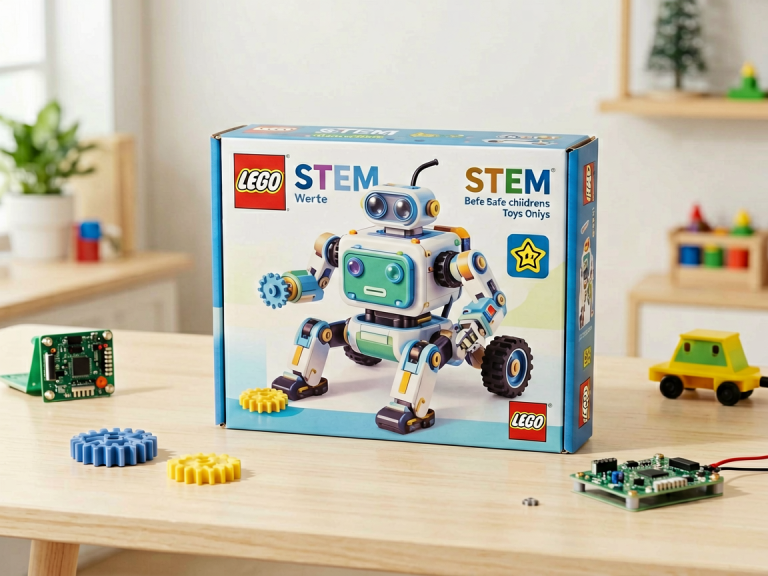
App-based toys shine in their ability to tailor experiences to a child’s individual level. A smart phonics game can detect that a child confuses “b” and “d” and automatically adjust exercises to target that gap. An augmented-reality globe can display a 3D dinosaur when the child scans a specific location, merging geography with paleontology in a way a paper map cannot. This adaptivity is powered by algorithms that process millions of data points, offering a level of customization that screen-free toys can only dream of. For children with learning disabilities, app-based toys can provide accessible entry points: text-to-speech for struggling readers, visual cues for auditory learners, or reduced distractions for those with attention deficits.
*Engaging Multimedia and Immediate Reinforcement*
Children today are digital natives, and app-based toys speak their language. Bright animations, sound effects, and gamification (point systems, badges, levels) tap into the brain’s reward centers, sustaining engagement for longer periods. A child might practice math facts for thirty minutes on an app but refuse to touch a math workbook for five. This stickiness can be a powerful tool for drilling foundational skills. Apps also provide instant feedback—a correct answer triggers a celebratory animation; an error shows a gentle correction. This immediacy can accelerate learning in certain domains, especially rote memorization of letters, numbers, and facts. Furthermore, app-based toys often include extensive libraries of content, so a single device can offer hundreds of activities, reducing clutter and appealing to parents with limited space.
*Global Connectivity and Expanding Horizons*
Many app-based toys now incorporate elements of social connection that transcend the physical playroom. A child can draw a picture on a tablet and send it to a grandparent hundreds of miles away, or collaborate on a virtual LEGO build with a friend across the city. For families in remote areas or with limited access to playgroups, app-based toys can be a lifeline to community. Some educational apps even connect children with live tutors, native-language speakers, or cultural exchanges. While screen-free toys can certainly foster family bonds, app-based toys have a unique ability to bridge geographic distances and expose children to diverse perspectives—a benefit not to be underestimated in our interconnected world.
Finding a Balanced Path Forward
Neither category is inherently superior; each serves different developmental purposes at different ages. For infants and toddlers under two, the American Academy of Pediatrics recommends zero screen time (except video calling), making screen-free toys the unequivocal choice for sensory and motor development. For preschoolers, a diet of mostly screen-free play with limited, high-quality app use can be ideal. The key is intentionality: parents should actively choose app-based toys that encourage creation over consumption (e.g., drawing apps vs. passive video-watching), that require physical movement (like dance-along apps), or that offer cooperative play.
Equally important is the role of adult mediation. A screen-free toy like a board game gains immense value when a parent explains the rules, cheers the child’s efforts, and models good sportsmanship. Similarly, an app-based toy becomes far more beneficial when a parent sits beside the child, asking questions about what she sees and relating the digital experience to the real world. Ultimately, the toy itself is less critical than the quality of interaction it inspires.
Conclusion
The battle between screen-free and app-based toys is a false dichotomy. Children do not need to choose between a building block and a tablet—they need a world rich with both, provided each is used thoughtfully and in moderation. Screen-free toys ground children in the tangible, the social, and the patient; app-based toys offer personalized, expansive, and engaging windows into knowledge. The mature parent does not ban screens outright nor surrender to them, but curates a landscape of play that honors the ancient wisdom of the block and the new promise of the pixel. In that delicate balance—between a hand that builds and a screen that teaches—lies the true art of raising a child for the twenty-first century.