The Blueprint of Curiosity: How Science Kits and Building Toys Shape the Minds of Tomorrow
In an age dominated by digital screens and passive entertainment, the humble science kit and the timeless building toy have emerged as quiet revolutionaries. These tangible, hands-on tools are far more than mere playthings; they are cognitive laboratories where children develop the fundamental skills of inquiry, creativity, and resilience. From a simple set of plastic gears to a chemistry set that fizzes and bubbles, these resources offer a unique, active form of learning that no tablet application can replicate. This article explores the multifaceted benefits of science kits and building toys, arguing that they are essential instruments for nurturing the problem-solvers, innovators, and lifelong learners of the future.
The Cognitive Architecture of Hands-On Play
At the heart of every science kit and building toy lies a powerful pedagogical principle: learning by doing. When a child picks up a set of interlocking blocks or prepares a crystal-growing solution, their brain is not merely receiving information; it is actively constructing knowledge. This process, rooted in the constructivist theories of Jean Piaget and others, requires the child to hypothesize, test, and adapt. For example, when a young builder attempts to construct a bridge using only certain pieces, they must engage in spatial reasoning, estimating weight distribution and structural integrity. If the bridge collapses, the moment of failure becomes a powerful teaching tool. The child is compelled to ask “Why?” and then to adjust their design.
This iterative cycle of trial, error, and correction is the very essence of the scientific method. Science kits, in particular, formalize this process. A classic chemistry set may guide a child through a reaction that creates a harmless explosion of color. But the most profound learning occurs not when the reaction succeeds, but when it fails. Perhaps the solution was too dilute, or the temperature was off. The child must then retrace their steps, troubleshoot, and reattempt. This builds metacognitive skills—the ability to think about one’s own thinking—which is a cornerstone of academic success. In contrast to the immediate gratification of a video game, building toys and science kits demand patience, focus, and a tolerance for ambiguity. They teach that frustration is not a signal to quit, but a signal to think harder.
Fostering Creative Divergence and Problem-Solving
While the name “science kit” might evoke images of rigid instructions and predetermined outcomes, the reality is that these tools are profoundly creative. The best building toys, such as modular construction systems like LEGO Technic or magnetic tiles, are deliberately open-ended. They provide a grammar of components but no pre-written script. A child with a set of gears, axles, and motors can build a car one day, a windmill the next, and a robotic arm the day after. This freedom is crucial for developing divergent thinking—the ability to generate multiple solutions to a single problem.
Modern education often overemphasizes convergent thinking, where there is only one correct answer. Yet the real-world challenges of the 21st century—climate change, pandemics, technological disruption—require precisely the opposite. They demand innovators who can look at a set of disparate parts and imagine a new whole. Building toys are, in effect, physical analogies for this kind of thinking. When a child decides to use a gear as a wheel instead of a cog, or uses a straw from a kitchen chemistry kit to create a telescope, they are practicing cognitive flexibility. They learn that the function of an object is not fixed; it is what you make of it.
Science kits further extend this into the realm of experimental design. A high-quality electronics kit, for instance, allows a child to create circuits, but the design challenges—like building a light that turns on when it gets dark—are open-ended. The child must decide which components to use, how to arrange them, and what thresholds to set. There is no single “right” way to solve the problem. This experience of engineering under constraints is exactly what professional scientists and engineers do. It builds a mindset that is comfortable with novelty and persistent in the face of obstacles.
STEM Foundations in the Early Years
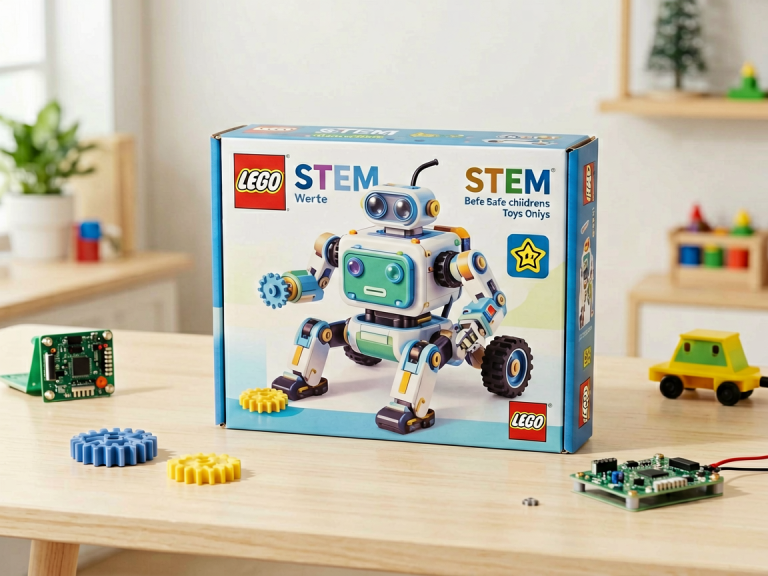
The acronym STEM (Science, Technology, Engineering, and Mathematics) has become a staple of educational discourse, yet the abstract nature of these subjects can be daunting for young learners. Science kits and building toys serve as the critical bridge between the concrete world of childhood and the abstract concepts of formal science. A child who plays with a marble run is, without realizing it, learning about gravitational potential energy, kinetic energy, and friction. A child who builds a simple catapult from a kit is experimenting with elastic potential energy and projectile motion. These early, intuitive experiences create a mental scaffold onto which later formal instruction can be attached.
Moreover, these tools address a persistent problem in STEM education: the drop in interest that often occurs around middle school. Many students lose interest in science because it seems disconnected from their lives—it becomes a series of equations and memorized facts. Hands-on kits counteract this by making science tangible and immediately relevant. When a child sees a potato battery light up an LED, the concept of electrochemical cells ceases to be a textbook diagram and becomes a memorable event. The emotional engagement created by that “aha!” moment is far more durable than any lecture.
Building toys also excel at teaching spatial reasoning, a skill strongly correlated with later success in mathematics and engineering. According to research, children who engage in activities like building with blocks or assembling puzzles develop better mental rotation abilities and visualization skills. This is not a trivial advantage; spatial reasoning is a predictor of performance in geometry, physics, and even disciplines like surgery and computer graphics. By providing low-stakes, playful contexts for practicing these skills, science kits and building toys lay a concrete foundation for future academic and professional achievements.
Social and Emotional Learning Through Collaborative Construction
The stereotype of the lone scientist in a lab coat is misleading. Much of modern science and engineering is deeply collaborative, requiring communication, negotiation, and teamwork. Building toys and science kits are excellent vehicles for developing these social-emotional skills. When siblings or classmates work together on a complex model, they must share resources, listen to each other’s ideas, and manage disagreements. One child may want to make the robot taller; another may want to add more sensors. The process of reaching a compromise teaches leadership, empathy, and conflict resolution.
Furthermore, the failure inherent in these activities is a powerful tool for emotional regulation. A child who spends an hour building a delicate structure only to see it collapse experiences a genuine, albeit small-scale, disappointment. In a supportive environment, they learn that failure is not a judgment of their worth but an invitation to try again. This builds resilience and a growth mindset—the belief that abilities can be developed through effort. Neuroscience has shown that the brain grows most when it encounters challenges and errors, not when it succeeds effortlessly. By creating a safe space for productive struggle, science kits and building toys help inoculate children against the fear of failure that so often stifles adult creativity.
Choosing the Right Toolkit for Lifelong Learning
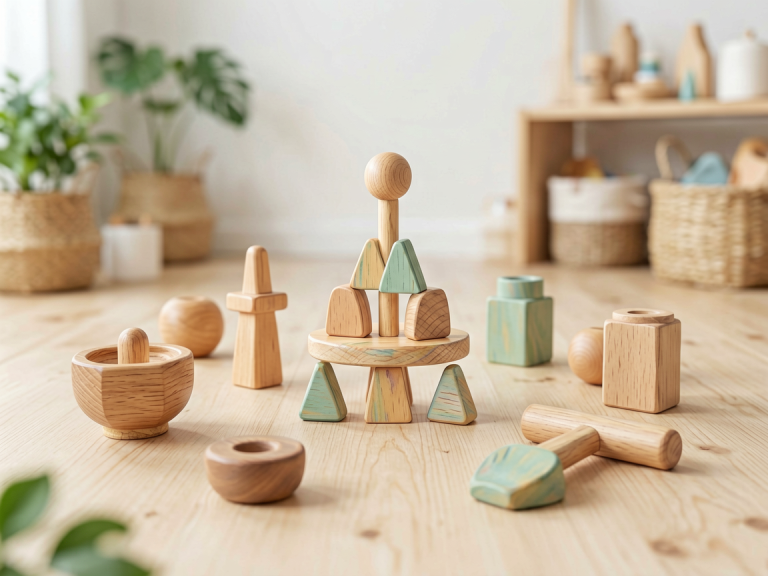
Not all kits are created equal, and the selection of appropriate materials is key. For very young children (ages 3–6), large, safe building blocks and simple magnetic tiles are ideal. They foster fine motor skills, basic geometry, and early physics concepts like balance. For elementary school children (ages 7–11), chemistry sets with clear safety guidelines, electronic snap-circuit kits, and more complex construction sets (like those with gears and pulleys) are excellent. The emphasis should be on exploration rather than rigid outcomes.
For older children and teenagers (ages 12+), kits that introduce programming, robotics, or advanced engineering principles are incredibly valuable. Microcontroller kits like Arduino or Raspberry Pi, or robotic arm kits, allow for coding and physical construction to merge. These kits prepare students not just to use technology, but to understand and create it. Parents and educators should prioritize kits that offer open-ended challenges and that allow for failure. A kit that provides a single, perfect outcome may entertain for an afternoon, but a kit that offers a dozen possible outcomes—some successful, some not—will engage the child for years.
It is also important to consider the “scrappiness” of the experience. Some of the most powerful learning happens when a child combines kit components with household items—a cardboard box becomes a chassis, a rubber band becomes a motor. Encouraging this kind of improvisation amplifies the educational value. The goal is not to produce perfect scientists, but to cultivate an identity of “I am someone who can figure things out.”
Conclusion: Building More Than Toys
In a world that increasingly prizes speed, convenience, and pre-packaged answers, science kits and building toys stand as a quiet counter-culture. They demand time. They demand patience. They demand that we get our hands dirty. But in return, they offer something precious: the experience of genuine discovery. A child who watches a balsa wood bridge bear weight without breaking, or who sees a chemical reaction turn from blue to green to yellow, has not just learned a fact. They have experienced the thrill of agency—the knowledge that their own actions, their own thinking, made something happen.
These tools are not a substitute for formal education, but they are an irreplaceable complement. They turn abstract concepts into concrete experiences. They transform passive consumers into active creators. And they teach the most important lesson of all: that the world is not something to be accepted, but something to be understood, questioned, and rebuilt. As we face the complex challenges of the future, the thinkers and doers we will need are those who, as children, were never afraid to take apart a toy to see how it worked, or to build a tower just to watch it fall. Science kits and building toys are, in the truest sense, the blueprints for that courage.