The Endless Labyrinth: How Marble Runs and Building Sets Shape Young Minds
Introduction
In an age dominated by glowing screens and algorithm-curated entertainment, the simple joy of watching a marble roll down a wooden track or clicking a plastic brick into place might seem almost quaint. Yet marble runs and building sets have not only survived the digital deluge—they have thrived. From toddlers stacking oversized blocks to engineers prototyping complex ball-bearing roller coasters, these deceptively simple playthings are powerful tools for learning, creativity, and resilience. Far from being mere toys, they are miniature laboratories where physics meets imagination, and where failure becomes the first draft of success. This article explores the multifaceted world of marble runs and building sets: their underlying principles, their cognitive benefits, their historical evolution, and the reasons why they remain indispensable in classrooms, therapists’ offices, and living rooms around the globe.
The Physics of Play: Understanding the Mechanics
At their core, both marble runs and building sets are exercises in applied physics. A marble run—whether a prefabricated kit like Gravitrax or a homemade contraption from cardboard tubes—relies on gravity as its primary engine. The marble’s mass, the incline’s angle, friction on the track, and the conservation of momentum all come into play. Children who build a loop-the-loop soon discover that if the marble’s speed is too low, it will fall; if the curved track is too sharp, centrifugal force will fling the marble outward. They are, in effect, conducting repeated experiments in classical mechanics without ever opening a textbook.
Building sets, meanwhile, introduce structural engineering. A tower of LEGO bricks or wooden Kapla planks must obey the laws of balance, load distribution, and tension. Children quickly learn that a foundation must be wider than the top, that diagonal braces provide stability, and that a single misaligned piece can cascade into collapse. The beauty of these systems is that the feedback is immediate and unambiguous: the marble either rolls to the finish or derails; the tower either stands or falls. This instant feedback loop is far more powerful than a worksheet problem because it engages the whole body and mind.
Cognitive and Educational Benefits: Beyond the Blueprint
The educational value of marble runs and building sets has been underscored by decades of research in developmental psychology and STEM education. At the preschool level, simply dropping a marble into a hole and watching it appear elsewhere fosters cause-and-effect reasoning. As children grow, they tackle more complex challenges: planning a multi-level track, predicting where the marble will land, or adapting the design when the marble gets stuck. These activities directly exercise executive functions—working memory, cognitive flexibility, and inhibitory control—because the child must hold a mental image of the track, compare it with reality, and adjust accordingly.
Moreover, these playsets are inherently open-ended. Unlike a jigsaw puzzle with a fixed final picture, a building set or marble run has infinite possibilities. This open-endedness nurtures divergent thinking, the cornerstone of creativity. A child might build a “marble machine” that also knocks down dominoes, or combine two building sets to create a hybrid system. Such combinatorial play is the foundation of innovation.
Schools around the world have integrated marble runs and building sets into their STEM curricula. The “Engineering is Elementary” program, for example, challenges students to design a marble run that can deliver a message across a table. They learn iterative design—build, test, fail, redesign—mirroring the real-world engineering process. A 2019 study in the *Journal of Educational Psychology* found that children who engaged in construction play scored significantly higher on spatial reasoning tests, a skill strongly correlated with later success in mathematics and science.
Design Principles and Creativity: The Art of the Possible
What separates a mediocre marble run from a spectacular one? The answer lies in three design principles: elevation, transitions, and redundancy. Elevation provides the potential energy; transitions (curves, drops, splitters) add unpredictability and visual flair; redundancy—such as multiple parallel tracks—ensures that a single jam doesn’t end the run. Mastering these principles requires not only logical thinking but also aesthetic sensibility. A beautifully designed track is one where the marble weaves through spirals, leaps gaps, and triggers sound effects, creating a miniature performance.
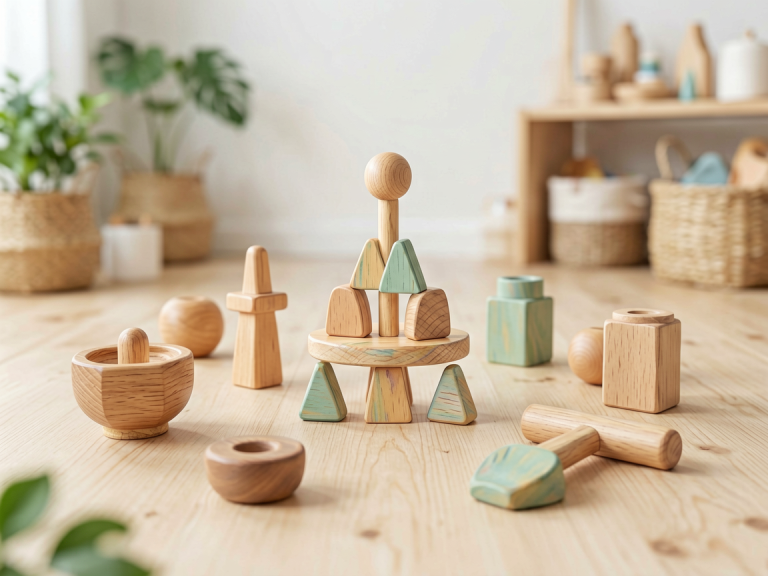
Building sets, too, have evolved from simple geometric blocks into sophisticated architectural systems. Modern sets like the popular "Magna-Tiles" use magnetic edges that allow for both 2D and 3D constructions, while "KEVA Planks" rely solely on friction and balance. The diversity of materials—plastic, wood, metal, foam—invites different tactile experiences and design constraints. A wooden marble run, for instance, has a classic warmth and a certain acoustic resonance when the marble rolls; a plastic one might allow for more dramatic loops and connectors.
Crucially, these toys teach constrained creativity. You cannot build a suspension bridge out of LEGO bricks without understanding that bricks have fixed dimensions. You cannot make a marble go up a hill without adding a lift mechanism. These constraints force children to work within boundaries—exactly as adults must in any real-world project. The result is a playful yet rigorous training ground for resourcefulness.
Historical Evolution: From Ancient Puzzles to Modern Kits
The impulse to build and set objects in motion is as old as humanity. Simple ball-and-track games existed in ancient Egypt and China, often made from carved stone or wood. But the modern marble run, as we know it, traces its lineage to the 19th century, when German toymakers produced the first “Kugelbahn” (ball track) sets. These were handcrafted wooden sculptures that families displayed on dining tables, combining function with ornament.
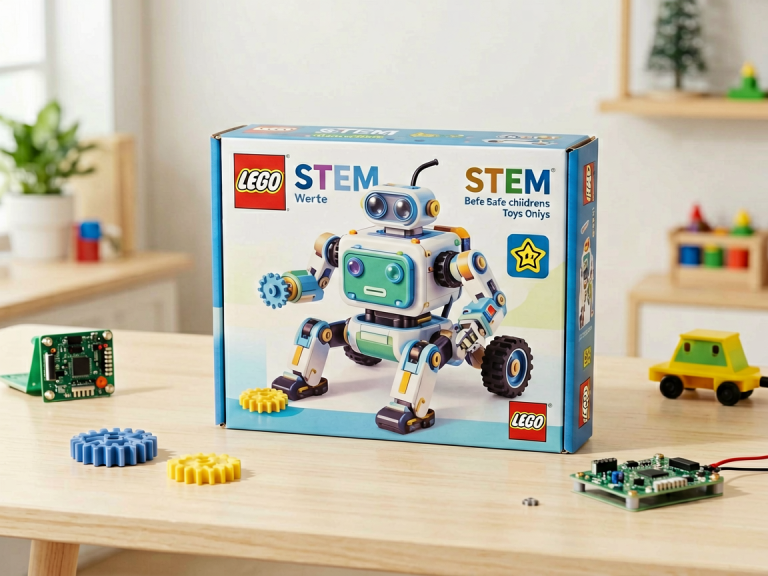
The 20th century brought an explosion of building sets. In 1901, Frank Hornby patented Meccano, a metal construction system with bolts and strips that allowed children to build working models of cranes and bridges. In 1949, Danish carpenter Ole Kirk Christiansen introduced LEGO bricks, whose interlocking design revolutionized the building set industry. The 1960s saw the launch of "Tinkertoy," "Erector Set," and later "K’NEX"—each adding new connection mechanisms.
Marble runs, meanwhile, became more systematic. In the 1970s, the German company "Quercetti" produced colorful plastic tracks with gears and spirals. In the 2000s, Ravensburger’s "Gravitrax" series introduced magnetic tiles with no need for a base plate, allowing for truly three-dimensional designs. More recently, "Hape’s Quadrilla," "Marble Genius," and digital simulations like "Incredibox" style marble-run apps have blurred the line between physical and virtual.
Today, the market for building sets and marble runs is estimated at over $8 billion globally, driven by parents seeking screen-free alternatives and educators demanding hands-on STEM tools. The COVID-19 pandemic further boosted sales, as families sought indoor activities that could engage multiple ages simultaneously.
Therapeutic and Social Dimensions
Beyond education and entertainment, marble runs and building sets have found remarkable applications in therapy. Occupational therapists use them to improve fine motor control: picking up small marbles, aligning tracks, placing blocks with precision. For children with autism or ADHD, the predictable, cause-and-effect nature of a marble run can provide a calming, focused activity. The repetitive motion of the marble and the clear beginning and end of the run offer a structured sensory input that many find soothing.
Socially, these toys are inherently collaborative. Building a large marble run often requires teamwork: one child holds the track, another tests the marble, a third suggests improvements. This shared negotiation teaches communication, compromise, and shared excitement. Unlike competitive games, there is no winner or loser—only the satisfaction of a successful run or the lesson of a failed one. In classrooms, teachers report that shy students often come out of their shells when invited to contribute to a group marble run, because the focus is on the system, not on the individual.
Conclusion: The Timeless Pull of a Rolling Ball
In a world that increasingly prizes speed, efficiency, and virtuality, marble runs and building sets stand as a quiet rebellion. They demand patience—the marble will not roll faster because you tap the screen. They require precision—a track misaligned by two millimeters will send the marble flying. And they celebrate failure—the collapse of a tower is not the end but a clue for the next attempt.
We return to these toys, generation after generation, because they speak to something fundamental: the human urge to build, to test, to watch, and to try again. Whether you are a five-year-old discovering that a steeper ramp makes the marble go faster, or a fifty-year-old engineer revisiting childhood nostalgia while designing a complex ball machine with your own children, the magic remains unchanged. Marble runs and building sets are not just toys—they are machines that make thinking visible, and in doing so, they shape the builders of tomorrow.
*(Word count: approximately 1,280)*