Science Toys vs. Engineering Toys: Divergent Pathways to Discovery and Creation
Introduction
In the modern landscape of childhood education, toys have transcended mere entertainment. They now serve as stealthy instructors, embedding foundational concepts in science, technology, engineering, and mathematics (STEM) into the fabric of play. Yet, not all STEM toys are created equal. A subtle but crucial distinction exists between *science toys* and *engineering toys*—a distinction that parents, educators, and even toy designers often blur. Science toys typically invite children to explore natural phenomena, observe outcomes, and ask “why?” Engineering toys, by contrast, challenge children to build, test, and iterate—to answer “how?” Understanding this difference is not merely academic; it directly influences the type of cognitive skills, creativity, and perseverance a child develops. This article delves into the defining characteristics of each category, compares their educational impacts, and offers guidance on selecting the right toy for different developmental goals.
—
Defining Science Toys and Engineering Toys
Science toys are primarily about inquiry and observation. They encourage children to conduct experiments, explore cause-and-effect relationships, and discover principles of physics, chemistry, biology, or earth science. Examples include chemistry sets, crystal-growing kits, microscopes, telescopes, and even simple magnets or prism sets. The core activity is often open-ended: mix two substances and watch the reaction; place a seed in a jar and track its growth; shine light through a prism and observe the rainbow. The joy lies in the unexpected result and the subsequent curiosity it sparks.
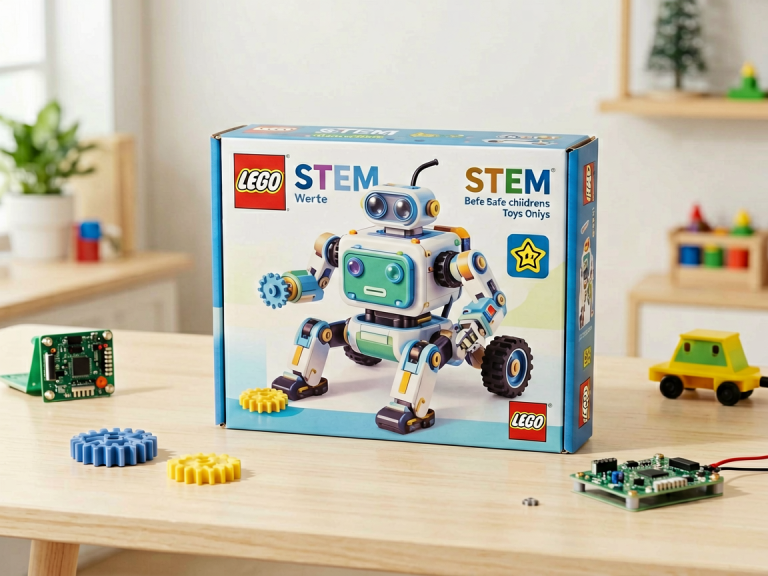
Engineering toys, on the other hand, focus on design, construction, and problem-solving. They ask children to achieve a specific functional goal: build a bridge that can hold weight, create a working pulley system, program a robot to follow a line, or assemble a gear train that rotates a flag. Classic examples include LEGO Technic, K’NEX, Erector sets, marble runs, and robotics kits like VEX or LEGO Mindstorms. The process is inherently iterative: a structure collapses, a gear jams, a robot veers off course—and the child must analyze the failure, modify the design, and try again.
The fundamental divergence lies in epistemology. Science toys teach *what is*—the laws of nature waiting to be uncovered. Engineering toys teach *what can be*—the human-made solutions that harness those laws.
—
Cognitive Skills Developed: Observation vs. Optimization
Science toys primarily cultivate observational and analytical thinking. When a child uses a magnifying glass to examine a leaf’s veins, or watches a baking soda volcano erupt, they engage in hypothesis formation: “What if I add more vinegar? What happens if I use cold water?” The feedback is often immediate and sensory, reinforcing the scientific method without formal instruction. These toys also nurture patience and wonder, as natural processes unfold at their own pace (e.g., growing crystals takes days). A child learns to document change, to look for patterns, and to accept that some phenomena are simply not controllable.
Engineering toys, in contrast, emphasize optimization, spatial reasoning, and resilience. Building a sturdy tower from spaghetti and marshmallows requires an understanding of triangles and load distribution—but the child may not verbalize this. Instead, they learn through tactile feedback: “This side keeps bending; maybe I need a cross-brace.” This is design thinking in its purest form. The iterative nature of engineering play—fail, adjust, test again—builds a tolerance for frustration and a growth mindset. Moreover, engineering toys often involve constraints (limited pieces, time limits, weight limits), mirroring real-world project management. Research shows that children who engage regularly with engineering toys develop stronger executive function skills, including planning, working memory, and cognitive flexibility.
Interestingly, the two toy types intersect in areas like kinetic sculptures or Rube Goldberg machines, which combine physics observation with design challenges. Yet even here, the emphasis can be tilted. A marble run can be enjoyed as a science toy (watching gravity and momentum) or as an engineering toy (designing a track that gets the marble to the target fastest). The distinction often comes down to the adult’s framing or the child’s inherent curiosity.
—
Play Patterns and Engagement: Solo Experimentation vs. Collaborative Construction
The social dynamics of play differ markedly between the two categories. Science toys often lend themselves to solo exploration or paired observation. A child staring into a microscope isolates the specimen; a chemistry experiment can be dangerous if done in a chaotic group. While group science demonstrations exist (e.g., launching a bottle rocket as a team), the focus remains on the phenomenon itself. This solitary aspect can be ideal for introverted children or those who need uninterrupted focus.
Engineering toys, by nature, thrive in collaborative settings. Building a complex structure or programming a robot often requires division of labor: one child holds the base, another attaches gears, a third reads instructions. This fosters communication, negotiation, and shared decision-making. Even when played alone, engineering toys encourage a kind of internal dialogue: “If I change this piece, will the whole thing break?” The problem-solving is active and often noisy—full of triumphant shouts and frustrated sighs.
Time scales also differ. A science activity like growing crystals might span a week, with brief daily checks. Engineering can be more intense: a child may sit for two hours straight to complete a LEGO Technic car, driven by the immediate goal of seeing it roll. The former teaches delayed gratification; the latter teaches sustained effort toward a defined objective.
—
Educational Outcomes: The “What” and the “How”
When we compare the long-term educational impact, both toy types are essential, but they feed into different STEM pillars. Science toys build scientific literacy—the ability to interpret data, understand evidence, and appreciate the natural world. A child who played with a bug-catching kit may grow up valuing biodiversity; one who loved a gyroscope might develop an intuitive grasp of angular momentum. These toys are the seeds of critical thinking and curiosity about the universe.
Engineering toys, however, are the gateway to technological and mathematical competence. They teach systems thinking—understanding how parts interact to form a whole. They also directly prepare children for computational thinking, especially when paired with coding elements (e.g., a programmable rover). Studies from Purdue University suggest that early exposure to engineering design processes correlates with higher performance in geometry and algebra later in school. Moreover, engineering toys often include measuring and quantifying—counting bricks, aligning angles, testing loads—which reinforces math skills in a low-stakes, enjoyable context.
It is worth noting that many modern “science” toys have incorporated engineering elements. For instance, a “solar system model” kit might be a science toy if it focuses on planetary orbits, but if the child must assemble a working orrery with gears, it becomes an engineering toy. The rise of STEAM (adding Arts to STEM) has further blurred lines, arguing that both creative design and systematic inquiry are needed for innovation.
—
Choosing the Right Toy: A Framework for Parents and Educators
Given these differences, how should a parent or educator select? The answer depends on the child’s temperament and current developmental needs.
Choose science toys when:
- The child is naturally inquisitive and loves to ask “why.”
- They need to develop patience and observational skills.
- You want to spark awe about the natural world (e.g., a butterfly garden kit).
- The child responds well to open-ended wonder, without a fixed “right answer.”
Choose engineering toys when:
- The child is a “tinkerer” who loves to take things apart and rebuild.
- They need practice with perseverance after failure.
- They enjoy tangible, measurable outcomes (e.g., a robot that actually moves).
- You want to nurture spatial reasoning and goal-oriented planning.
Ideal combination: A rotating library that offers both. For example, Monday’s science activity: “Let’s see how salt affects the freezing point of water.” Tuesday’s engineering challenge: “Design a container that keeps an ice cube frozen the longest.” Over time, children internalize how scientific principles directly inform engineering solutions.
—
Conclusion
The distinction between science toys and engineering toys is not a hierarchy—neither is superior. They are two sides of the same STEM coin. Science toys open children’s eyes to the grandeur of the universe; engineering toys place tools in their hands to reshape it. In a world that urgently needs both discoverers and creators, the most thoughtful playrooms will include both a microscope and a set of gears. By consciously choosing toys that align with specific learning goals, we can help children develop a balanced, resilient approach to problem-solving—one that respects nature’s laws while daring to test their limits. After all, the greatest engineers were once children who wondered at the stars, and the greatest scientists were once children who refused to stop building.