The Ultimate Guide to the Best STEM Toys for 7-Year-Olds: Building Brains Through Play
At the age of seven, children stand at a remarkable crossroads in their cognitive and social development. Their curiosity is boundless, their imagination is vivid, and their ability to grasp abstract concepts is rapidly expanding. This is the golden age for introducing STEM (Science, Technology, Engineering, and Mathematics) toys that not only entertain but also educate in profound ways. STEM toys for 7-year-olds are designed to harness this natural inquisitiveness, transforming playtime into a laboratory of discovery where logic, creativity, and problem-solving skills flourish. In this comprehensive guide, we will explore the best STEM toys available, categorized by their core disciplines, and provide insights into why these toys are essential for a child's growth. Whether you are a parent, a teacher, or a gift-giver, this article will equip you with the knowledge to make informed choices that will inspire a lifelong love for learning.
Why STEM Toys Matter at Age 7
Before diving into specific product recommendations, it is crucial to understand the developmental significance of the age seven. At this stage, children typically have developed fine motor skills sufficient for building complex structures, following multi-step instructions, and engaging in sustained focus for up to 30 minutes or more. They are also beginning to understand cause-and-effect relationships, making connections between actions and outcomes, and showing an increased interest in how things work. STEM toys capitalize on these emerging abilities by offering hands-on experiences that challenge children to think critically. For example, a simple building set can teach engineering principles like stability and weight distribution, while a coding robot introduces sequencing and logical reasoning. Moreover, research has consistently shown that early exposure to STEM concepts through play can boost confidence in these subjects later in school, reducing the gender and cultural gaps that often appear in middle school. A 7-year-old who learns that failure is just a step toward success—perhaps when a bridge collapses or a robot fails to follow a code—gains resilience that transcends academics. Therefore, choosing the right STEM toy is not merely about entertainment; it is an investment in a child's future problem-solving toolkit.
Top Categories of STEM Toys for 7-Year-Olds
STEM toys come in a dazzling variety of forms, but they generally fall into a few key categories that align with the core disciplines. Understanding these categories will help you match a toy to a child's specific interests and learning style.
Engineering and Construction Kits
Engineering toys are perhaps the most intuitive entry point for 7-year-olds because they involve tangible building and manipulating physical objects. These kits range from traditional magnetic tiles to advanced gear-driven machines. The best options for this age group strike a balance between open-ended creativity and guided challenges. For instance, a set that includes gears, axles, and pulleys allows children to experiment with mechanical advantage, while a marble run system introduces concepts of gravity, momentum, and trajectory. Many engineering kits now come with instruction booklets that progress from simple structures to complex machines, encouraging children to follow diagrams—a skill that directly translates to reading technical blueprints. Some top picks include the *Magna-Tiles® Clear Colors 100-Piece Set*, which offers endless possibilities for 3D geometric constructions, and the *Learning Resources Gears! Gears! Gears!® Super Building Set*, which features interlocking pieces that teach rotational motion and gear ratios. For children who love vehicles, the *LEGO® Classic Creative Bricks* (with a focus on building cars, planes, and robots) is a timeless choice that also supports fine motor development.
Coding and Robotics
In the digital age, understanding the basics of programming is becoming as fundamental as reading and writing. Coding toys for 7-year-olds do not require a computer screen; instead, they use physical blocks, cards, or simple apps to teach sequencing, loops, and conditional logic. The most successful products make coding tactile and visual, allowing children to see immediate results as their commands cause a robot to move, light up, or make sounds. The *Botley 2.0 Coding Robot* by Learning Resources is a standout choice because it requires no smartphone or tablet—children simply press buttons on a remote programmer to send Botley through obstacle courses. It teaches 100% screen-free coding and includes advanced features like object detection and looping commands. Another excellent option is the *Sphero Mini*, a small robotic ball that can be programmed using a free app. Sphero Mini introduces block-based coding, which is similar to Scratch, and allows children to guide the ball through maze challenges or even play games like pinball. For a more hands-on approach, the *Code & Go Robot Mouse Activity Set* lets kids create a maze and then program a mouse to navigate it, teaching algorithmic thinking in a playful context. These toys not only foster logical reasoning but also build persistence when the first few attempts at coding fail.
Science Experiment Kits
Science toys for 7-year-olds should be safe, engaging, and capable of producing visible, surprising results. Chemistry sets, crystal-growing labs, and microscope kits are perennial favorites, but modern versions are designed with child-friendly materials and clear instructions. The *National Geographic Mega Science Lab* offers more than 45 experiments, including volcano eruptions, slime making, and crystal growing, all with detailed explanations of the scientific principles at work. This kit is particularly good because it covers multiple branches of science—earth science, chemistry, and physics—in one package. For a more focused experience, the *Thames & Kosmos Kids First Chemistry Set* uses non-toxic chemicals and includes a 48-page manual that explains concepts like acids, bases, and reactions in language a 7-year-old can understand. Additionally, the *Osmo Genius Starter Kit* blends physical play with digital technology, using an iPad or Fire tablet to turn on-screen puzzles into hands-on learning. While it is not purely a science kit, it includes tangram challenges and number games that reinforce mathematical and spatial reasoning. For outdoor exploration, the *Educational Insights GeoSafari Jr. Talking Microscope* is a fantastic tool that introduces children to the microscopic world without the complexity of a professional microscope. It features 20 prepared slides with facts spoken aloud, making it perfect for independent discovery.
Math and Logic Puzzles
Mathematics is often the most intimidating STEM subject for children, but when presented through games and puzzles, it becomes a source of joy. The best math toys for 7-year-olds focus on developing number sense, pattern recognition, and logical deduction rather than rote memorization. The *SumBlox* set is a brilliant example: each block represents a number, and when stacked, the height equals the sum. This visual and kinesthetic approach helps children internalize addition and multiplication. Similarly, the *ThinkFun Math Dice Junior* is a fast-paced game where players roll dice and use mental math to reach a target number, building fluency and strategic thinking. For logic, the *Rush Hour Jr.* traffic jam puzzle challenges children to slide cars and ice cream trucks out of a grid, teaching problem-solving and spatial planning. Another top pick is the *Magnetic Tiles in Numbered Sets*, which allow children to build towers while experimenting with quantities. The *MummyMod* set, though less known, combines fractions, geometry, and building into one activity: children construct 3D shapes and then learn about fractions by dividing them into parts. These toys prove that math is not about speed but about understanding relationships, and they build a strong foundation for more advanced concepts.
Integrated STEM and STEAM Kits
Many educators now advocate for STEAM, which adds an "A" for Arts to traditional STEM, recognizing that creativity and design are essential to innovation. Integrated kits combine elements from multiple disciplines, often requiring children to build, program, and test a device while also decorating or customizing it. The *Snap Circuits® Jr. SC-100 Electronics Exploration Kit* is a classic that allows children to build over 100 projects, including a doorbell, a light circuit, and a fan. It teaches basic electronics without soldering or wires, and children can experiment by swapping components to see how the circuit changes. The newer *Snap Circuits SCL-175 Coding Lab* adds a coding element, using a microcontroller and a simple programming interface. For a more artistic twist, the *Crayola STEAM Paper Flower Science Kit* teaches hydroponics and plant biology while children grow real paper flowers—a blend of biology, chemistry, and creative design. The *Makeblock mBot Neo* is an educational robot that combines building, coding, and even artificial intelligence. It includes a sensor that can detect colors, making it possible to program the robot to follow lines or avoid obstacles. This kind of integrated toy is ideal for children who enjoy multiple ways of learning and who might be inspired to see how science and art can coexist.
Detailed Reviews of the Best STEM Toys for 7-Year-Olds
To help you make a final decision, here are five detailed reviews of specific products that have earned consistent praise from educators, parents, and children alike. Each review includes the toy's key features, learning benefits, and potential drawbacks.
1. Botley 2.0 Coding Robot by Learning Resources
Key Features: Botley 2.0 is a small, friendly-looking robot that requires no screen or app. It comes with a remote programmer that has 78 directional and action buttons. Children can program sequences of up to 150 steps, which is impressive for a screen-free toy. It also includes object detection, looping commands, and a "black line" follower mode. The set includes obstacle pieces, a goal target, and coding cards for offline challenges.
Learning Benefits: This toy excels at teaching the fundamentals of programming: sequencing, debugging, and loops. Children must plan a path, test it, and fix errors when the robot does not behave as expected. It also promotes spatial reasoning as they visualize the route. The screen-free nature is a major bonus for parents concerned about screen time.
Potential Drawbacks: The remote programmer uses small buttons that may be tricky for some 7-year-olds to press accurately at first. Also, the robot's movements are somewhat slow, which might bore children who are used to fast video games. However, the depth of coding options keeps it engaging for years.
2. National Geographic Mega Science Lab
Key Features: This all-in-one kit contains over 45 experiments spread across four main categories: earth science (volcano, tornado tube), chemistry (slime, crystal growing), physics (optical illusions, rocket balloon), and biology (ant farm, bug viewer). It includes most of the necessary materials, such as beakers, test tubes, and safety goggles, along with a full-color instruction guide.
Learning Benefits: The variety ensures that children can explore multiple scientific disciplines in one purchase. Each experiment is designed to demonstrate a specific principle, and the guide explains the "why" behind the results. This encourages curiosity and scientific thinking, such as making hypotheses and observing outcomes.
Potential Drawbacks: Some experiments require additional household items (like baking soda or vinegar), which can be inconvenient. Also, the crystal-growing experiment takes several days to complete, which may test a child's patience. But the sense of accomplishment when the crystals form is well worth the wait.
3. LEGO Classic Creative Bricks (11022) – Space Mission
Key Features: This 1,420-piece set includes bricks in a wide array of colors and special pieces like wheels, windows, and tiles. It comes with instructions for building a rocket, a spaceship, a rover, and a satellite, but also encourages free building. The set is part of LEGO’s "Creative" line, meaning there are no strict rules—children can combine pieces with other LEGO sets.
Learning Benefits: LEGO bricks are the gold standard for engineering play. Building from instructions teaches following diagrams, symmetry, and structural integrity. Free building fosters creativity and problem-solving when a design doesn't stand up. The space theme is particularly inspiring for 7-year-olds who dream of becoming astronauts or engineers.
Potential Drawbacks: The set does not include any motors, lights, or moving parts beyond what children manually create. For children who want more dynamic builds, a LEGO Technic set might be better. However, the Creative line's versatility is its greatest strength.
4. ThinkFun Rush Hour Jr. Logic Game
Key Features: This compact puzzle comes with a grid, 15 traffic jam cards (vehicles), and 40 challenge cards ranging from beginner to expert. The goal is to slide the vehicles to free a red ice cream truck from the grid. The game is single-player but can be played cooperatively.
Learning Benefits: Rush Hour Jr. is a master class in logical thinking and planning. Children must consider the order of moves, anticipate obstacles, and backtrack when stuck. It develops spatial awareness and executive function—skills that are critical for math and engineering. The progressive difficulty ensures that children can advance at their own pace.
Potential Drawbacks: The game is small and portable, but the pieces can slide off the grid if handled roughly. Some children might find the puzzles frustrating if they get stuck—but that's precisely where resilience is built. Parental guidance can help turn frustration into a learning moment.
5. Snap Circuits Jr. SC-100 Electronics Kit
Key Features: This kit includes 30 components mounted on plastic modules that snap together easily. Children can build over 100 projects, such as a musical doorbell, a flying fan, or a light-emitting diode (LED) circuit. The manual is color-coded and step-by-step, with schematic diagrams for each project.
Learning Benefits: Snap Circuits provide an intuitive introduction to electronics. Children learn about circuits, switches, resistors, and motors without needing to solder or handle exposed wires. Once they complete the guided projects, they can design their own circuits, which encourages innovation. The hands-on experience demystifies how everyday devices like flashlights and alarms work.
Potential Drawbacks: The pieces are small and must be stored carefully to avoid loss. Also, the projects are not particularly challenging for a 7-year-old who already has some electronics experience, though the kit can be expanded with additional modules. It is best for beginners and early intermediate learners.
Tips for Choosing the Right STEM Toy for Your 7-Year-Old
With so many options available, selecting the perfect STEM toy can feel overwhelming. Here are five practical tips to guide your decision.
First, match the toy to the child's current interests, not your aspirations. A child who loves building with blocks will thrive with an engineering kit, while a child who enjoys puzzles might prefer a logic game. Forcing a coding robot on a child who hates screens can backfire. Instead, use their existing passions as a bridge. For example, if they love animals, a science kit about habitats or a buildable animal robot could spark interest.
Second, consider the balance between complexity and frustration. A toy that is too simple will bore a 7-year-old, while one that is too complex can discourage. Look for products that offer graduated difficulty levels or expandable features. Many top STEM toys, like the Osmo Genius Kit, allow children to progress from easy challenges to harder ones. Reading online reviews from other parents can help gauge the appropriate challenge level.
Third, prioritize open-ended play. While guided projects are valuable, the best STEM toys also allow for free experimentation. A set of magnetic tiles can be used to build a castle, a bridge, or a ball-run—each time teaching a different concept. Coding toys that offer "free play" mode alongside mission-based challenges provide the same benefit. Open-ended toys encourage creativity and multiple solutions, which is the essence of true STEM thinking.
Fourth, check for safety and durability. Unsurprisingly, 7-year-olds can be rough on toys. Ensure that pieces are made from non-toxic materials, have no sharp edges, and are large enough to avoid choking hazards (though age 7 rarely has this issue). Electronics should be battery-operated with a secure compartment. Also, consider storage: sets with a large number of small pieces (like LEGO or Snap Circuits) require a dedicated container to prevent loss.
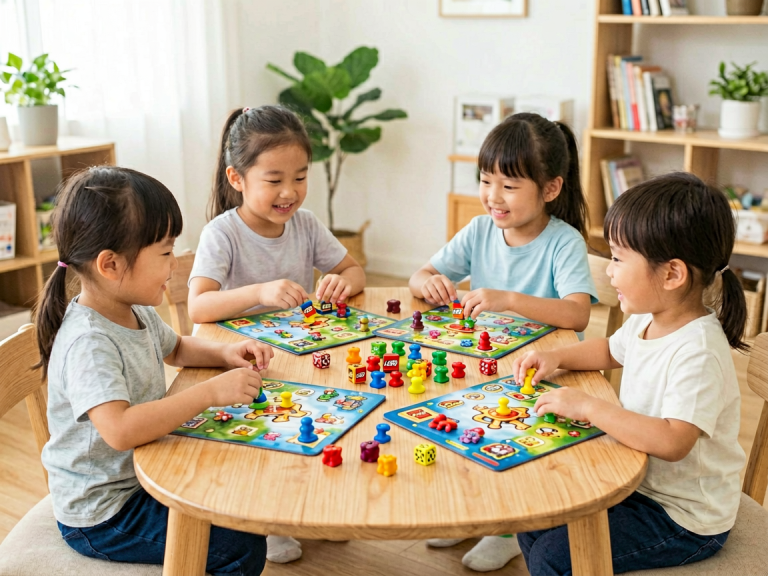
Finally, look for toys that encourage social play. STEM is often collaborative in the real world, and many toys can be enjoyed with siblings or friends. Building kits become more fun when two children work together, and logic puzzles can be solved as a team. Coding robots can be used for races or obstacle courses that require group planning. Social interaction also teaches communication and negotiation skills, adding an emotional intelligence layer to STEM learning.
Conclusion
The best STEM toys for 7-year-olds are more than just gifts—they are catalysts for a lifetime of curiosity, confidence, and critical thinking. Whether it is a screen-free coding robot like Botley 2.0, a comprehensive science lab from National Geographic, or a timeless construction set from LEGO, each toy offers a unique pathway into the worlds of science, technology, engineering, and mathematics. These toys align perfectly with the developmental stage of a seven-year-old, providing just enough challenge to stretch their abilities without overwhelming them. As children build, program, experiment, and solve puzzles, they are not merely playing; they are learning how to learn. They are discovering that failure is a stepping stone, that creativity is a form of intelligence, and that the world around them is governed by principles they can understand and manipulate. By investing in high-quality STEM toys, you are giving a child the tools to become an innovator, a problem-solver, and a lifelong learner. So whether you are shopping for a birthday, a holiday, or just because, choose a toy that aligns with the child's passions, offers room for growth, and, most importantly, sparks joy. Because in the end, the very best STEM toy is one that a child cannot wait to play with again.