Nature-Inspired Learning: The Best Educational Toys for Kids Who Love the Outdoors
Introduction: Where Curiosity Meets the Wild
Children who are naturally drawn to nature—whether they spend hours turning over rocks to find bugs, collecting leaves of every shape, or asking endless questions about why the sky is blue—possess a unique kind of intellectual hunger. Their curiosity is not abstract; it is rooted in the tactile, the living, the ever-changing world around them. For these young explorers, traditional toys often fall short. A plastic action figure or a video game may entertain for a moment, but it rarely satisfies the deep desire to understand, categorize, and interact with the natural environment. This is where educational toys designed specifically for nature-loving kids come into play. They are not merely playthings; they are tools of discovery, bridges between the backyard and the laboratory, between wonder and knowledge. In this article, we will explore the philosophy behind nature-themed educational toys, examine the most effective categories and examples, and offer guidance on how to choose toys that truly nurture a child’s love for the outdoors while building essential skills in science, creativity, and critical thinking.
The Value of Nature-Themed Educational Toys: More Than Just Play
Why should parents and educators invest in toys that specifically cater to a child’s interest in nature? The answer lies in the unique developmental benefits that such toys provide. First and foremost, nature-themed educational toys transform abstract scientific concepts into tangible experiences. A child who learns about photosynthesis from a textbook may memorize the term, but a child who plants a bean seed in a self-watering terrarium and watches it sprout over two weeks *understands* the process on a cellular level. This hands-on, inquiry-based learning is far more memorable and meaningful. According to research in child development, outdoor and nature-based play enhances executive function, reduces stress, and fosters resilience. When a toy like a portable bird identification kit encourages a child to sit quietly and observe, it trains patience and attention to detail—skills that are increasingly rare in the digital age. Moreover, these toys often cross disciplinary boundaries. A simple compass-and-map activity teaches geography, math (angles and distances), and physical education all at once. They also cultivate environmental stewardship. When a child uses a bug catching kit and learns to release insects gently back into their habitat, they internalize a respect for living things that no lecture can instill. In short, nature-themed educational toys are not just about “learning about nature”; they are about learning *through* nature, using the child’s intrinsic motivation as the engine of education.
Types of Educational Toys for Nature Lovers: A Curated Guide
Not all nature-themed toys are created equal. To help parents and gift-givers choose wisely, here is a breakdown of the most impactful categories, each with specific examples and the skills they develop.
1. Exploration and Observation Tools: The Scientist’s Starter Kit
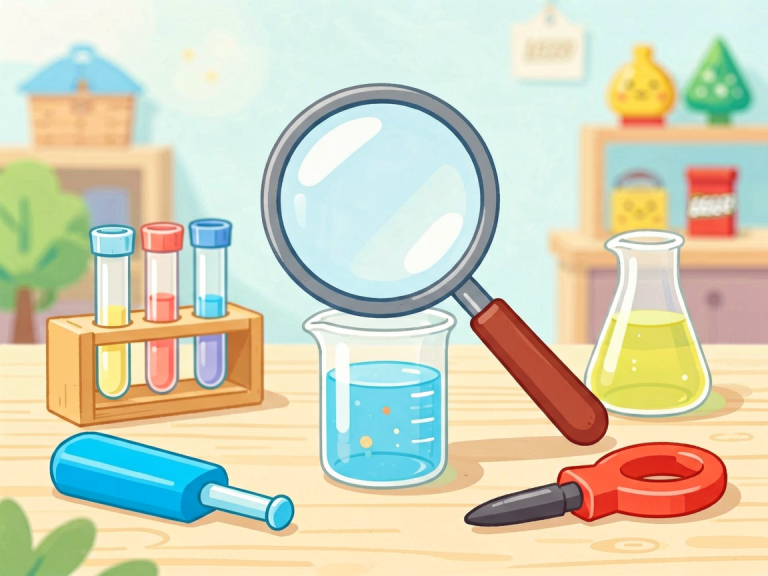
At the heart of every young naturalist is a desire to see the unseen. Exploration tools are the entry point. A classic example is the child-friendly microscope (e.g., the GeoSafari Jr. Talking Microscope or a simple handheld digital microscope that connects to a tablet). These allow kids to examine the veins of a leaf, the compound eyes of a fly, or the crystalline structure of a grain of sand in stunning detail. Another essential is a high-quality magnifying glass with a sturdy handle and a built-in LED light—perfect for examining bark, lichen, and tiny insects without disturbing them. For older children (ages 8+), a beginner’s telescope (such as the Celestron FirstScope) can ignite a passion for astronomy, connecting the stars in the night sky to the plants and animals that rely on day-night cycles.
Beyond magnification, observation tools include nature journals and field guides. A well-designed nature journal—with blank pages, prompts for sketching, and pockets for collecting samples—encourages children to record their findings, a practice that strengthens scientific observation and writing skills. Pairing the journal with age-appropriate field guides (e.g., the Peterson First Guides series) teaches how to identify plants, birds, and insects using key characteristics, turning a simple walk into a detective mission.
2. Construction and Engineering with Natural Materials: Building from the Earth
Many nature-loving kids are also natural builders. They love creating forts, dams in streams, and sculptures from sticks and mud. Educational toys that channel this impulse can teach principles of physics, engineering, and ecology. One outstanding example is natural block sets, such as those made from unfinished bamboo, cork, or recycled wood with irregular shapes that mimic logs, stones, and branches. Unlike uniform plastic blocks, these require children to balance, stack, and problem-solve with organic forms, developing spatial reasoning and an intuitive understanding of gravity and stability.
Another powerful tool is the terrarium or vivarium kit. Products like the “Plant-in-a-Jar” terrarium or the AntWorks gel habitat allow children to construct a complete, self-contained ecosystem. They learn about soil layers, drainage, plant respiration, and animal behavior. More advanced kits (e.g., the Grow ‘n’ Glow Terrarium by Creativity for Kids) include seeds, glow-in-the-dark sand, and miniature figurines, combining biology with creative design. For children who love water, a DIY worm composting bin or a pond-microscope exploration set can turn a muddy puddle into a biology lesson.
3. Science Kits Focused on Living Systems: Botany and Entomology
Direct experimentation with living things is perhaps the most engaging way for nature-loving kids to learn science. Butterfly garden kits (e.g., the popular Insect Lore Butterfly Garden) let children witness metamorphosis firsthand. Raising caterpillars, watching them form chrysalides, and releasing the butterflies teaches life cycles, ecology, and responsibility. Similarly, ant farm kits (such as the Uncle Milton Ant Farm) offer a window into social insect behavior, division of labor, and engineering (the ants build tunnels). For botanical interests, plant growing kits that focus on specific themes—like carnivorous plants (Venus flytraps), herbs, or wildflowers—allow children to control variables such as light, water, and temperature, introducing the scientific method in a joyful way.
More advanced kits include water testing kits for ponds and streams, weather station sets with anemometers and rain gauges, and fossil digging kits that simulate real paleontological excavation. The latter (e.g., National Geographic’s Mega Fossil Mine) combine manual dexterity with geology, history, and curiosity about what lived millions of years ago. These kits often come with detailed guides that explain the scientific relevance of each find, making the learning explicit.
4. Art and Creativity Inspired by Nature: Expressing Wonder
Not all nature-loving kids are future biologists—many are artists, poets, and storytellers. Educational toys that blend nature with creativity are equally valuable. Nature print and rubbing kits (e.g., using crayons and paper to capture leaf textures, or sun-print paper that develops images using sunlight) teach about negative space, texture, and photochemical reactions. Clay modeling kits that include natural pigments (like earth-based clay) encourage sculpting animals, trees, or landscapes, developing fine motor skills and an appreciation for natural aesthetics.
Birdhouse or bug hotel building kits are another hybrid: they combine woodworking (measuring, sanding, assembling) with biology and art (painting the finished structure to blend into the garden). These projects have the added benefit of attracting real wildlife, creating a feedback loop of observation and pride. For older children, nature photography workshops (using a simple digital camera or a phone with a macro lens attachment) teach composition, patience, and the power of documenting the natural world—a skill that can blossom into a lifelong hobby.
5. Outdoor Adventure and Navigation Gear: The Explorer’s Toolkit
Finally, no nature-loving child should be without tools that enable safe, independent exploration. A high-quality compass (like the Suunto A-10) is a classic educational toy that teaches cardinal directions, map reading, and geometry. Pair it with a child’s topographical map of a local park and a magnifying glass, and you have a complete orienteering kit. Kids’ binoculars (designed for small faces, such as the Leupold BX-1 Cabine or the Educational Insights GeoSafari Jr. Binoculars) allow bird watching and distant observation without bulky weight. Some outdoor kits include whistles, signal mirrors, and lightweight emergency blankets—these teach survival awareness and responsibility in a controlled way.
For the ultimate immersive experience, consider a backyard scavenger hunt kit that includes laminated cards with prompts like “find a leaf with five points” or “listen for a woodpecker.” These kits encourage systematic searching, categorization, and sensory engagement. They can be reused in different seasons, providing endless opportunities for comparing autumn vs. spring findings. Many such kits are available online, but they can also be DIY projects, which themselves become an educational activity.
How to Choose the Right Toy: Age, Interest, and Safety
Selecting the perfect educational toy for a nature-loving child requires more than just picking the first shiny box. First, consider the child’s age and developmental stage. For a preschooler (ages 3–5), simple magnifying glasses, oversized tweezers for picking up leaves, and a nature-themed puzzle may be ideal—avoid small parts that could be a choking hazard. For elementary-age children (ages 6–10), more complex systems like ant farms, terrariums, and beginner microscopes are appropriate, provided adult supervision is available for activities involving water, soil, or living creatures. Teens (11+) may enjoy high-quality portable microscopes, field guides for local ecosystems, or DIY weather station kits that integrate with smartphone apps.
Second, match the toy to the child’s specific interests within nature. Does the child prefer bugs, birds, plants, rocks, or weather? A generic “nature” kit may be less engaging than one focused on their current obsession. Observe their behavior: A child who always looks up at the sky would love a telescope or a cloud identification wheel; one who digs in the dirt would adore a fossil or crystal mining kit.
Third, prioritize durability and safety. Nature toys often go outdoors—they get muddy, wet, and dropped. Look for sturdy construction, non-toxic materials (especially for anything that will be near the mouth or handled repeatedly), and easy-to-clean surfaces. Batteries should be in sealed compartments. For living creatures, ensure the kit’s design allows for proper care (e.g., adequate air holes, escape-proof lids) and that the provider offers a guarantee or humane disposal options.
Finally, consider the toy’s potential for open-ended play. The best educational toys are those that can be used in multiple ways, encouraging improvisation. A simple set of natural wood blocks, for instance, can become a forest, a fence, or a bridge—limited only by imagination. Kits that require strict following of instructions may be less effective long-term than those that invite exploration.
Conclusion: The Gift of Connection
In a world increasingly dominated by screens and virtual experiences, educational toys for kids who love nature are more than a nostalgic throwback—they are a necessary counterbalance. These toys do not merely entertain; they connect children to the rhythms of the earth, to the wonder of growth and decay, to the infinite variety of life. They teach that science is not just a subject in a textbook but a living adventure waiting under every leaf and behind every cloud. By choosing toys that honor and channel a child’s natural curiosity, we give them more than knowledge—we give them a sense of place, a habit of observation, and a deep, abiding respect for the world that sustains us. Whether it is the simple joy of watching a caterpillar become a butterfly or the intellectual thrill of mapping constellations, these tools lay the foundation for a lifetime of learning, stewardship, and wonder. So the next time you look for a gift for a young explorer, skip the plastic electronics and look for something that whispers of wind, soil, and wings. You might just be opening the door to a future naturalist, scientist, artist, or simply a happier, more thoughtful human being.