The Ultimate Guide to the Best Toys for 7-Year-Olds: Fueling Imagination, Learning, and Active Play
Introduction
At the age of seven, children are at a fascinating developmental crossroads. They have outgrown the simple, chunky toys of toddlerhood and are not yet fully immersed in the complexities of the pre-teen years. Seven-year-olds are curious, energetic, and increasingly capable of abstract thought, problem-solving, and social collaboration. Their attention spans are longer, their fine motor skills are more refined, and their imagination is soaring. Choosing the right toys for this age group is not just about keeping them entertained—it is about nurturing their cognitive growth, emotional intelligence, physical coordination, and creativity.
The best toys for 7-year-olds are those that strike a balance between fun and educational value, between independent play and social interaction, and between structured challenges and open-ended exploration. In this guide, we will explore five key categories of toys that are particularly beneficial for seven-year-olds: STEM and Educational Kits, Creative and Artistic Tools, Active and Outdoor Play Equipment, Board Games and Strategy Games, and Building Sets and Construction Toys. Each category offers unique opportunities for development, and together they form a well-rounded playroom that will engage a child’s mind, body, and spirit.
STEM and Educational Kits: Building the Engineers of Tomorrow
At seven, children are natural scientists. They ask endless questions about how things work, why the sky is blue, and what makes a volcano erupt. STEM (Science, Technology, Engineering, and Mathematics) toys tap into this innate curiosity and channel it into hands-on learning that feels like play. The best STEM kits for this age are those that offer clear instructions but also leave room for experimentation and failure, because learning from mistakes is a critical part of the process.
One outstanding example is the Snap Circuits Jr. SC-100 Electronics Exploration Kit. This toy allows a 7-year-old to build over 100 different electronic projects, from a simple light switch to a working alarm or a flying fan. The components snap together easily—no soldering required—so children can focus on the logic of circuits rather than struggling with tiny wires. As they follow the illustrated manual, they learn about voltage, resistance, and how electricity flows. More importantly, they gain confidence in troubleshooting: when a circuit doesn’t work, they learn to check connections, swap components, and try again. This resilience is a life skill.
Another excellent choice is the NATIONAL GEOGRAPHIC Mega Science Lab. This kit includes everything a young scientist needs to conduct 45 different experiments: a real microscope, test tubes, a pH paper, and even a pyrite specimen. Seven-year-olds love the “wow” factor of making crystals grow or watching a chemical reaction change colors. The included guide explains the science behind each experiment in simple terms, turning a messy afternoon into a memorable lesson in chemistry and biology. For parents who want to encourage a love of discovery, these kits are invaluable.
Finally, consider ThinkFun Gravity Maze, a marble run logic game that combines engineering with critical thinking. Players build a tower of colorful pieces to guide a marble from start to finish, following increasingly difficult challenge cards. This toy enhances spatial reasoning, planning, and sequential thinking—skills that are foundational for math and programming. It is also surprisingly addictive, and children often spend an hour trying to solve just one puzzle, completely absorbed.
Creative and Artistic Tools: Unleashing the Inner Artist
The imagination of a seven-year-old is a powerful force. They can spend hours drawing elaborate worlds, crafting creatures out of clay, or designing their own comic books. Creative toys not only allow this self-expression but also help develop fine motor skills, patience, and the ability to plan and execute a vision. The key is to provide high-quality materials and open-ended prompts rather than rigid, predetermined outcomes.
One of the best investments for this age is a high-quality art set, such as the Crayola Ultimate Art & Craft Kit. This massive collection includes markers, colored pencils, crayons, watercolors, modeling clay, scissors, glue, and a variety of paper types. It encourages children to experiment with different media, from drawing to collage to sculpture. What makes it particularly suited for 7-year-olds is the inclusion of a “How to Draw” booklet that teaches basic techniques without being overly prescriptive. A child can copy a simple animal drawing one day and then invent a fantasy creature the next.
For a more structured creative challenge, Klutz Clay Charm Bracelets Kit is a hit. Children follow step-by-step instructions to roll, shape, and bake colorful polymer clay into tiny charms—hearts, animals, stars, and food items—and then string them onto elastic cord to make bracelets. This project builds fine motor precision and attention to detail. The sense of accomplishment when a child completes a bracelet and gives it to a friend is enormous. It also teaches the satisfaction of creating something wearable and shareable.
Another wonderful option is Light-Up Tracing Pad for Drawing and Animation. Many 7-year-olds are fascinated by the idea of making their own cartoons. A tracing pad allows them to trace images from provided templates or their own drawings, then flip pages to create simple animations. This toy bridges art and storytelling, encouraging narrative thinking. As they create sequences of images, they inadvertently learn about cause and effect, timing, and visual continuity.
Active and Outdoor Play Equipment: Energizing the Body and Mind
Seven-year-olds have boundless energy. They need physical activity not only to stay healthy but also to release stress, improve concentration, and develop motor skills like balance, coordination, and strength. Outdoor play is especially important in an age of screens. The best active toys for this age are those that can be used alone or with friends, that encourage risk-taking in a safe environment, and that combine fun with exercise.
The Razor A Kick Scooter is a classic that never goes out of style. Lightweight, durable, and with adjustable handlebars, it allows children to cruise around the neighborhood, learn to balance on two wheels, and build leg strength. Unlike battery-powered scooters, the kick scooter requires physical effort, which means children are actually exercising while having fun. It also teaches spatial awareness and traffic safety when used in a supervised area.
For backyards or parks, a Pogo Stick is an excellent choice. The Flybar 800 Series Pogo Stick is designed for children aged 6–9, with a weight range that accommodates most 7-year-olds. Bouncing up and down strengthens leg muscles, improves cardiovascular endurance, and challenges the vestibular system (balance). It also has a certain cool factor—children love showing off their skills. Learning to keep the pogo stick upright and maintain rhythm is a great lesson in persistence.
Team sports equipment also deserves a spot. A Pop-Up Soccer Goal Set or a Kid-Sized Basketball Hoop (adjustable from 3 to 6 feet) allows children to practice shooting, passing, and teamwork. Even if a child is not naturally athletic, these toys make sports accessible and fun. The social aspect of playing catch or a mini soccer game with siblings or friends teaches cooperation, turn-taking, and graceful losing. Active play also helps regulate sleep and mood—an often overlooked benefit.
Board Games and Strategy Games: Sharpening the Mind Through Play
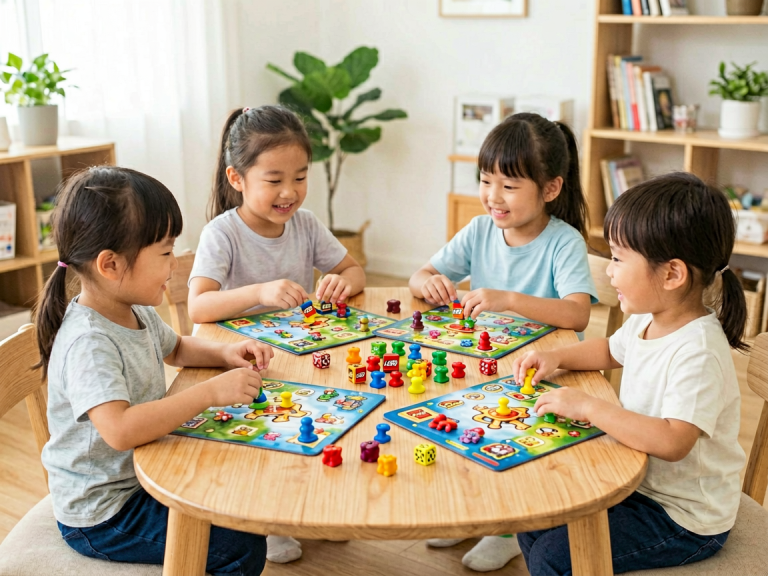
Board games are perhaps the most underrated educational tool for seven-year-olds. At this age, children are developing the ability to think several moves ahead, to follow complex rules, to read social cues, and to manage disappointment when they lose. A good board game provides all of this in a fun, low-stakes environment. The best games for this age group are those that are challenging enough to hold interest but not so complicated that they cause frustration.
Outfoxed! is a cooperative game for 2–4 players, perfect for seven-year-olds who are still learning to handle losing. In this whodunit mystery, players work together to collect clues, narrow down suspects, and solve the crime before the naughty fox escapes. Because everyone wins or loses together, it teaches teamwork and communication without the pressure of competition. The deduction element encourages logical thinking and memory.
For a more competitive option, Sequence for Kids is a brilliant spin on the classic game. Players lay down cards to place chips on a board, trying to get four in a row. It combines card strategy with spatial awareness, and the rules are simple enough for a child to teach a grandparent. Seven-year-olds love the thrill of blocking an opponent’s sequence while building their own. This game subtly introduces the idea of planning and foresight.
Another standout is Sushi Go!, a fast-paced card-drafting game where players collect sets of sushi dishes to earn points. Games last only 15 minutes, which is ideal for short attention spans. Children learn to weigh options: do I take the squid that gives me three points now, or the chopsticks that let me take two cards next turn? This is strategic decision-making in its purest form. The adorable art and food theme make it universally appealing.
Building Sets and Construction Toys: From Simple Blocks to Complex Structures
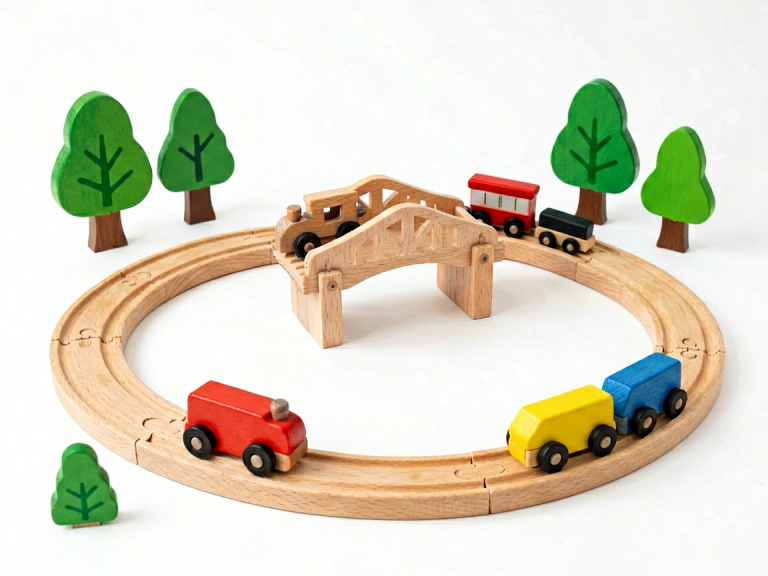
Building toys are timeless because they align with a child’s natural desire to create, destroy, and rebuild. For seven-year-olds, the best construction toys are those that offer increasing levels of complexity, allowing children to progress from following instructions to designing their own creations. They also encourage problem-solving, spatial reasoning, and fine motor dexterity.
LEGO Classic Creative Bricks are still the gold standard. The large box of 1,500 pieces in rainbow colors provides endless possibilities. Unlike themed sets that come with a specific instruction manual for a castle or spaceship, the Classic line encourages free building. A seven-year-old can build a skyscraper one day, a dinosaur the next, and a rocket ship the day after that. The open-ended nature fuels creativity and teaches structural engineering: why does my tower keep falling? Because the base is too small. This trial-and-error learning is powerful.
For something different, consider Magna-Tiles. These magnetic building tiles are translucent and come in various geometric shapes. They snap together easily, allowing children to build 3D structures like houses, bridges, and geometric shapes. Because they are magnetic, they hold together firmly but are also easy to reconfigure. Seven-year-olds love the satisfying click and the ability to create arches and enclosures. Magna-Tiles are also an excellent tool for teaching fractions, symmetry, and basic geometry in a playful way.
A more complex option is the K’NEX Thrill Rides – Roller Coaster Building Set. This kit allows children to build a working motorized roller coaster with up to 630 pieces. The finished model has a real chain lift and cars that zoom down the track. Building it requires following a detailed instruction booklet, which takes patience and focus—a whole afternoon project. The payoff is immense: the thrill of seeing the marble (or small car) complete the loop. This toy introduces concepts of gravity, momentum, and kinetic energy in a tangible way.
Conclusion: Curating the Perfect Mix
When selecting toys for a seven-year-old, it is essential to think beyond the latest trend or the noisy, flashy gadget. The best toys are those that grow with the child, that can be used in multiple ways, and that spark joy while also fostering development. A well-chosen STEM kit can ignite a passion for science. A set of high-quality art supplies can unlock a lifetime of creativity. An active outdoor toy can build a healthy body and a resilient spirit. A strategic board game can sharpen the mind and strengthen social bonds. And a versatile building set can lay the foundation for engineering thinking.
Remember that no single toy does everything. The ideal collection for a seven-year-old includes a balance of these categories, allowing the child to choose what resonates with them on any given day. Some days they will want to run outside and bounce on a pogo stick; other days they will want to sit quietly and build a complex LEGO castle. Both are valuable. The best gift you can give a seven-year-old is not a single perfect toy, but the freedom to explore, make mistakes, and discover their own passions—one play session at a time.
(Word count: approximately 1,580)