The Blueprint of Play: Why Building Toys Are Essential for 6-Year-Olds
At six years old, a child stands at a remarkable crossroads. The world of preschool imagination is still vivid, but cognitive demands of early elementary school are knocking at the door. Fine motor skills are sharpening, attention spans are lengthening, and the thirst for understanding "how things work" is insatiable. Among the countless toys competing for a place in a six-year-old’s playroom, building toys hold a unique, almost magical power. They are not merely amusement; they are the silent curriculum of childhood, teaching physics, patience, creativity, and problem-solving through the simple act of stacking, clicking, and snapping.
The Cognitive and Developmental Benefits of Building Toys
Strengthening Fine Motor Skills and Hand-Eye Coordination
For a six-year-old, the small muscles in their hands are still developing. Manipulating small blocks, connecting interlocking pieces, and aligning gears require precision that improves with practice. A child who struggles with handwriting may find that building a tower of interlocking bricks forces the same pinch grip and wrist control needed to hold a pencil. The repeated action of pressing two plastic studs together or fitting a wooden dowel into a hole is, in essence, a gym workout for little fingers. Over time, this translates into greater dexterity for everyday tasks—tying shoes, cutting with scissors, and eventually, typing on a keyboard.
Encouraging Spatial Reasoning and Mathematical Thinking
Building toys are geometry in disguise. When a six-year-old decides that her castle needs a taller tower, she must intuitively understand balance, symmetry, and weight distribution. She learns that a wide base is more stable than a narrow one, that two short blocks stacked vertically equal the height of one long block, and that a bridge needs supports underneath. These are not abstract school lessons; they are embodied knowledge. Research consistently shows that children who engage with construction play perform better on spatial visualization tests, which in turn predicts future success in STEM fields—science, technology, engineering, and mathematics.
Fostering Problem-Solving and Resilience
One of the most overlooked benefits of building toys is their capacity to teach failure. A six-year-old who carefully builds a skyscraper only to watch it topple in a cascade of plastic pieces has just experienced a powerful lesson in cause and effect. The child must then decide: do I give up in frustration, or do I examine what went wrong and try again? With a gentle nudge from a parent or teacher, the child begins to analyze the structure—was the base too small? Were the pieces not aligned? This iterative process of hypothesis, test, failure, and redesign is the very foundation of scientific thinking and emotional resilience.
Choosing the Right Building Toys for a 6-Year-Old
Classic Interlocking Bricks with a Twist
The ubiquitous plastic brick—whether from Lego, Mega Bloks, or off-brand sets—remains the gold standard for this age group. For six-year-olds, the key is to move beyond the simple "big brick" sets designed for toddlers and toward sets with smaller pieces, more specialized parts (wheels, windows, hinges), and instructions for specific models. However, too much instruction can stifle creativity. The ideal approach is to buy a base set with plenty of generic bricks and then add a "themed" set (such as a fire station or spaceship) only if the child shows interest. The real magic happens when the child decides to build a spaceship that also functions as a fire station—mixing themes, breaking rules, and inventing new narratives.
Magnetic Tiles for Open-Ended Creativity
Magnetic building tiles—brands like Magna-Tiles or Picasso Tiles—have exploded in popularity for good reason. The magnets provide instant satisfaction; pieces snap together with a satisfying click and hold firmly, making it easier for six-year-olds to build complex 3D structures without the frustration of blocks that slip apart. The translucent colored panels allow children to explore light and shadow, and the geometrical shapes (squares, triangles, rectangles) teach basic geometry hands-on. Unlike brick sets, magnetic tiles have no "right" way to build—a child can make a cube, a house, a rocket, or an abstract sculpture. This open-endedness is critical for creative thinking at age six, when imagination is still highly fluid.
Wooden Blocks: Timeless Simplicity
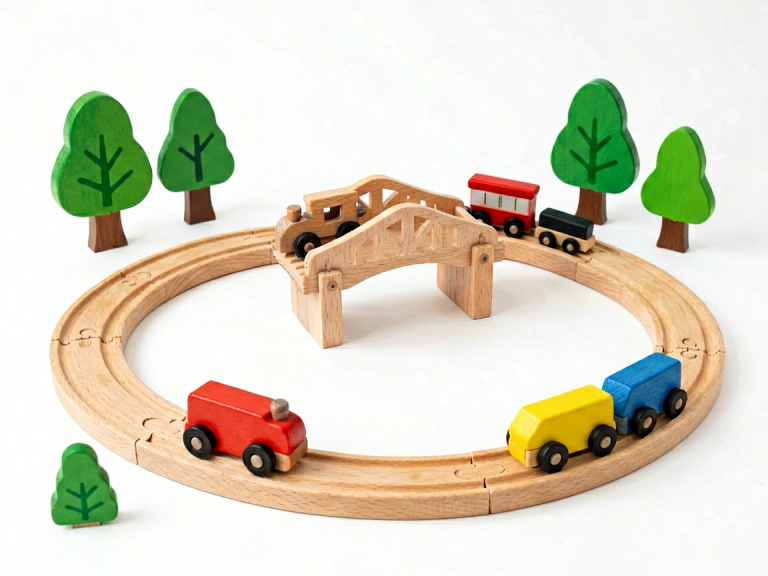
Never underestimate the humble wooden block. While high-tech toys dazzle with lights and sounds, plain wooden blocks (such as those from Melissa & Doug or Hape) offer something different: weight and texture. A six-year-old stacking real wood learns about gravity in a visceral way that plastic cannot replicate. Wooden blocks are also quieter, easier on floors, and infinitely combinable. For a child who loves storytelling, wooden blocks become the walls of a fairy-tale kingdom; for a child who loves engineering, they become the supports of a suspension bridge. Because they lack connectors or magnets, wooden blocks demand more careful balancing, which teaches patience and precision.
Integrating Building Toys into Daily Life and Education
Building as a Social Activity
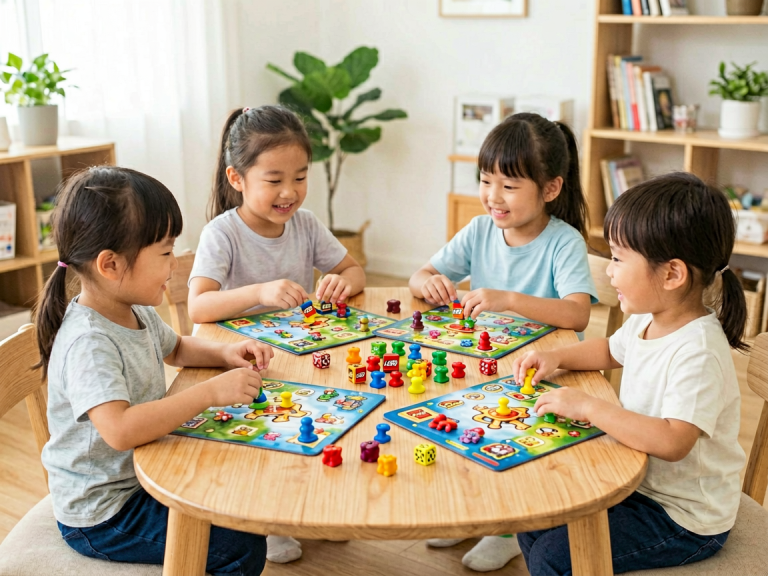
While solo building is valuable, building with others introduces social dynamics that are equally important for six-year-olds. When two children cooperate on a single structure, they must negotiate—who places the next block, whose idea for the roof is better, and how to share limited pieces. They learn to articulate their ideas ("I think the tower should go here because it's more stable") and to compromise. Parents can facilitate this by setting up "building challenges" with siblings or friends: "Can you build a bridge that can hold this toy car?" or "Who can build the tallest tower in five minutes?" These playful competitions channel natural rivalry into collaborative problem-solving.
Tying Building to Academic Subjects
Teachers and parents can use building toys to make abstract concepts concrete. For example, a six-year-old learning addition can count the number of bricks used in a tower. A lesson on symmetry becomes real when the child is asked to build a structure that looks the same on both sides. Even literacy can be woven in: after building a castle, ask the child to write or dictate a short story about who lives inside. Building toys also lend themselves perfectly to project-based learning. A unit on "community helpers" could involve building a police station, a hospital, and a school out of blocks, then role-playing the people who work there.
Avoiding the Pitfalls of Over-Structuring
One risk with building toys is that adults—with the best intentions—turn play into work. A six-year-old may feel pressured to follow exact instructions or to create something "impressive" for a parent's approval. The moment building becomes a performance, its intrinsic joy fades. The golden rule: let the child lead. If she wants to build the same simple tower every day for a week, that repetition is her way of mastering a skill. If he builds a "mess" that he calls a robot, resist the urge to "fix" it. Praise the effort, the persistence, and the imagination, not just the final product.
Conclusion: The Foundation of a Lifetime
Building toys for six-year-olds are far more than playthings. They are small laboratories where children test the laws of physics, exercise the muscles of their hands, and develop the patience to try again after a crash. In a world increasingly dominated by screens and passive entertainment, the simple act of putting one block on top of another is a radical act of creation. A child who builds knows that she can shape her environment, that her hands have power, and that even a pile of scattered parts can become a castle, a rocket, or a dream. That lesson—that order can emerge from chaos through effort and imagination—is one that will serve her well long after the last block is stored away. So the next time you see a six-year-old engrossed in a pile of bricks, remember: they are not just playing. They are building the architecture of their own minds.