Beyond the Glow: Why Screen-Free Toys Matter for 9-Year-Olds and How to Choose Wisely
Introduction: The Digital Dilemma at Age Nine
At nine, children stand at a fascinating crossroads. They have outgrown the simple sensory play of toddlerhood, yet they are not quite ready for the abstract complexities of teenage life. Their brains are rapidly developing cognitive skills—logical reasoning, empathy, strategic thinking, and creativity—while their social worlds expand beyond family into peer groups and structured activities. Unfortunately, this is also the age when screens begin to dominate leisure time. Video games, streaming platforms, and educational apps compete fiercely for a child’s attention, often leaving little room for the kind of unstructured, hands-on play that builds deep neural connections.
Parents and educators increasingly voice concerns about excessive screen time: reduced attention spans, diminished problem-solving abilities, and a decline in physical activity. The solution is not to ban technology entirely but to intentionally curate a collection of screen-free toys that engage a nine-year-old’s growing mind and body. Screen-free toys do not merely “keep kids busy”; they invite children to become creators, explorers, and collaborators. This article explores the cognitive, social, and emotional benefits of off-screen play and offers a practical guide to selecting the best screen-free toys for nine-year-olds—toys that are challenging enough to hold their interest, yet open-ended enough to spark imagination.
1. Why Nine-Year-Olds Need Unplugged Play
1.1 Cognitive Development and Deep Focus
A nine-year-old’s prefrontal cortex—the part of the brain responsible for planning, impulse control, and decision-making—is undergoing a growth spurt. Activities that require sustained attention, such as building a complex LEGO structure or solving a multi-step puzzle, strengthen these neural pathways. Unlike digital games that provide instant rewards (bright lights, sound effects, points), screen-free toys demand patience. A child who spends an afternoon constructing a marble run must troubleshoot when the track fails, adjust the incline, and test hypotheses. This iterative process builds grit and frustration tolerance, qualities that are far more valuable than quick wins on a tablet.
1.2 Social and Emotional Growth
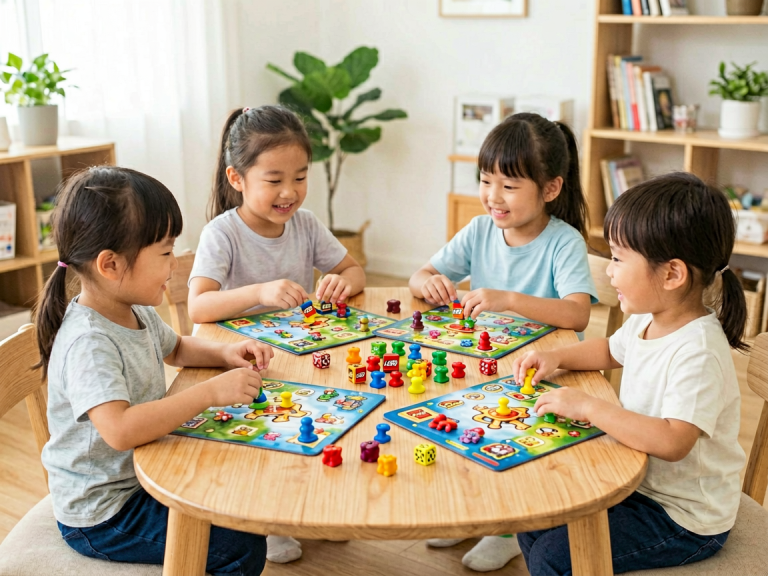
Screen-free toys naturally encourage face-to-face interaction. A board game like *Settlers of Catan* or *Codenames* requires negotiation, turn-taking, reading facial expressions, and graceful losing. These are subtle but crucial social skills that no digital avatar can teach. Moreover, open-ended toys like magnetic building tiles or art supplies allow children to express complex emotions. A nine-year-old who feels stressed about school might build a fortress or paint a thunderstorm; the toy becomes a safe channel for processing feelings without the pressure of an online audience.
1.3 Physical Well-Being and Sensory Integration
By age nine, many children spend six or more hours daily in school, plus homework, leaving limited time for gross motor activity. Screen-free toys that involve movement—such as a Nerf obstacle course kit, a swing set, or a classic jump rope with partner games—help maintain cardiovascular health and improve coordination. Even “stationary” toys like kinetic sand, modeling clay, or woodworking kits engage fine motor skills and tactile senses that screens cannot replicate. The act of squeezing, rolling, and shaping materials also provides calming sensory input, which can be especially beneficial for children with attention differences.
2. Categories of Screen-Free Toys That Engage a 9-Year-Old’s Mind
2.1 Construction and Engineering Toys
At nine, children have the dexterity and patience to tackle sophisticated building sets. Avoid simple plastic bricks; instead, look for:
- Motorized STEM kits (e.g., Thames & Kosmos physics kits, Snap Circuits) that teach basic electronics and mechanics. A child can build a working alarm, a radio, or a solar-powered car.
- Magnetic tiles with gears (e.g., Magna-Tiles with add-ons) that combine geometry with cause-and-effect.
- Wooden marble runs with ramps, tunnels, and switches (e.g., Hape Quadrilla). These encourage spatial reasoning and creative iteration.
2.2 Strategy and Logic Puzzles
This age group loves a good challenge. Screen-free puzzles that stretch the mind include:
- 3D puzzles like a Rubik’s Cube, a wooden brain teaser (e.g., “Soma Cube”), or a laser-cut dinosaur skeleton to assemble without instructions.
- Multi-player board games with strategic depth: *Ticket to Ride*, *Azul*, *Kingdomino*, or *Clue* help children learn to plan ahead, read opponents, and manage resources.
- Escape room in a box kits (e.g., *Exit: The Game* series) that require collaboration and deduction to solve a mystery within 60 minutes—perfect for a family game night.
2.3 Creative and Artistic Expression
Nine-year-olds often have strong opinions and a desire to create something uniquely theirs. Screen-free creative toys include:
- High-quality art kits: watercolor palettes with professional-grade paper, charcoal drawing sets, or a pottery wheel for modeling clay. Unlike digital drawing apps, physical art involves texture, smell, and the unpredictability of real materials.
- DIY craft subscriptions (e.g., KiwiCo or Tinker Crate) that arrive monthly with all supplies for a project like weaving a bracelet, building a kaleidoscope, or creating a stop-motion animation *without* a screen—using a physical background and clay figures.
- Storytelling kits: a set of wooden story cubes with 54 images, or a felt board with characters and scenery. These inspire oral storytelling and narrative writing, which boost literacy.
2.4 Outdoor and Active Play
The best screen-free toy for a nine-year-old is often one that gets them moving. Options include:
- Advanced kick scooters or skateboards with safety gear; they teach balance and risk assessment.
- Giant foam-building blocks (e.g., Stomp Rocket, Giant Jenga) for outdoor group play.
- Gardening tools with a child-sized real spade, seeds, and a journal. Gardening requires planning, daily responsibility, and a connection to nature that no video game can simulate.
2.5 Role-Playing and Imagination
Despite their age, nine-year-olds still love pretend play, but it must be more sophisticated. Costume trunks with realistic props (like a doctor’s kit with stethoscope, a detective’s magnifying glass and fingerprint powder, or a chef’s set with real utensils) allow them to act out grown-up roles. Similarly, board games that simulate real life—such as *The Game of Life* or *Monopoly Junior*—provide safe avenues for exploring economic decisions and consequences.
3. How to Encourage Screen-Free Play: Practical Tips for Parents
3.1 Curate, Don’t Overwhelm
It’s tempting to fill a playroom with dozens of toys, but a nine-year-old’s attention will scatter. Instead, choose five to seven high-quality, open-ended toys and rotate them every few weeks. When a toy is put away for a while, it becomes exciting again when it reappears. Observe what your child gravitates toward—construction, art, strategy?—and invest in those categories.
3.2 Create “Play Zones” Without Screens
Designate a corner of the living room or a dedicated playroom as a “no-tech zone.” Stock it with a large table for building, a comfortable carpet for puzzles, and accessible shelves. Keep art supplies in clear jars; a magnetic board for LEGO creations; and a basket of board games. The physical environment should invite rather than require instruction.
3.3 Model Screen-Free Behavior
Children copy adults. If you are always on your phone, they will resist screen-free toys. Set aside family device-free hours—for example, Sunday afternoons for hiking or board games. When you join them in building a marble run or coloring a complex mandala, you signal that this type of play is valuable and enjoyable. Narrate your own problem-solving: “Hmm, this ramp doesn’t fit. What if I try turning it sideways?” This modeling teaches persistence.
3.4 Balance with Screen Time, Don’t Ban It
A total ban on screens often backfires. Instead, treat screen-free toys as the default option for free time. Keep screens in a common area and set clear boundaries (e.g., 30 minutes after homework, not before bed). When your child complains of boredom—and they will—resist the urge to hand them a device. Boredom is the mother of invention. Hand them a box of LEGO pieces or a marble run and say, “I bet you can build something amazing.” Then step back.
Conclusion: The Gift of Boredom and the Joy of Making
The nine-year-old brain is a powerhouse of potential, but it needs the right fuel. Screen-free toys are not a nostalgic rejection of technology; they are a deliberate choice to nurture deeper cognitive skills, stronger relationships, and healthier bodies. When a child builds a tower that topples and rebuilds it stronger, they learn resilience. When they argue over the rules of a board game and then laugh together, they learn social negotiation. When they paint a sunset with their own hands, they learn self-expression.
As parents, our job is not to entertain our children but to equip them with tools that inspire their own problem-solving, creativity, and joy. The next time you consider a birthday gift or a rainy-day activity, look beyond the glowing screen. Choose a toy that asks, “What can you create with me?” rather than one that says, “Watch me.” The answer—echoed in the concentration on a child’s face, the pride in their voice, and the dirt under their fingernails—is far more rewarding than any digital reward. Give a nine-year-old a handful of wooden blocks, a deck of cards, or a chemistry set, and you give them the world—one unplugged moment at a time.