Building Brilliance: The Essential Guide to Safe Building Toys for Kids
Introduction
Building toys have long been cherished as cornerstones of childhood development. From the first wooden blocks stacked with chubby fingers to intricate magnetic constructions that spark architectural dreams, these playthings offer more than just amusement. They nurture fine motor skills, spatial reasoning, creativity, and problem-solving abilities. However, as parents and educators increasingly recognise the profound impact of early play on cognitive growth, a critical question emerges: how do we ensure that the toys we give our children are not only educational but also completely safe? The market is flooded with options, from classic interlocking bricks to innovative magnetic tiles, each promising hours of engagement. Yet beneath the bright colours and clever packaging lurk potential hazards that can turn a joyful activity into a cause for concern. This article delves deep into the world of safe building toys for kids, exploring what truly makes a toy safe, identifying the best materials and designs, and providing actionable advice for caregivers who want to foster creativity without compromising health or security.
Why Safety Matters in Building Toys
The importance of safety in children's toys cannot be overstated, particularly when it comes to building sets. Unlike soft plush toys or simple balls, building toys often consist of multiple small pieces, intricate shapes, and sometimes moving parts. These characteristics, while beneficial for development, also introduce specific risks. The most immediate danger is choking. According to the U.S. Consumer Product Safety Commission (CPSC), small parts are a leading cause of toy-related injuries among children under three. A building block that is small enough to fit inside a standard choke-test cylinder (a tube with a diameter of approximately 3.17 cm) poses a serious threat. Additionally, many building toys are made from plastics that may contain harmful chemicals such as phthalates, bisphenol A (BPA), or lead, especially in toys sourced from manufacturers with lax quality controls. Sharp edges, weak joints that break easily into jagged fragments, and magnets that can be swallowed are other hazards that demand vigilance. Furthermore, the physical environment of play matters: toys that are too heavy can cause injury if dropped, and those with loose strings or cords can pose strangulation risks. Safety is not a mere checklist—it is the foundation upon which all the developmental benefits of building toys rest. Without it, a child's exploration can quickly turn into a trip to the emergency room.
Key Safety Features to Look For
When evaluating building toys for children, several features should be non-negotiable. First, material composition is paramount. The safest toys are made from natural, non-toxic materials such as solid wood (preferably from sustainably managed forests) finished with water-based, lead-free paints or stains. Wooden blocks have been a trusted choice for generations because they are durable, free from synthetic chemicals, and have a pleasant tactile quality. For plastic building toys, look for certifications like ASTM F963 (the American standard for toy safety) or the CE mark in Europe, which indicates compliance with strict regulations. Many high-quality brands now use food-grade silicone or BPA-free, phthalate-free ABS plastic, which is both sturdy and safe. Second, size and shape matter. For children under three, blocks should be large enough not to fit through a toilet paper roll—a common non-scientific but practical test. Edges should be rounded to prevent cuts or scrapes. Third, magnet safety deserves special attention. If the toy contains magnets, they must be fully encased in a sealed compartment that cannot be opened, even under stress. Swallowing multiple magnets can cause catastrophic internal injuries, so magnetic building sets should only be used by children old enough to understand not to put them in their mouths. Fourth, stability and durability are crucial. A toy that easily cracks or splinters creates sharp fragments. Look for well-constructed pieces that can withstand drops and rough handling. Finally, easy cleaning often correlates with safety—toys that can be wiped down or washed reduce the risk of bacterial buildup, which is especially important for toddlers who explore with their mouths.
Types of Safe Building Toys
A wide variety of safe building toys exist, each catering to different ages, interests, and developmental stages.
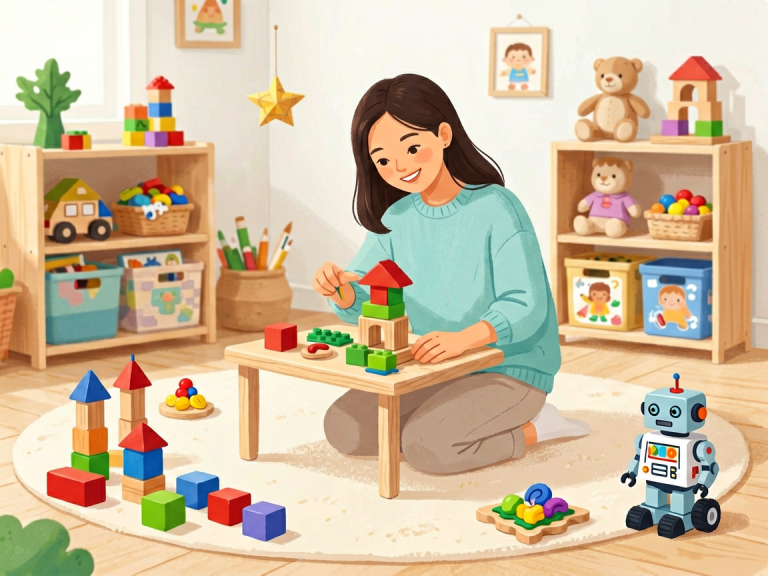
Wooden Building Blocks remain a gold standard. Classic unit blocks—rectangular prisms, cylinders, arches, and triangles—offer open-ended play that grows with the child. High-quality sets are sanded smooth and coated with non-toxic finishes. Brands like PlanToys, Hape, and Melissa & Doug are known for rigorous safety testing. Wooden blocks encourage symmetry, balance, and pre-math concepts without the distraction of flashing lights or sounds.
Magnetic Tiles such as Magna-Tiles or Picasso Tiles have become wildly popular. These translucent geometric shapes snap together via embedded magnets. The safest versions have strong, sealed magnets that cannot be removed, and the plastic is made from food-grade ABS. They are lightweight, easy to clean, and perfect for constructing 2D patterns or 3D structures. However, always check that the edges are smooth and that the tiles are not too thin to avoid cracking.
Plastic Interlocking Bricks (like LEGO Duplo or Mega Bloks) are specifically designed for small hands. Duplo blocks are twice the size of standard LEGO bricks, making them safe for toddlers. They are made from sturdy ABS plastic that resists breakage, and LEGO has one of the most stringent quality control systems in the industry. For older children, standard LEGO bricks are also safe when used as intended, but parents should supervise until kids are past the mouthing phase.
Soft Foam Blocks are ideal for babies and very young toddlers. Made from high-density, non-toxic foam that is fire-retardant and free from volatile organic compounds (VOCs), these blocks are large, lightweight, and squishy. They allow building without fear of injury from falling pieces. Brands like SoftBlocks and Edushape offer foam sets that can even be used in water.
Cardboard Building Kits are an eco-friendly and surprisingly sturdy option. Items like CittàBlock or Makedo involve large cardboard bricks or connectors that let children build full-scale forts and structures. Since cardboard is light and non-toxic, these toys pose minimal risk. Ensure the cardboard is thick and that any connectors are plastic or foam with no sharp points.
Age-Appropriate Recommendations
Choosing a building toy that matches a child's developmental stage is as important as its safety features.
- Birth to 18 months: Focus on sensory and motor development. Soft foam blocks, fabric blocks with crinkle textures, and large wooden balls that can be rolled but not mouthed are ideal. Avoid anything smaller than 2 inches (5 cm) in any dimension. Look for toys labeled “safe for 0+” with no small parts.
- 18 months to 3 years: This is the prime age for wooden unit blocks and large plastic interlocking bricks like Duplo. Blocks should be no smaller than 1.25 inches (3 cm) to prevent choking. Magnetic tiles are also suitable if the child does not put things in their mouth—supervision is critical. Many magnetic sets recommend ages 3+, so check labels.
- 3 to 5 years: Children can graduate to more complex sets. Standard LEGO bricks (the classic 4-stud pieces) become safe once a child no longer mouths objects, but many parents wait until age 4 or 5. At this stage, magnetic tiles with smaller pieces (still larger than choke-hazard size) are popular. Also consider cardboard building kits for collaborative play.
- 5 to 8 years: Building toys can become more intricate. Connector-based sets (like K’NEX or Tinker Toys) with rods, wheels, and clips offer engineering challenges. Ensure any small gears or pins are clearly labelled with age recommendations. STEM building kits that involve simple circuits or gears are excellent, but parents should verify that batteries are securely enclosed and that no wiring is exposed.
- 8 years and up: At this stage, safety concerns shift from choking to durability and chemical safety. Advanced sets like LEGO Technic or architectural model kits are safe as long as they meet standard certifications. However, parents should still be mindful of magnets in high-end building sets and discourage children from bringing toys to the dinner table (where small parts can be lost).
Benefits Beyond Safety
Safe building toys are not just about avoiding harm—they actively promote holistic development. When children engage with well-designed, non-toxic toys, they are free to concentrate on the joy of creation. Block play enhances spatial vocabulary (“on top,” “next to,” “behind”), mathematical concepts like symmetry and fractions, and problem-solving when a tower collapses. Magnetic tiles teach polarity and geometry. Cardboard forts encourage cooperative social skills and dramatic play. Moreover, the tactile experience of natural materials like wood or silicone can be calming and grounding, reducing stress. A child who feels secure with their toys will explore more freely, take creative risks, and build confidence. In contrast, a toy that is flimsy or chemically pungent can cause anxiety or distraction. Hence, investing in safe building toys is an investment in a child's cognitive, emotional, and social growth.
Tips for Parents
To ensure maximum safety and value from building toys:
- Read labels and certifications. Look for ASTM, EN71 (European standard), or CPSIA compliance. Avoid toys that lack these markers.
- Check for recalls. The CPSC website and similar authorities regularly update recall lists. Before buying used toys, inspect them for wear, cracks, or missing pieces.
- Supervise younger children. Even the safest toy can become hazardous if a child tries to chew it or throw it. Stay close during play.
- Rotate toys. To maintain interest without overwhelming children, rotate building sets every few weeks. This also gives you a chance to inspect each toy for damage.
- Teach clean-up routines. Not only does this foster responsibility, but it also helps ensure no stray blocks end up in unexpected places (like a baby sibling’s mouth).
- Buy from reputable brands. Well-known companies often invest more in safety testing and material research. While they may cost more, the peace of mind is worth it.
Conclusion
Building toys are gateways to imagination and learning. They allow children to construct worlds, solve puzzles, and express ideas—all while developing foundational skills that last a lifetime. However, the responsibility to choose safe building toys rests with the adults who provide them. By prioritising non-toxic materials, age-appropriate sizes, robust construction, and established safety certifications, we can create an environment where children build with confidence. Whether it is the satisfying clack of wooden blocks, the satisfying click of magnetic tiles, or the sturdy snap of interlocking bricks, the best toy is one that ignites curiosity without compromising well-being. As we guide the next generation of architects, engineers, and artists, let us remember: the safest foundation for their dreams is a playroom built on care, knowledge, and uncompromising standards.