Science Kits vs. Building Toys: A Comparative Analysis of Educational Play
In the landscape of children’s playthings, few categories spark as much debate among parents, educators, and toy designers as science kits and building toys. Both promise to entertain while educating, yet they approach learning from fundamentally different angles. Science kits typically present a structured, experiment-driven experience that guides children through predetermined scientific concepts, whereas building toys offer open-ended construction opportunities that encourage creativity and problem-solving through free-form assembly. This article delves into a comprehensive comparison between these two popular types of educational play, examining their objectives, cognitive demands, developmental benefits, and suitability for different age groups. By understanding the unique strengths and limitations of each, caregivers and educators can make informed decisions about how to best support children’s intellectual growth.
Defining the Categories
Before comparing them, it is essential to clarify what we mean by “science kits” and “building toys.” A science kit is a packaged set typically containing materials, tools, and instructions for conducting a specific experiment or series of experiments. Examples include crystal growing kits, volcano eruption kits, chemistry lab sets, and electricity circuit kits. The emphasis is on following a protocol to observe a scientific phenomenon, often with a predetermined outcome. The child’s role is that of a guided investigator, learning cause-and-effect relationships through hands-on replication.
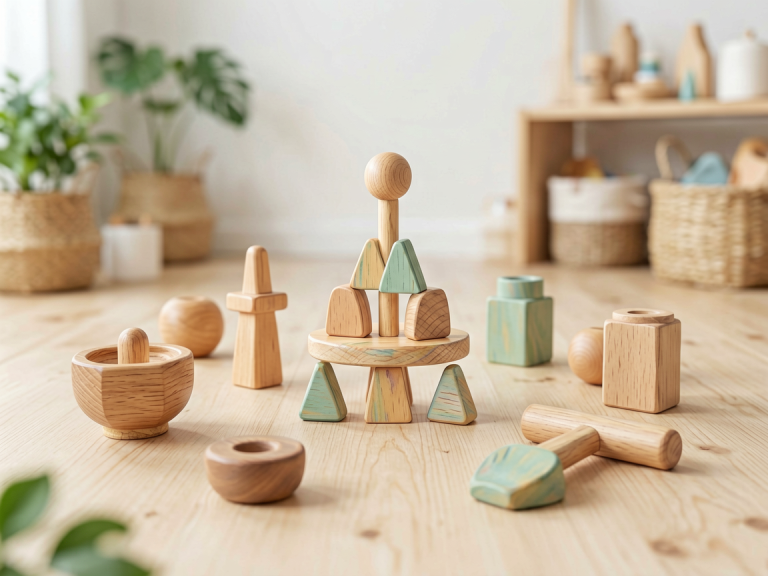
Building toys, on the other hand, refer to construction sets that allow children to create structures, models, or machines from individual components. Classic examples include LEGO bricks, wooden blocks, magnetic tiles, K’Nex, Meccano, and more modern systems like interlocking plastic connectors. While some building toys come with building guides for specific models, their core philosophy emphasizes free-form creativity: the child decides what to build and how to build it. The learning arises from the iterative process of designing, testing, and revising structures, rather than from following a fixed recipe.
Educational Objectives: Structured vs. Exploratory Learning
Science kits are primarily designed to teach specific scientific principles. A chemistry kit might aim to demonstrate acid-base reactions, while a physics kit could illustrate Newton’s laws through pulley systems. The learning is explicit: the child reads the instructions, performs steps, and observes results that confirm the underlying concept. This approach is excellent for delivering clear, factual knowledge and for building familiarity with scientific equipment and procedures. It also introduces children to the scientific method—hypothesis, experiment, observation, conclusion—in a controlled setting.
Building toys, conversely, do not have explicit educational objectives. Their value lies in implicit learning. When a child stacks blocks to make a tower, they grapple with gravity, balance, and structural integrity. When they build a bridge with magnetic tiles, they experiment with tension and compression. The learning is embedded in the activity itself, often without the child even realizing it. Building toys foster mathematical thinking (spatial reasoning, symmetry, geometry), engineering instincts (load distribution, stability), and fine motor skills. They also encourage persistence, as a tower that collapses invites the child to rebuild with modifications.
A key distinction: science kits typically teach *what* happens (e.g., vinegar and baking soda produce carbon dioxide), while building toys teach *how* things work through trial and error. Both are valuable, but they address different facets of intellectual development.
Skill Development: Cognitive, Motor, and Social
Cognitive Skills
Science kits strongly promote deductive reasoning and procedural adherence. A child must read instructions carefully, sequence steps logically, and interpret results. This strengthens concentration, analytical thinking, and the ability to follow multi-step directions. Additionally, many science kits include theoretical explanations, introducing vocabulary like “catalyst,” “oxidation,” or “circuit.” For older children, these kits can form a foundation for formal science education.
Building toys, in contrast, enhance divergent thinking and problem-solving flexibility. There is no single correct answer; a child may build a house, a spaceship, or an abstract sculpture. The cognitive demand is high because the child must generate goals, plan construction sequences, adapt when pieces don’t fit, and troubleshoot failures. This process develops executive functions such as working memory, cognitive flexibility, and inhibitory control—skills that underpin academic success and real-world creativity.
Motor Skills
Both categories contribute to fine motor development, but in different ways. Science kits often involve pouring, measuring, mixing, using tweezers, and assembling small components—actions that refine hand-eye coordination and precision. Building toys similarly demand manual dexterity: snapping bricks together, aligning connectors, balancing blocks. However, building toys often require more sustained repetitive manipulation (e.g., pressing dozens of LEGO studs together), which can strengthen hand muscles. Building toys also involve gross motor skills when children work with large blocks on the floor.
Social and Emotional Skills
Science kits are frequently designed for individual use, though some are collaborative. When done in groups, children must take turns, share materials, and discuss observations. However, the structured nature can limit negotiation; the “correct” way is already prescribed. Building toys, especially large-scale sets, naturally encourage cooperative play. Children must communicate their ideas, coordinate tasks (e.g., one holds the base while another adds blocks), and resolve conflicts over design decisions. This social dynamic fosters teamwork, empathy, and leadership. Additionally, building toys allow for more expressive play—children can incorporate storytelling, role-playing, and imaginative scenarios into their constructions, which nurtures emotional and linguistic development.
Creativity and Open-Endedness
One of the most significant differences lies in the degree of creative freedom. Science kits are inherently closed-ended: the outcome is known, and deviation from instructions may yield failure. For example, if a child mixes the wrong amounts in a chemistry kit, the experiment might not work, leading to frustration or a lost learning opportunity. This structured approach can be beneficial for children who thrive on clear goals and prefer a sense of accomplishment through successful replication. It also teaches discipline and respect for process.
Building toys, on the other hand, are open-ended. A set of 500 LEGO bricks can produce an infinite variety of creations. This freedom empowers children to be architects of their own play, fostering originality and self-expression. However, open-endedness can be intimidating for some children who lack confidence or need prompting. Some building toys address this by including multiple build instructions (e.g., three models per set), offering a middle ground. Yet the true spirit of building toys is to eventually encourage free design.
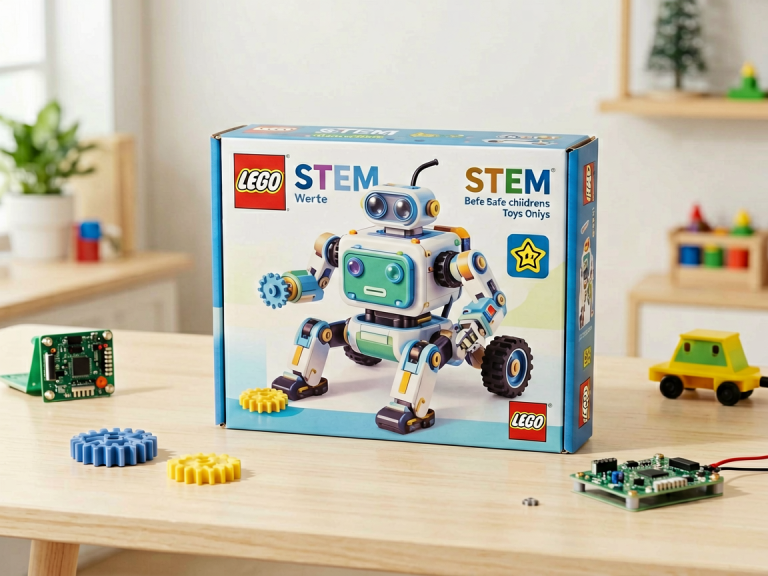
It is worth noting that creativity is not absent in science kits. Some advanced kits allow children to design their own experiments using the provided components. For instance, a robotics kit might let children program different behaviors for a robot, blending open-ended coding with predefined hardware. But generally, the creativity in science kits is confined to the interpretation of results, not the design of the experiment itself.
Age Appropriateness and Complexity
Age suitability is a critical factor when choosing between the two. Science kits often have a recommended age range that aligns with reading ability and safety considerations. For example, chemistry sets for ages 8+ may include real chemicals and require adult supervision. Younger children (ages 3–6) can use basic science kits that focus on sensory exploration, like water play or simple magnets, but these are less common than building toys for that age group. Building toys, from basic wooden blocks for toddlers to complex Meccano sets for teenagers, offer a much broader age spectrum. Even infants can benefit from large, safe blocks that promote grasping and stacking.
As children grow, the complexity of building toys scales naturally: LEGO Technic introduces gears and motors, while advanced construction sets incorporate pneumatics or programmable electronics. Science kits also scale, from “magic” color-changing experiments for early elementary to serious dissection kits for high school students. However, building toys tend to have a longer “shelf life” because they remain engaging as children develop more sophisticated construction skills. A child who mastered basic LEGO at age 5 can still enjoy advanced sets at age 12. Science kits, by contrast, may lose appeal once the specific experiments are completed, unless they are reusable or adaptable.
Parental and Educator Perspectives
From a parental standpoint, both types of toys are valuable, but they serve different roles in a child’s development. Science kits are often chosen to supplement school learning, to spark interest in STEM fields, or to provide a structured activity that guarantees a “wow” moment—like a baking soda volcano. They are excellent for short-term, project-based engagement. Building toys, meanwhile, are seen as long-term investments that promote creative play, spatial intelligence, and perseverance. Many educators advocate for building toys in classrooms because they encourage collaborative problem-solving and are easily differentiated for various ability levels.
One practical consideration is mess and cleanup. Science kits can be messy (liquids, powders, small parts), requiring dedicated space and adult supervision. Building toys are generally cleaner, though they scatter pieces everywhere. Another factor is cost: science kits are often one-time-use (e.g., a crystal growing kit yields a single product), while building toys are reusable indefinitely, offering better value over time.
Conclusion
Neither science kits nor building toys is inherently superior; they complement each other beautifully. Science kits provide structured, goal-oriented learning that demystifies scientific principles and builds procedural confidence. Building toys offer unstructured, inventive play that nurtures creativity, problem-solving, and social skills. The most effective educational strategy is to expose children to both, allowing them to experience the satisfaction of a successful experiment and the joy of building something entirely their own. Parents and educators should consider the child’s personality: a child who loves clear instructions and predictable outcomes may gravitate toward science kits, while a child who thrives on imagination and exploration may prefer building toys. Ultimately, the best toy is one that engages a child deeply—and in that sense, both categories are winners. By understanding their differences, we can provide a rich, balanced play diet that prepares children for a world that demands both scientific literacy and creative innovation.