The Transformative Power of Science and Engineering Toys: Building Minds for Tomorrow
In an age when digital screens dominate children's attention, science and engineering toys offer a refreshing and vital alternative. These are not mere playthings; they are catalysts for cognitive development, critical thinking, and a lifelong love for learning. From a simple chemistry set to an intricate robotics kit, science and engineering toys provide hands-on experiences that textbooks and passive entertainment cannot replicate. This essay explores the profound educational value of these toys, their distinct roles in nurturing different skill sets, and how they collectively prepare young minds to solve the complex challenges of the future.
The Pedagogical Value of Hands-On Learning
Educational theorists have long championed experiential learning. John Dewey, Jean Piaget, and Maria Montessori all recognized that children learn most effectively when they actively engage with their environment. Science and engineering toys operationalize this principle perfectly. When a child assembles a circuit, observes a chemical reaction, or builds a bridge with blocks, they are not just playing—they are constructing mental models of how the world works. This tactile, iterative process reinforces concepts far more deeply than passive reading or watching videos.
Moreover, these toys naturally incorporate failure as a learning tool. A bridge that collapses or a circuit that fails to light a bulb teaches a child to troubleshoot, hypothesize, and try again. This resilience is an invaluable life skill that extends far beyond STEM fields. Research has shown that children who engage with construction and experiment-based toys exhibit higher levels of spatial reasoning, problem-solving ability, and even creativity, as they learn to think in systems and embrace open-ended challenges.
Science Toys: Cultivating Curiosity and Observation
Science toys are designed to provoke questions and inspire exploration. Classic examples include microscopes, telescopes, chemistry sets, and crystal-growing kits. These toys allow children to become junior scientists, systematically observing phenomena and drawing conclusions. Unlike rigid school curricula, science toys often encourage unstructured experimentation—mixing different substances to see what happens, adjusting the focus of a lens to reveal hidden details, or tracking the phases of the moon.
Consider a simple magnifying glass. It is one of the most basic science toys, yet it empowers a child to see the intricate venation of a leaf or the compound eyes of an ant. This direct observation sparks wonder and the desire to know more. Similarly, a chemistry set with safe, guided experiments teaches the principles of acids, bases, and reactions. It transforms abstract chemical equations into vivid, colorful reality. Science toys also foster patience and methodical thinking. A child waiting for seeds to germinate or crystals to form learns the value of time and careful observation. In a world of instant gratification, this is a genuinely countercultural and beneficial habit.
Furthermore, science toys often include journals or log sheets, encouraging children to record their findings. This practice builds early scientific literacy—the ability to describe observations, form hypotheses, and communicate results. For older children, more advanced science toys like spectrometry kits or portable weather stations introduce them to authentic tools used by professionals, bridging the gap between amateur curiosity and serious inquiry.
Engineering Toys: Fostering Design Thinking and Resilience
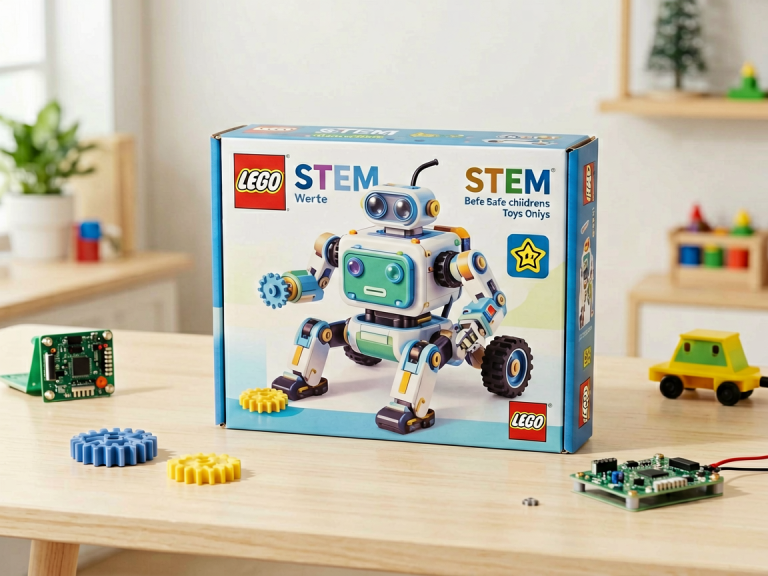
If science toys focus on discovering natural laws, engineering toys emphasize creating solutions within those laws. Engineering toys encompass building blocks (like LEGO, K’NEX, or magnetic tiles), construction sets (like Erector sets), robotics kits (like LEGO Mindstorms or Arduino starter kits), and mechanical models. These toys require children to plan, design, build, test, and iterate—the very essence of the engineering design process.
One of the key lessons from engineering toys is the concept of constraints. A child building a tower from blocks must consider stability, gravity, and material limits. When they use a motorized kit to construct a vehicle, they must balance weight, gear ratios, and friction. These experiences teach practical physics and mechanics in an intuitive, memorable way. More importantly, they cultivate design thinking: the ability to define a problem (e.g., "My robot arm cannot lift the small weight"), generate possible solutions, prototype, and refine.
Engineering toys are particularly effective at teaching resilience because failure is immediate and tangible. A poorly designed bridge collapses; a miswired circuit sends the motor spinning in the wrong direction. But because the toy system is forgiving—blocks can be rebuilt, wires can be reconnected—children learn that mistake is not an endpoint but a stepping stone. This is a profound lesson that many adults struggle to internalize. Moreover, engineering toys often encourage collaboration. Building a complex structure or programming a robot to navigate a maze is more fun and more effective when done with others. This social dimension develops communication, teamwork, and negotiation skills.
The Synergy of Science and Engineering Toys in Modern Education
While science toys and engineering toys are often categorized separately, their true power emerges when used in combination. Science provides the "why"—the principles of nature—while engineering provides the "how"—the application of those principles to meet human needs. A magnificent example is a solar car kit. Children first learn about photovoltaic cells (science), then they design and build a vehicle chassis (engineering), integrate the motor and gears (mechanical engineering), and finally test and optimize the car's performance under different conditions (iterative engineering). This holistic experience mirrors real-world innovation, where science and engineering are inseparable.
Educators and parents increasingly recognize the value of such integrated play. Maker spaces in schools are stocked with both science lab equipment and engineering construction kits. STEM competitions, like FIRST LEGO League, require teams to research a scientific problem and then build a robot to solve a specific challenge. These activities develop not only technical skills but also critical soft skills like persistence, creativity, and ethical awareness (e.g., considering the environmental impact of a design). Furthermore, science and engineering toys are particularly effective at reaching diverse learners. A child who struggles with traditional reading and math may excel when given a hands-on engineering challenge, thereby discovering a new path to academic confidence.
Selecting the Right Toys: A Guide for Parents and Educators
With the market flooded with "educational" toys, careful selection is essential. Not all toys labeled as science or engineering are equally valuable. The best choices are open-ended, age-appropriate, and allow for multiple outcomes. For young children (ages 3–6), simple building blocks, magnifying glasses, and water play sets provide foundational concepts of cause and effect, balance, and volume. For elementary-age children (7–11), more structured kits like snap-circuit electronics, crystal-growing labs, and mechanical construction sets (e.g., building a simple crane) offer guided experimentation. For preteens and teenagers (12+), programmable robotics kits, chemistry sets with higher-level experiments, and 3D printing pens open up professional-grade exploration.
Equally important is the role of adult facilitation. A parent or teacher who asks open-ended questions—"What do you think will happen if you add one more gear?" "How could you make the bridge stronger?"—enhances the learning exponentially. Conversely, overly directing the child’s play or focusing on a single "correct" outcome stifles creativity. The goal is to let the toy be a tool for discovery, not a scripted lesson. Also, consider durability and safety. Good science and engineering toys are robust enough to withstand repeated assembly and disassembly, and they come with clear safety instructions, especially for chemical or sharp components.
Conclusion: Play as the Foundation for Innovation
Science and engineering toys are far more than pastimes; they are the seeds of tomorrow's inventors, engineers, scientists, and problem-solvers. In a world facing climate change, technological upheaval, and complex social challenges, the ability to think critically, creatively, and resiliently is paramount. These toys provide a low-risk environment where children can explore the limits of possibility, learn from failure, and discover the joy of creation. They bridge the gap between theoretical knowledge and practical application, making abstract concepts tangible and exciting.
As we encourage children to engage with science and engineering toys, we are not merely preparing them for potential careers in STEM fields. We are nurturing a mindset—a mindset that asks "Why?" and "What if?" and "How can I make this better?" This is the very mindset that has driven human progress from the first stone tools to the exploration of Mars. Let us therefore champion these toys, not as a substitute for outdoor play or creative arts, but as a complementary and essential component of a well-rounded childhood. In every bridge built, every circuit lit, every crystal grown, there lies the quiet promise of a future innovator. And that is a promise worth investing in.