Unplugged Play: The Enduring Power of Screen-Free Toys for 6-Year-Olds
Introduction: The Digital Dilemma in Early Childhood
In an era where tablets, smartphones, and endless video streams have become default babysitters, the simple joy of a wooden block or a set of crayons can feel almost revolutionary. For a six-year-old, the world is a whirlwind of discovery—they are learning to read, to reason, to negotiate friendships, and to regulate their emotions. Yet, increasingly, these critical developmental milestones are being crowded out by passive screen consumption. The American Academy of Pediatrics continues to recommend no more than one hour of high-quality screen time per day for children aged 2 to 5, and consistent limits for older children, yet many six-year-olds spend two to three times that amount staring at glowing rectangles. The solution is not simply to ban screens—that battle is often lost before it begins—but to replace them with something far more compelling. Screen-free toys for 6-year-olds offer exactly that: a tactile, imaginative, and socially rich alternative that nurtures the whole child. This article explores why unplugged play matters, what types of toys deliver the greatest developmental bang, and how parents can thoughtfully curate a playroom that fuels curiosity rather than just consuming attention.
The Importance of Screen-Free Play for 6-Year-Olds
By age six, children are at a unique crossroads. They have outgrown the simple cause-and-effect toys of toddlerhood but are not yet ready for the abstract logic of later elementary school. Their brains are wiring at an extraordinary rate, building neural pathways that will underpin future learning, creativity, and emotional resilience. Screen-free toys are not merely “entertainment”—they are the engines of this neural growth.
Cognitive Development Through Hands-On Exploration
Unlike digital games that present predetermined outcomes, analog toys invite open-ended problem-solving. A six-year-old who builds a castle from magnetic tiles must plan, measure, test, and revise—skills that translate directly into mathematical thinking and executive function. When a child loses a piece of a puzzle or realizes their marble run doesn’t connect properly, they experience frustration in a safe, manageable context. Overcoming that frustration without a reset button or a new level to click teaches perseverance and delayed gratification, qualities that no app can instill.
Social and Emotional Growth in the Real World
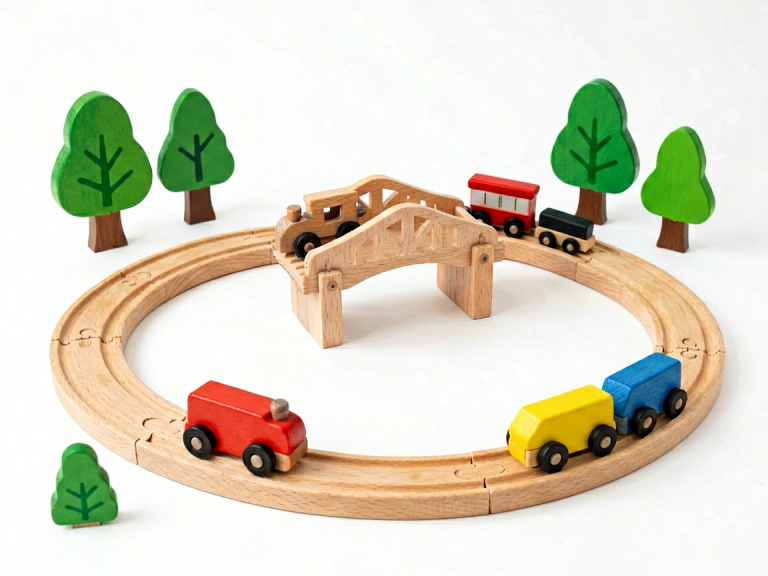
Screen-free toys naturally encourage collaboration. A set of wooden train tracks or a box of LEGO bricks becomes a shared language among friends. Six-year-olds are learning to take turns, to negotiate whose idea gets tried first, and to handle the disappointment of a tower falling over. These are micro-doses of real-life social training that screen-based play, even in multiplayer mode, often short-circuits. Moreover, physical toys allow for sensory feedback—the weight of a wooden block, the texture of modeling clay—which grounds children in their bodies and helps regulate the nervous system. For a child who is easily overstimulated by the flashing lights of a screen, the calm of a quiet construction project can be deeply restorative.
Physical Activity and Fine Motor Mastery
Six-year-olds are in a prime window for developing fine motor skills. Screen-free toys such as lacing beads, tweezers for sorting, or small construction kits require precise finger movements that strengthen the small muscles of the hand—critical for legible handwriting. Gross motor play, like a simple balance board or a skipping rope, builds core strength and coordination. These physical benefits are trivial on a screen, where the only movement required is a thumb swipe.
Top Categories of Screen-Free Toys for 6-Year-Olds
Not all screen-free toys are created equal. For a six-year-old, the sweet spot lies between open-ended creativity and just enough structure to prevent frustration. Here are the categories that consistently engage and educate.
Construction and Building Sets
Beyond classic wooden blocks and LEGO Duplo (which can feel babyish by six), consider magnetic tiles like Magna-Tiles or Picasso Tiles, which allow for complex architectural creations. Advanced LEGO sets designed for ages 6+ (such as the LEGO Classic Creative Bricks or themed sets with step-by-step instructions) teach spatial reasoning and following multi-step directions. They also provide a sense of accomplishment that is entirely self-generated—no “level complete” animation required.
Art and Craft Supplies with a Twist
Six-year-olds love to create, but generic coloring books can feel limiting. Instead, offer blank paper with high-quality markers, watercolor sets, modeling clay (like Model Magic or air-dry clay), and simple sewing kits with plastic needles. Sticker books with reusable vinyl stickers encourage storytelling and fine motor precision. A box of mixed “loose parts”—buttons, pom-poms, pipe cleaners, googly eyes—paired with a glue stick can spark hours of imaginative assembly. The key is to provide materials that allow for open-ended expression rather than a single correct outcome.
Imaginative and Pretend Play Toys
Role-playing is at its peak around age six. Screen-free toys that support this include dress-up clothes (especially costumes for community helpers like doctor, firefighter, or chef), a play kitchen or tool bench, and puppets. Melissa & Doug’s “Let’s Play House” line offers realistic but safe accessories. A simple wooden dollhouse with miniature furniture lets children create their own narratives, practicing language and empathy as they act out social scenarios. Similarly, small plastic animals or dinosaurs with no predetermined storylines encourage original world-building.
Strategy Games and Puzzles
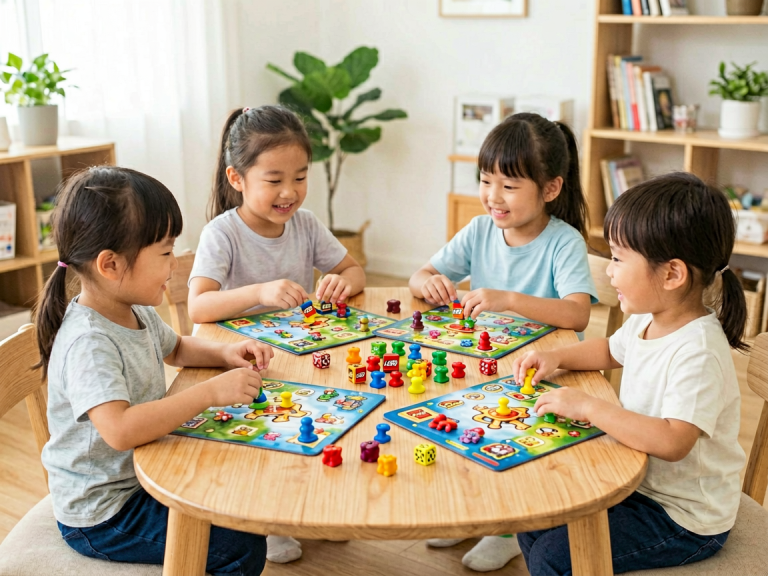
Board games for 6-year-olds should emphasize cooperation over competition, or at least simple turn-taking with clear rules. Games like *Outfoxed!* (a cooperative whodunit), *Hoot Owl Hoot!* (a color-matching game that requires teamwork), or *Sequence for Kids* (a simpler version of the classic) teach logic, patience, and sportsmanship. Jigsaw puzzles with 100–200 pieces are excellent for visual-spatial skills; choose ones with high-contrast images that appeal to a six-year-old’s interests—dinosaurs, space, or fairy tales.
Science and Discovery Kits
Curiosity about the natural world is intense at this age. Simple science kits—magnets, a butterfly garden, a rock tumbler, or a microscope with prepared slides—transform abstract concepts into tangible experiences. A bug catcher with a magnifying lid allows outdoor exploration without harming insects. Even a basic set of magnet wands and metal filings can provoke endless questions about invisible forces. These toys don’t need to be expensive; a cardboard box and a flashlight can become a shadow-puppet theater that teaches light and optics.
Movement and Balance Toys
To channel six-year-old energy, consider a pogo stick, a jump rope, a Hula-Hoop, or a wooden balance board. These toys build gross motor skills and can be used alone or in games with siblings. A beginner’s scooter or a strider balance bike (if not already mastered) improves coordination and confidence. Even simple items like a beach ball for catch or a set of beanbags for toss games encourage active, screen-free social play.
How to Choose the Right Screen-Free Toys
With thousands of options on the market, parents can feel paralyzed by choice. A few guiding principles can cut through the noise.
Follow the Child’s Interests, Not the Hype
A six-year-old who loves dinosaurs will engage far more deeply with a set of realistic dinosaur figures, a dinosaur dig kit, and a non-fiction book about fossils than with a generic “educational” toy that promises to teach math. Leverage their current obsessions to introduce related screen-free play. If they love space, get a planetarium projector (a non-screen analog that projects stars on the ceiling) or a rocket-building set.
Prioritize Open-Endedness Over Single-Use Features
Toys that do one thing—like a plastic cash register that only beeps—have limited replay value. Instead, choose toys that can be used in multiple ways. A set of wooden blocks can become a house, a bridge, a spaceship, or a sled for a small doll. A plain cardboard box with markers and tape is arguably the most screen-free toy of all. Ask yourself: “Can my child use this in five different ways?” If not, think twice.
Consider Durability and Longevity
Six-year-olds are not gentle. Look for toys made from sturdy materials—solid wood, thick plastic, reinforced cardboard—that can survive drops and enthusiastic play. Avoid cheap, flimsy items that break quickly, as frustration with broken toys can drive a child back to the screen out of boredom. Also, consider whether the toy will still be interesting in a year. A complex LEGO set might be frustrating for a brand-new six-year-old but perfect for an almost-seven-year-old.
Limit the Number of Toys
Paradoxically, having too many screen-free toys can reduce engagement. When a playroom is overflowing, children often flit from one thing to another without deep involvement, mimicking the shallow attention demanded by screens. Rotating toys—keeping only a dozen or so accessible at a time and swapping them monthly—encourages focus and rediscovery. A simple strategy: store half the toys in a closet and cycle them every few weeks.
The Long-Term Benefits of an Unplugged Childhood
The decision to invest in screen-free toys is not about being anti-technology. It is about preserving a space for childhood itself—a time when the most powerful computer is the one between the child’s ears, and the best “app” is the imagination. Research consistently shows that children who engage in frequent unstructured play develop stronger executive function skills (working memory, flexible thinking, self-control) than those who spend equivalent time on screens. They are also better at reading social cues, managing boredom creatively, and persisting through challenges.
Building Resilience and Self-Regulation
When a six-year-old builds a LEGO tower that collapses, they have a choice: cry and give up, or try again. A screen-free environment forces that choice, and over time, children learn to regulate their frustration. They also learn to entertain themselves without external stimulation—a skill that is becoming increasingly rare. A child who can sit on the floor and build a marble run for thirty minutes without needing a video or a parent’s attention is developing the foundation for later academic focus.
Fostering Family Connection
Screen-free toys also invite parents and siblings into the play. A board game brings a family around a table; a collaborative art project creates conversation; a building set can be a shared weekend activity. These moments of connection are the antidote to the isolation that screens can create. When a child looks back on their childhood, they are far more likely to remember building a blanket fort with Dad than watching a cartoon alone.
Protecting Creative Thinking
Finally, screen-free toys protect the spark of original thinking. Screens often provide too much information too quickly, leaving little room for the child to fill in the gaps. A blank piece of paper and a box of markers, by contrast, demands that the child imagine a world from nothing. That act—creating something that did not exist before—is the essence of human intelligence. It cannot be downloaded, streamed, or simulated. It must be practiced.
Conclusion: Reclaiming Play, One Toy at a Time
In a world that constantly whispers “faster, brighter, easier,” choosing screen-free toys for a six-year-old is an act of quiet rebellion. It is a choice to say that childhood is not a race to the next screen, but a slow, messy, glorious process of discovery. A wooden train set, a cardboard box, a set of paints—these are not relics of a bygone era. They are the tools that build brains, shape character, and create memories. As parents, we cannot shield our children from screens entirely, but we can offer them something more powerful: the freedom to play on their own terms. And in that freedom, they will find not just entertainment, but themselves.