Wooden Toys vs. Plastic Toys for Newborns: A Holistic Guide for Conscious Parents
Introduction
The arrival of a newborn transforms a home into a sanctuary of wonder, where every object is scrutinized for safety and developmental value. Among the first purchases parents face is the selection of toys. While the market overflows with colorful plastic rattles, teethers, and activity gyms, a quieter yet increasingly popular alternative—wooden toys—has reemerged as a nostalgic favorite. Both materials have passionate advocates, but which truly serves the unique needs of a newborn? This article takes a deep, evidence-based dive into the physical, sensory, environmental, and psychological implications of choosing wooden versus plastic toys for infants from birth to twelve months. By examining safety standards, developmental milestones, sustainability, and practical family realities, we aim to equip parents with the nuanced understanding needed to make informed choices.
Safety Considerations: The Non‑Negotiable Foundation
For newborns, safety is the paramount criterion. Any toy that enters a baby’s mouth—and everything does—must be free of toxins and built to withstand aggressive chewing and dropping.
Wooden Toys: High‑quality wooden toys are typically crafted from untreated hardwoods like maple, beech, or birch, and finished with food‑grade oils, beeswax, or water‑based, non‑toxic paints. They contain no BPA, phthalates, or lead, which are occasionally found in cheap plastics. Wood is naturally antimicrobial; studies suggest that certain wood surfaces reduce bacterial survival compared to plastic surfaces. However, parents must inspect for splinters, sharp edges, and loose parts. Small wooden pieces (e.g., beads on a string) pose a choking hazard if not securely attached. Reputable brands follow stringent safety regulations (ASTM F963 in the U.S., EN71 in Europe), but counterfeit wooden toys may still use unsafe varnishes.
Plastic Toys: Mainstream plastic toys for newborns are also regulated, but the quality varies dramatically. Hard, BPA‑free plastics (polypropylene, polyethylene) are generally safe. Yet soft plastics, especially those made from PVC, can leach phthalates when chewed—a risk for infants who mouth objects constantly. Even “safe” plastics can develop sharp edges if cracked. Moreover, plastic toys often contain tiny crevices where mold and bacteria thrive after repeated sanitizing. The lightweight nature of plastic means they can be hurled with surprising force, potentially causing minor injuries when thrown from a crib or high chair.
Developmental Verdict: Both materials can be made safe, but wood offers greater peace of mind regarding chemical exposure. The key is to buy from reputable sources, irrespective of material.
Sensory and Motor Development: Stimulating the Newborn Brain
Newborns learn through their senses: touch, sight, sound, and taste. The tactile feedback of toys shapes neural connections.
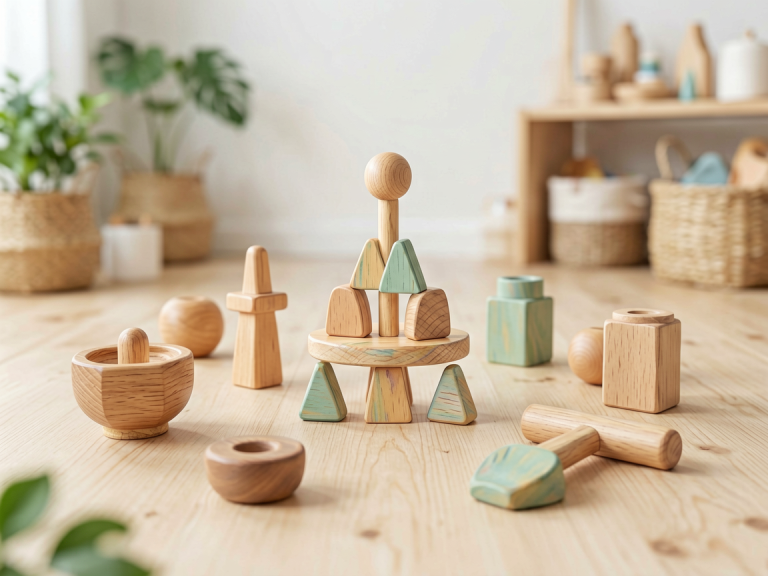
Wooden Toys: Wood is dense, warm to the touch, and has a subtle, pleasing grain. A simple wooden rattle provides a gentle, natural sound—not jarring like a high‑pitched plastic rattle. The weight of wood gives resistance, which helps develop grip strength and proprioception (awareness of body in space). For teething, a smooth wooden ring offers a firm, satisfying surface that does not deform, encouraging proper jaw alignment. Visually, the muted, earthy tones of natural wood or low‑saturation paints are easier on a newborn’s developing visual system, reducing overstimulation. Many Waldorf and Montessori educators advocate for wood precisely because it invites slower, more focused exploration.
Plastic Toys: Plastic toys often feature bright, contrasting colors that attract infant attention—a trait useful for visual tracking. Their lightweight nature makes them easy for tiny hands to grasp, but they provide little resistance, so the motor challenge is lower. Many plastic toys incorporate flashing lights, music, and moving parts. While engaging for a few minutes, studies suggest that over‑stimulated infants may become fussy or tune out after sensory overload. The hard, uniform surface of plastic offers less varied texture than wood, and the sound of plastic rattles can be harsh, which may startle a newborn rather than soothe.
Developmental Verdict: For pure sensory richness and gradual motor challenge, wooden toys have an edge. However, a few well‑chosen plastic toys with simple, non‑electronic features can complement a wooden collection.
Environmental and Ethical Impact: The Planet Your Baby Will Inherit
The decision between wood and plastic extends beyond the nursery to the broader world your child will grow up in.
Wooden Toys: Sustainably harvested wood is renewable, biodegradable, and has a lower carbon footprint than plastic manufacturing. Many wooden toy brands plant trees for every purchase and use recycled packaging. A single wooden teether can last generations, being passed from sibling to sibling, or even resold. The end‑of‑life disposal is simple: untreated wood can be composted. The ethical dimension is also strong; many wooden toys are handcrafted by artisans, supporting small-scale, fair‑labor economies.
Plastic Toys: Plastic production is petroleum‑based, releasing CO₂ and toxic byproducts. Most plastic toys are not recyclable through curbside programs because they are mixed materials or too small. They end up in landfills or oceans, fragmenting into microplastics that enter the food chain. Even “biodegradable” plastics require industrial composting facilities, which are rare. The durability of plastic is a double‑edged sword: it does not break down for centuries, but it also cracks, warps, and discolors after repeated washing, leading to frequent replacement. The sheer volume of plastic toys discarded annually is staggering—an estimated 90% are thrown away within a year.
Environmental Verdict: Wooden toys are unequivocally the greener choice, provided the wood is responsibly sourced. Parents concerned about climate change often find this factor decisive.
Durability and Longevity: Toys That Grow with the Child
A newborn’s toy needs may last only a few months, but does the toy itself last?
Wooden Toys: Properly cared for, wooden toys are virtually indestructible across normal use. They do not rust, fade significantly, or become brittle. A wooden block set bought for a newborn can be used for building towers at age two, for counting games at four, and for imaginative play at six. Wooden puzzles, stacking rings, and shape sorters often become family heirlooms. However, wood does not tolerate water immersion; if left in a bath or soaked in a sanitizing solution, it may warp or crack. Surface scratches can be sanded away, and wooden toys can be refinished.
Plastic Toys: Plastic toys are less forgiving. Batteries corrode, electronic components fail, and moving parts wear out. A plastic music player that works at birth may stop functioning by the first birthday. Plastic also degrades under UV light (sunlight), becoming brittle. Many plastic toys are designed with specific age windows in mind; once the novelty wears off or the child outgrows the feature, the toy is often discarded. On the positive side, plastic can be washed in the dishwasher and submerged in bleach solutions, making it easier to sanitize for secondhand use.
Longevity Verdict: Wooden toys win on lifespan and multi‑stage utility. Plastic toys may be easier to clean but often have a short effective life.
Cost and Accessibility: Budget Considerations
Financial reality influences every family’s choices. Are wooden toys worth the higher upfront cost?
Wooden Toys: Quality wooden toys are expensive—a simple teething ring may cost $12–$20, whereas a plastic alternative costs $3–$5. This price reflects material, craftsmanship, and sustainable practices. However, when amortized over years of use across multiple children, the per‑use cost of wood can be lower than that of plastic toys, which often break and are replaced. Families on a tight budget can find second‑hand wooden toys at thrift stores or online marketplaces, as wood holds its value and appearance well.
Plastic Toys: Plastic toys are undeniably cheaper and widely available. A new parent can buy a complete set of rattles, teethers, and activity toys for under $30. However, hidden costs accumulate: replacing broken parts, buying new batteries, and eventually purchasing new toys once the child outgrows the electronic features. Moreover, cheap plastic toys may not be safety‑tested to the same standards as premium brands.
Cost Verdict: There is no absolute winner. For a single child with a limited budget, plastic offers immediate affordability. For a family planning multiple children or valuing long‑term value, wood may be more economical.
Parental Preferences and Practicality
Beyond facts and figures, the emotional and practical dimensions matter deeply to parents.
Wooden Toys: Many parents appreciate the aesthetic—wooden toys harmonize with minimalist, nature‑inspired nurseries. They are quiet, creating a calm play environment. Wooden toys also encourage parent‑child interaction because they lack automated features; a parent must actively shake a rattle or stack rings with the baby, fostering bonding. On the downside, wood is heavier; a baby can hurt themselves if a block falls on their face. Cleaning requires gentle wiping with a damp cloth and occasional oiling, which is more labor‑intensive than tossing plastic into the dishwasher.
Plastic Toys: Plastic toys are lightweight, often designed to attach easily to carriers, strollers, and car seats. Their bright colors can help distract a fussy baby during diaper changes or long car rides. Many parents rely on the soothing music and lights of plastic toys to buy a few minutes of quiet. However, the noise can be grating for adults. The visual clutter of multiple plastic toys may also contribute to a sense of chaos in the home.
Practical Verdict: Choose wood for a calm, tactile, interactive environment; choose plastic for convenience, portability, and budget‑friendly accessibility.
Conclusion: A Balanced Approach for the Newborn
The debate between wooden and plastic toys for newborns does not demand an either‑or solution. Rather, the wisest path is a curated mix that prioritizes the baby’s safety, sensory needs, and the family’s values and resources. For daily, close‑contact play—teething, grasping, mouthing—opt for high‑quality wooden toys finished with non‑toxic materials. They offer superior sensory feedback, environmental sustainability, and remarkable durability. For travel, bathtime (if waterproof plastic is needed), and moments when a gentle distraction is required, a few carefully selected plastic toys can be practical allies. Avoid electronic, light‑and‑sound toys for the first six months, as they tend to overstimulate newborns and reduce opportunities for quiet exploration. Regardless of material, the best toy for a newborn is one that involves the loving presence of a parent—a rattle held gently, a wooden ring offered with a smile, or a soft plastic mirror that reflects a face full of wonder. In the end, the material matters far less than the intention behind the play.