Wooden vs Plastic Toys for One-Year-Olds: A Balanced Guide for Modern Parents
Introduction
The first year of a baby’s life is marked by explosive growth in sensory, motor, and cognitive abilities. By the time a child reaches twelve months, they are typically pulling up to stand, taking tentative steps, and exploring the world with insatiable curiosity. Selecting the right toys during this critical window is not merely a matter of entertainment; it directly influences brain development, hand-eye coordination, and even emotional regulation. Among the countless options lining store shelves, two categories dominate the debate: wooden toys and plastic toys. Both have passionate advocates and vocal critics. For the parent of a one-year-old, the choice can feel overwhelming. Should you fill the nursery with the warm, natural feel of wood, or opt for the bright colors and interactive features of plastic? This article provides an evidence-based, nuanced comparison of wooden and plastic toys for one-year-olds, covering safety, developmental impact, durability, environmental concerns, cost, and sensory appeal. By the end, you will have the clarity to make an informed decision that aligns with your child’s needs and your family’s values.
Safety Considerations: Materials, Edges, and Choking Hazards
Safety is the paramount concern for any toy intended for a one-year-old. At this age, babies explore primarily through mouthing, chewing, and throwing. Wooden toys, typically made from untreated or naturally finished hardwoods like maple or beech, are generally free from the chemical concerns associated with some plastics. High-quality wooden toys are painted with non-toxic, water-based paints and are sanded smooth to prevent splinters. However, cheap or poorly manufactured wooden toys may have rough edges, loose parts, or toxic varnishes. Parents must always check for certifications such as ASTM or EN71. On the other hand, plastic toys dominate the market because they are lightweight, shatter-resistant, and easy to sanitize. Yet not all plastics are equal. Bisphenol A (BPA), phthalates, and other endocrine disruptors can be present in low-grade plastics, especially soft, flexible ones. For one-year-olds, hard, durable plastics like ABS are preferable. A critical safety issue is choking: small plastic parts attached to toys (e.g., eyes on a plastic bear, wheels on a plastic car) can break off. Wooden toys, if well-constructed, tend to have fewer detachable small parts. Nevertheless, both categories require vigilant inspection. Ultimately, the safest toy is one that meets rigorous safety standards, regardless of material. For peace of mind, choose brands that explicitly label their products as “BPA-free,” “phthalate-free,” and “non-toxic.”
Developmental Benefits: Fine Motor Skills, Sensory Stimulation, and Imagination
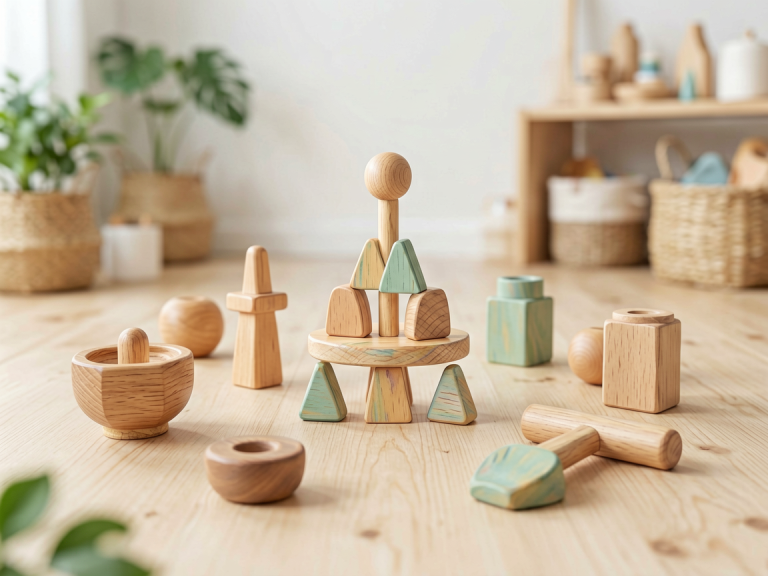
One-year-olds are at a stage of rapid neural development, and the type of toy they engage with can shape their learning trajectory. Wooden toys are often celebrated for their simplicity. A set of wooden blocks, for example, encourages open-ended play. A toddler can stack them, knock them down, line them up, or simply feel the weight and texture. This unstructured activity builds fine motor control, spatial reasoning, and problem-solving. The natural grain and slight variations in wood provide subtle sensory feedback that synthetic materials cannot replicate. Wooden puzzles with large knobs help refine the pincer grasp. In contrast, plastic toys frequently incorporate lights, sounds, and moving parts. A plastic shape-sorter with a button that plays music when the correct piece is inserted can be highly engaging. Such toys offer immediate cause-and-effect learning, which is valuable for a one-year-old’s cognitive development. However, the flashy features can also overstimulate a child, leading to shorter attention spans and less creative exploration. Developmental psychologists argue that for babies under two, the best toys are those that do 90% of the work for the child and only 10% for themselves. Wooden toys embody this principle: they are passive objects that require active manipulation. Plastic toys often do the work for the child—the toy sings, flashes, or moves automatically after a mere touch. While this can be motivating, it may not foster the same depth of problem-solving. For a balanced developmental diet, a mix of both types is ideal: wooden toys for foundational sensory and motor skills, and carefully selected plastic toys for targeted learning (e.g., a simple cause-and-effect toy or a plastic vehicle that encourages imaginative play).
Durability and Longevity: Which Survives the Toddler Gauntlet?
The typical one-year-old is a force of nature. Toys are dropped, thrown, chewed, stepped on, and occasionally used as percussion instruments. How do wood and plastic hold up under such abuse? Well-made wooden toys are extraordinarily durable. A solid beechwood stacking ring can survive generations of children; many vintage wooden toys are still in use decades later. Wood does not crack or break easily, though it can dent or splinter if the quality is subpar. Plastic toys, especially those made from cheap polymers, are prone to cracking, especially when dropped on hard floors. The seams of plastic toys can split, and batteries corrode over time. However, high-grade plastics like polypropylene or ABS are remarkably resilient and can withstand heavy use. One advantage of plastic is that it does not absorb moisture or odors as wood can. A plastic toy left in a wet diaper bag will not warp or grow mold. Another consideration is longevity relative to developmental stage. Many plastic toys are designed for a very narrow age range—a musical mobile that a one-year-old loves may be ignored by the same child at eighteen months. Wooden toys, being open-ended, often remain engaging for years: a set of blocks that a one-year-old stacks is still interesting to a three-year-old who builds towers, and to a six-year-old who constructs a castle. From a cost-per-use perspective, high-quality wooden toys often outlast plastic ones, making them a better long-term investment.
Environmental Impact: Sustainability and End-of-Life
For eco-conscious parents, the environmental footprint of toys is a significant factor. Wood is a renewable resource, especially when sourced from sustainably managed forests (look for FSC certification). Wooden toys are biodegradable and, if made without synthetic finishes, can be composted at the end of their life. Manufacturing wooden toys generally consumes less energy and produces fewer chemical emissions than plastic production. In contrast, plastic toys are derived from fossil fuels, a non-renewable resource. The production of plastic involves high energy consumption and releases greenhouse gases. Worse, most plastic toys are not recycled because they are composed of mixed materials, contain metal parts, or are too small for municipal recycling systems. They end up in landfills where they take hundreds of years to decompose. Microplastics from degrading toys can also enter the water supply. However, there is a nuance: lightweight plastic toys require less fuel for shipping, reducing their carbon footprint in transportation. A wooden toy, being heavier, has a higher transport cost. Additionally, if a wooden toy is painted with toxic paints or sealed with synthetic lacquers, its environmental advantage diminishes. The most sustainable choice is a wooden toy with minimal, non-toxic finishes, purchased from a local or small-scale artisan to cut down on shipping. If you choose plastic, opt for second-hand toys (which are abundant and keep plastic out of the waste stream) and avoid toys with batteries, as electronic waste is particularly problematic.
Cost and Accessibility: Budgeting for Baby’s Playroom
Price is a practical consideration that cannot be ignored. Plastic toys are generally cheaper to produce, so they dominate the low-cost market. A basic plastic rattle or teether can cost as little as a few dollars. Multi-feature plastic activity centers may retail for $30–60. Wooden toys, especially those from reputable brands, are often significantly more expensive. A single wooden puzzle can cost $15–25; a set of wooden blocks may run $30–50. However, the initial price tag is misleading. As mentioned earlier, wooden toys tend to last longer and can be passed down to siblings or sold second-hand. A cheap plastic toy that breaks within weeks must be replaced, driving up the true cost. Moreover, many plastic toys are designed to be trendy and quickly become obsolete, whereas wooden toys have a timeless appeal. On the other hand, for families with limited budgets, plastic toys offer immediate affordability. Thrift stores and online marketplaces are filled with gently used plastic toys that are perfectly safe after a thorough cleaning. Accessibility is another issue: wooden toys may be less available in rural areas or in countries without strong artisanal toy industries. Plastic toys are ubiquitous. Ultimately, the cost-benefit analysis depends on your family’s financial situation, willingness to buy second-hand, and preference for longevity versus upfront savings.
Sensory and Aesthetic Appeal: Texture, Weight, and Visual Stimulation
A one-year-old learns through the senses. The feel of a toy in their hands, its weight, its sound when dropped—all transmit information to the developing brain. Wooden toys have a distinct sensory profile: they are warm to the touch, have a natural wood scent, and produce a satisfying, gentle clunk when they fall. The grain of the wood provides a subtle tactile variation that plastic cannot imitate. Many parents and early childhood educators argue that this natural aesthetic is calming and promotes deeper concentration. Plastic toys, by contrast, are often smooth, cold, and uniform in texture. But plastic allows for bright, high-contrast colors that are highly appealing to babies. A one-year-old’s color vision is still maturing, and vivid reds, blues, and yellows are easier for them to distinguish. Plastic toys can also be made into complex shapes—animals, vehicles, characters—that are harder to carve from wood. Some plastic toys incorporate different textures, such as rubbery grips or ridged surfaces, which can be beneficial. In terms of auditory appeal, wooden toys produce natural sounds (e.g., a wooden rattle’s soft shake), while plastic toys often emit electronic beeps and songs. For a one-year-old, both can be engaging, but the electronic sounds may be overstimulating or cause frustration if the toy fails to function. Aesthetic preference is subjective, but many parents find that wooden toys blend more harmoniously with home decor and encourage a calmer play environment. For maximum sensory enrichment, a rotation of both materials—a wooden stacking toy one week, a plastic shape-sorter the next—can keep playtime fresh and stimulating.
Parental Preferences and Practicality: Cleaning, Storage, and Family Values
Real-world parenting involves daily chores like cleaning toys. Plastic toys are a dream to wipe down: a quick spray of mild soap and water or a disinfectant wipe makes them germ-free. They can be submerged in a bleach solution if needed, and they dry instantly. Wooden toys require more care. They should never be soaked; instead, they should be wiped with a damp cloth and mild soap, then dried immediately. Certain finishes can be damaged by harsh cleaners. For families dealing with frequent illnesses or multiple children in daycare, the ease of sanitizing plastic may tip the scales. Storage is another factor: plastic toys are often lightweight and can be tossed into bins, while larger wooden toys (play kitchens, train tables) are heavy and require sturdy shelving. However, plastic toys with many small parts can create clutter, whereas wooden toys are often minimalist in design. Family values also play a role. Some parents prioritize natural materials and avoid plastic for health or environmental reasons. Others value the educational features (e.g., lights that teach letters or sounds) that plastic toys offer. There is no right or wrong; the best choice is the one that aligns with your parenting philosophy and daily reality. For example, a Montessori-inspired home will likely favor wooden toys, while a tech-savvy family might embrace interactive plastic toys. The key is intentionality: choose each toy with a specific purpose, rather than accumulating a random assortment.
Conclusion: A Thoughtful Mix, Not a Binary Choice
The debate between wooden and plastic toys for one-year-olds does not have a single winner. Both materials bring distinct advantages and limitations. Wooden toys excel in durability, environmental sustainability, open-ended play, and sensory richness. Plastic toys offer affordability, bright colors, interactive features, and easy cleaning. For the developing one-year-old, what matters most is the quality of interaction, not the material itself. A simple wooden block that a parent sits with and shows how to stack is infinitely more valuable than the most expensive plastic gadget left for the child to explore alone. As you make your selections, consider the following practical tips: choose wooden toys for core developmental pieces (stackers, puzzles, blocks, shape-sorters) and look for non-toxic finishes. Supplement with a few well-designed plastic toys that have clear learning objectives (e.g., a cause-and-effect toy, a chunky plastic vehicle, or a teether). Avoid toys with excessive lights and sounds; they can overwhelm a one-year-old’s developing nervous system. Always prioritize safety by inspecting for loose parts, and buy from reputable brands. Finally, remember that a one-year-old’s favorite “toy” is often a cardboard box, a wooden spoon, or your smiling face. The best gift you can give is your attention and a diverse, thoughtfully curated play environment that respects the child’s natural pace of discovery. By balancing wooden and plastic toys, you can provide the richness of both worlds while nurturing a happy, curious, and healthy toddler.