Beyond the Material: Choosing Between Wooden and Plastic Toys for Thirteen-Year-Olds
Introduction: The Forgotten Playground of Adolescence
At thirteen, a child stands at the precipice of adulthood. Their world expands: they navigate social hierarchies, grapple with abstract concepts, and seek identity beyond the family circle. In this transitional phase, toys are often dismissed as childish remnants. Yet developmental psychology tells us that play remains crucial—it shifts from fantasy to strategy, from solitary manipulation to collaborative problem-solving. The question of whether wooden toys or plastic toys are more suitable for a thirteen-year-old is not merely nostalgic; it is a practical inquiry into how materiality shapes cognition, sustainability awareness, and emotional maturation. This article examines both categories through the lens of adolescent developmental needs, weighing tactile aesthetics, durability, environmental impact, and educational value.
1. The Tactile and Sensory Dimension: Wood’s Warmth vs. Plastic’s Precision
1.1 Wood: An Invitation to Slowness and Craft
Wooden toys possess an inherent sensory richness that plastic often lacks. For a thirteen-year-old, the grain, weight, and subtle irregularities of wood can evoke a sense of timelessness. Consider a hand-carved set of chess pieces or a wooden model of a sailing ship. The act of sanding, oiling, or assembling such toys requires patience and fine motor control—qualities that are undervalued in a world of instant gratification. Wood does not click with the same sterile snap as injection-molded plastic; it groans gently, warms to the touch, and develops a patina over years of use. This slow relationship between hand and object can foster mindfulness, a skill desperately needed by adolescents navigating social media’s dopamine loops. Moreover, the visual warmth of wood invites contemplation, making it ideal for board games like *Catan* or *Go*, where strategic thinking rather than frantic reaction prevails.
1.2 Plastic: Precision, Color, and Complexity
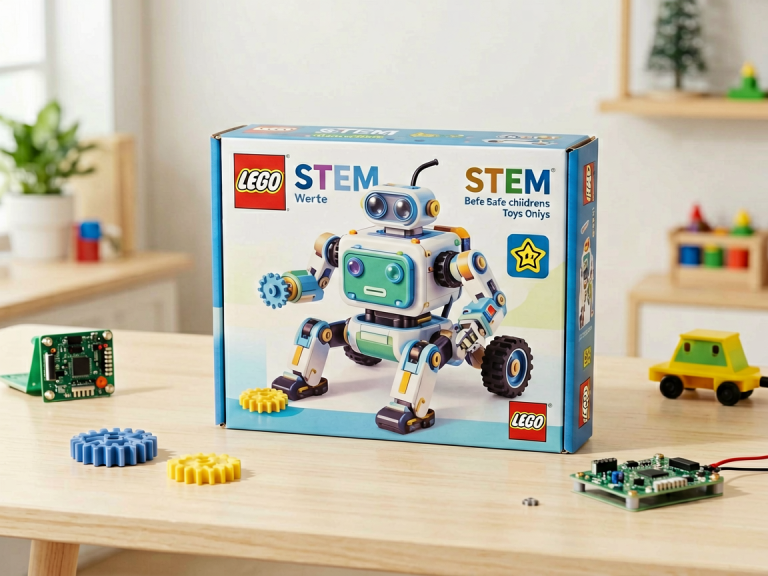
Plastic, by contrast, offers a level of detail and repeatability that wood cannot match. For a thirteen-year-old interested in engineering or modular building, plastic construction sets—such as advanced LEGO Technic, Meccano, or K’NEX—allow for gears, axles, and moving parts manufactured to tolerances of fractions of a millimeter. A plastic planetary gearbox works exactly as designed; a wooden one would require meticulous handcraft. Plastic’s vibrant, non-porous surface also enables intricate paint schemes and decals, crucial for model kits of aircraft, cars, or anime figurines. For teenagers fascinated by STEM, plastic provides the precision needed to simulate real-world mechanisms. Additionally, many plastic toys incorporate lights, sensors, and microprocessors—think of a programmable robot kit. While wood can accommodate simple circuits, plastic is far more practical for integrated electronics.
2. Durability and Longevity: Which Survives a Teenager?
2.1 Wood: Heirloom Potential, but Vulnerable to Abuse
Well-crafted wooden toys can last for generations. A solid-wood Jenga set, a stone-polished marble run, or a wooden puzzle box from a craftsman will likely outlast its owner. However, thirteen-year-olds are notorious for carelessness. Wood can dent, splinter, or warp if left in damp basements or dropped from a height. A plastic toy, when cracked, can often be glued; a wooden toy with a split grain may be irretrievable. Moreover, teenagers may outgrow the static nature of many wooden toys. A wooden tic-tac-toe board holds little appeal after three plays, whereas a plastic Snap Circuits set can be reconfigured into dozens of projects. Wood’s durability is best realized when the item becomes an heirloom—passed down or displayed—but as an active plaything, it demands respect that a typical thirteen-year-old may not consistently offer.
2.2 Plastic: Designed for Abuse, but Susceptible to Wear
Plastic toys are engineered to survive rough handling. A polycarbonate drone frame, a nylon-stringed construction crane, or a high-impact-polystyrene dollhouse can withstand drops, throws, and accidental stomps better than wood. However, plastic is not immortal. UV radiation causes brittleness; repeated stress leads to cracks at stress points; and plastic’s chemical bonds degrade over decades. For a teenager who expects a toy to endure intense, repetitive use (e.g., a yo-yo that spins at high speed, a remote-control car that jumps ramps), plastic often outperforms wood. But the environmental cost is high—most plastic toys end up in landfills, while wooden toys can be composted or repurposed. The choice becomes a trade-off between short-term robustness and long-term sustainability.
3. Educational and Developmental Value: Scaffolding Adolescent Cognition
3.1 Wood: Promoting Abstract Reasoning and Patience
At thirteen, cognitive development enters Piaget’s formal operational stage, where abstract logic and hypothetical reasoning emerge. Wooden toys that involve spatial manipulation, such as tangrams, Chinese puzzles, or 3D puzzles like the “Burr” knot, challenge adolescents to visualize unseen structures. The lack of external gimmicks (lights, sounds, built-in instructions) forces the teenager to rely solely on internal problem-solving. Furthermore, wooden board games often involve negotiation, turn-taking, and strategic planning—skills that underpin emotional intelligence. A game of *Backgammon* on a wooden board, for instance, teaches probability and risk assessment without digital distraction. Wood’s neutrality also allows the young mind to project meaning onto the object; a simple wooden block can become a fortress, a ship, or a statistical counter, depending on the context.
3.2 Plastic: Scaffolding Technical Literacy and Collaboration
Plastic toys, particularly those that are modular and programmable, align closely with the technological fluency demanded by the twenty-first century. A LEGO Spike Prime kit or a VEX Robotics set introduces principles of engineering design—iteration, torque, gear ratios—that are immediately applicable to real-world contexts. For teenagers who may feel alienated by abstract mathematics, building a plastic robot that moves with code makes concepts tangible. Moreover, many plastic toys are designed for multiplayer or online interactions. Trading card games (like *Magic: The Gathering*), collectible figurines (e.g., *Warhammer 40,000*), and tabletop role-playing miniatures often use plastic components. These foster social bonds through shared lore, strategy, and collection. While wood can also support social play, plastic’s compatibility with mass-produced digital ecosystems (e.g., QR codes, app integrations) broadens the teenager’s network beyond the immediate peer group.
4. Environmental and Ethical Considerations: The Weight of Choice
4.1 Wood: Renewable, Biodegradable—But Harvest Uncertainties
From a sustainability perspective, wooden toys have a clear advantage when sourced from responsibly managed forests (FSC-certified). They are biodegradable, require no petroleum, and often use fewer chemicals than plastic. However, the production of wooden toys consumes more energy in cutting, drying, and finishing. For a thirteen-year-old who is developing an environmental consciousness, choosing wood can be a statement against single-use plastics. Yet the elephant in the room is that many wooden toys are painted with varnishes containing volatile organic compounds (VOCs). Moreover, the global trade in tropical hardwoods for luxury toys can contribute to deforestation. A parent and adolescent must investigate the origin. Still, on balance, a wooden toy that lasts twenty years has a lower carbon footprint than a plastic toy replaced every two years.
4.2 Plastic: The Convenience Trap and Recycling Reality
Plastic toys represent a paradox. They are lightweight, cheap to manufacture, and versatile, but their end-of-life fate is grim. Most municipal recycling facilities cannot handle the mixed polymers and small parts of toys. A broken plastic action figure or a cracked construction block usually ends up in a landfill, where it may persist for centuries. Microplastic shedding is another concern; toys handled frequently release fibers into dust. For an environmentally aware thirteen-year-old, this knowledge can create cognitive dissonance. However, there are encouraging alternatives: toys made from recycled plastics (e.g., Hasbro’s “Sustainable” line) or biological plastics (PLA from cornstarch). But PLA is not truly biodegradable in household compost. The best option for plastic-conscious families is to buy fewer, higher-quality toys and to pass them on through community swaps or donations. For the thirteen-year-old, engaging in a toy repair program—where they learn to solder a broken wire on a plastic remote-control car—transforms the waste problem into a lesson in resourcefulness.
5. The Role of Nostalgia and Identity Formation
5.1 Wood as a Symbol of Heritage
For a thirteen-year-old, identity often crystallizes around what they choose to keep from childhood. A wooden puzzle box inherited from a grandparent carries emotional weight that no plastic equivalent can replicate. Wooden toys, with their natural feel, can serve as anchors in a digital sea, reminding the teenager of slower, more deliberate modes of engagement. They are less likely to be discarded impulsively because they feel “special.” This emotional durability may be more important than physical durability. Many adolescents, when given a choice, will proudly display a handcrafted wooden chess set on their desk, whereas a plastic gaming controller gets tossed into a drawer.
5.2 Plastic as a Medium of Subculture and Fandom
Plastic toys, especially licensed figurines and collectibles, help teenagers express membership in subcultures. A plastic Funko Pop of their favorite anime character, a Warhammer space marine, or a Gundam model kit are not just toys—they are badges of belonging. The precision and reproducibility of plastic allow for infinite variations, enabling a teenager to customize, paint, and modify their creations. Online communities dedicated to “kit-bashing” (combining parts from multiple plastic models) or “speed-painting” offer social validation. Wood, with its organic uniqueness, cannot provide the same level of consistency for group projects or competitions. Therefore, where identity hinges on peer recognition and shared hobby cultures, plastic often wins.
Conclusion: A Complementary, Not Competitive, Landscape
The debate between wooden and plastic toys for thirteen-year-olds is not about declaring a victor. It is about understanding that the material is a carrier of values. Wood fosters patience, sensory intimacy, and environmental stewardship; it excels in board games, puzzles, and heirloom items. Plastic offers precision, technological integration, and social connectivity; it is superior for robotics, construction kits, and collectible cultures. The most enriching experience for an adolescent is not a strict diet of one or the other, but a curated mix that respects their developmental stage. A thirteen-year-old who learns strategy from a wooden chess set and engineering from a plastic robotics kit is better prepared for the complexities of the world than one who has only one type. Ultimately, the question should not be “wood or plastic?” but “what kind of play does this toy invite?” and “does that play help this young person grow?” The answer, like the adolescent mind, is nuanced and wonderfully open-ended.