Marble Runs vs. Building Sets: Which One Reigns Supreme?
Introduction
For generations, children and adults alike have been captivated by the simple joy of construction and motion. Among the most beloved toys in this realm are marble runs and building sets—two categories that, while sharing a common foundation in creativity and engineering, offer fundamentally different experiences. Marble runs, with their cascading tracks, loops, and gravity‑driven marbles, provide a mesmerizing spectacle of cause and effect. Building sets, such as classic interlocking bricks or modular construction systems, offer boundless possibilities for static structures, vehicles, and imaginative worlds. The perennial question—which is better?—has no single answer, for the choice depends on age, learning goals, play style, and even budget. This article explores the unique strengths of each, comparing them across key dimensions to help you decide which toy deserves a place in your home or classroom.
The Appeal of Marble Runs: Physics in Motion
Marble runs are designed around a simple yet profound principle: gravity. A typical set includes tracks, ramps, funnels, spirals, and sometimes mechanical lifts, all arranged to guide a marble from a starting point to a final destination. The moment a marble is released, the player watches a chain of events unfold—rolling, bouncing, flipping, and sometimes even triggering a bell or a seesaw. This dynamic feedback loop is deeply satisfying. Unlike static structures, marble runs are inherently kinetic; they reward patience and precision because even a slight misalignment can cause the marble to derail. This teaches fine motor control and spatial reasoning in a highly engaging way. Moreover, marble runs often come with translucent or brightly colored components, allowing children to see the path of the marble clearly, which reinforces understanding of trajectories and momentum. Some advanced sets integrate motors, lights, or even programmable elements, turning a simple toy into an introduction to basic physics and engineering principles.
The Versatility of Building Sets: Unlimited Construction
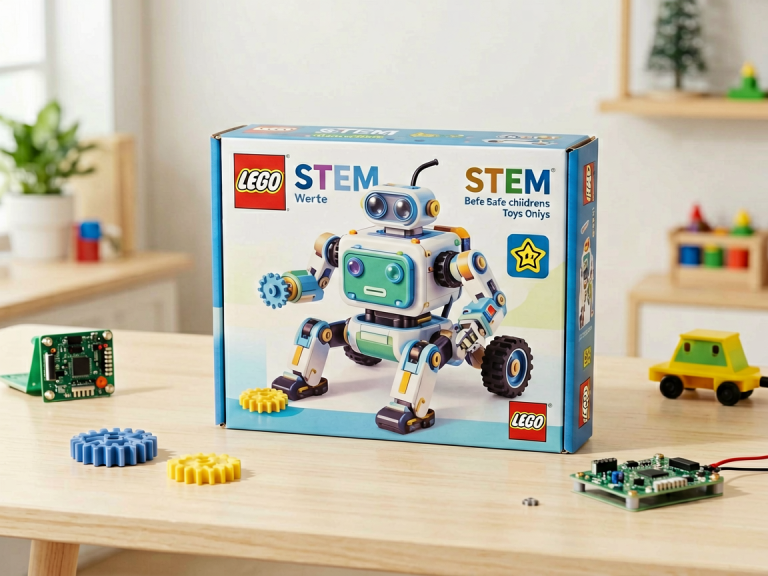
Building sets, from the ubiquitous LEGO bricks to magnetic tiles, wooden blocks, and futuristic robotics kits, offer a different kind of magic: the power to create anything imaginable. Unlike marble runs, which are largely confined to a linear or branched path for marbles, building sets allow for three‑dimensional structures that can be castles, spaceships, cities, or abstract sculptures. The open‑ended nature of building sets encourages divergent thinking—there is no single “correct” way to assemble the pieces. A child can follow a set of instructions to build a pre‑designed model, or they can invent their own creation, modifying it endlessly. This flexibility fosters creativity, problem‑solving, and resilience, as failed designs often lead to new insights. Furthermore, building sets often include specialized pieces like gears, axles, wheels, and hinges, enabling the creation of moving mechanisms such as cranes, cars, or even simple machines. This makes them equally valuable for STEM education, but in a more comprehensive and open‑ended manner compared to the more focused marble run.
Creativity and Open‑Ended Play: A Head‑to‑Head
When comparing creativity, the distinction lies in the type of creative thinking each toy nurtures. Marble runs encourage what might be called “procedural creativity”—the iterative design of a functional path that obeys physical laws. The challenge is to arrange components so that the marble follows a desired route, which often involves trial and error. This is a fantastic exercise in logical sequencing and cause‑and‑effect reasoning. However, the range of outcomes is limited by the track pieces themselves; you cannot create a marble run that also functions as a house or a vehicle without adding external elements. Building sets, by contrast, support “compositional creativity”—the ability to combine pieces into any form, limited only by the parts available and the builder’s imagination. A single set of bricks can be a castle today, a robot tomorrow, and a bridge the day after. This versatility makes building sets superior for long‑term open‑ended play, especially for children who enjoy storytelling and world‑building. Yet, marble runs have their own creative niche: they invite children to think in terms of systems, pathways, and motion, which is less common in traditional building sets. In short, both foster creativity, but in different domains—marble runs emphasize dynamic art, while building sets emphasize static architecture.
Educational Benefits: STEM, Problem‑Solving, and Beyond
Both toys are powerful educational tools, but they emphasize different aspects of STEM learning. Marble runs are a crash course in physics: concepts like gravity, momentum, friction, and kinetic energy become tangible. When a marble fails to make a turn, children naturally hypothesize why—too steep, not enough speed, a misaligned ramp—and adjust accordingly. This hands‑on experimentation mirrors the scientific method. Additionally, some marble runs incorporate counting, sorting, or color‑matching, making them suitable for early math skills. Building sets, on the other hand, excel at teaching spatial reasoning, geometry, and structural engineering. Constructing a stable tower requires understanding of balance, load distribution, and symmetry. Many sets also introduce mechanical principles (gears, levers, pulleys) and, with advanced robotics kits, basic programming and electronics. Both toys promote fine motor skills and hand‑eye coordination. Crucially, both encourage problem‑solving: when a design fails—whether a marble stops mid‑track or a tower collapses—the child must diagnose the issue and iterate. This resilience is invaluable. For formal education, building sets may have an edge in breadth because they can cover more concepts (math, engineering, art, technology), while marble runs offer a deeper dive into a narrower set of physical phenomena.
Age Suitability and Skill Progression
Age is a critical factor in choosing between marble runs and building sets. Simple marble runs with large, chunky pieces are suitable for toddlers (ages 2–4) who enjoy dropping marbles into a tube and watching them emerge. These early sets build cause‑and‑effect understanding and hand‑eye coordination. As children grow (ages 5–8), they can handle more complex track layouts with curves, jumps, and multiple levels. Some brands offer sets with hundreds of pieces that challenge older children (ages 8–12) to design elaborate, multi‑path systems. Building sets follow a similar progression: large, soft blocks for infants; Duplo for preschoolers; standard LEGO for ages 4+; and advanced technic or robotics kits for tweens and teens. However, building sets arguably have a longer age range because they can be as simple or as complex as the user desires. A teenager or even an adult can still enjoy building intricate models, whereas marble runs may lose appeal once the novelty of watching marbles roll fades—unless the user is into competitive marble run design or kinetic art. For sustained interest across childhood and beyond, building sets often win.
Replayability, Longevity, and Value for Money
Replayability refers to how often a toy can be used without becoming boring. Marble runs have a built‑in limitation: once you’ve built a track and watched the marble roll, the thrill partly depends on modifying the track to create new behaviors. Many children enjoy disassembling and rebuilding, but the core activity—watching marbles roll—can become repetitive if the set lacks variety (e.g., no special pieces like bells, loops, or motors). Building sets, by contrast, offer near‑infinite replayability because every creation is different. A set of 500 bricks can produce thousands of unique models. Additionally, building sets often integrate with other sets, expanding possibilities indefinitely. From a cost perspective, a high‑quality marble run set (e.g., from brands like Hape or Quadrilla) can be expensive, but it provides a unique play experience not replicated by blocks. Building sets vary widely in price; a good starter LEGO set costs about $20–$50, while large themed sets can exceed $200. However, because building sets are so versatile, they often offer better value per play hour, especially for children who enjoy constructing and deconstructing over months or years. Marble runs, though, are more likely to be used intensively for a shorter period, then revisited occasionally.
Social Interaction: Solo vs. Collaborative Play
Both toys can be enjoyed alone or with others, but they tend to encourage different types of social interaction. Marble runs are often a cooperative or competitive activity: two or more children can design a track together, each contributing ideas and troubleshooting. The immediate visual feedback (the marble’s path) makes it easy to celebrate successes or debug failures as a team. Some families hold “marble run races,” setting up competing tracks. Building sets also support collaboration—friends can jointly construct a large city or a giant robot—but the nature of building is slower and more parallel: each person might work on their own section. Marble runs, because of the need to test the marble repeatedly, create a more dynamic, fast‑paced social environment. On the other hand, building sets allow for more nuanced negotiation and division of labor, which can teach communication and compromise. For solitary play, building sets often win because they allow for quiet, focused immersion over long periods, while marble runs are more about brief bursts of excitement followed by redesign.
Conclusion: It Depends on Your Priorities
So, which is better? The answer, as with most things, is “it depends.” If you want a toy that vividly demonstrates physics principles and provides an instant, visual reward for careful design, a marble run is an excellent choice. It is ideal for short‑attention‑span play, for teaching cause and effect, and for fostering collaborative troubleshooting. If, however, you seek a toy that can grow with a child over many years, that encourages boundless creativity across multiple domains (architecture, engineering, storytelling), and that offers superior replayability, a building set is the clear winner. Many households will benefit from owning both: a marble run to spark wonder about motion, and a building set to nurture systematic construction. Ultimately, the best toy is the one that engages the player’s curiosity and keeps them coming back for more. Whether those players prefer the thrill of a speeding marble or the satisfaction of a perfectly aligned brick, both toys have an enduring place in the world of play.