Marble Runs vs. Building Sets: A Comparative Exploration of Constructive Play
Introduction
In the vibrant landscape of children’s toys, few categories captivate the imagination and intellect quite like construction-based playthings. Among the most enduring and educational are marble runs and building sets—two families of toys that, while superficially similar in their emphasis on assembly, diverge profoundly in the types of thinking, creativity, and learning they inspire. Marble runs, which consist of tracks, ramps, tubes, and sometimes spinning elements designed to guide a rolling marble from start to finish, are fundamentally about motion, gravity, and cause-and-effect sequences. Building sets, epitomized by classic interlocking bricks, magnetic tiles, or wooden blocks, offer open-ended vertical and spatial construction limited only by a child’s architectural ambition. This article systematically compares marble runs and building sets across several dimensions—cognitive development, creative expression, physical principles, social interaction, and age suitability—to help parents, educators, and toy enthusiasts understand the unique value each brings to the playroom.
The Nature of Play: Guided Purpose vs. Open-Ended Exploration
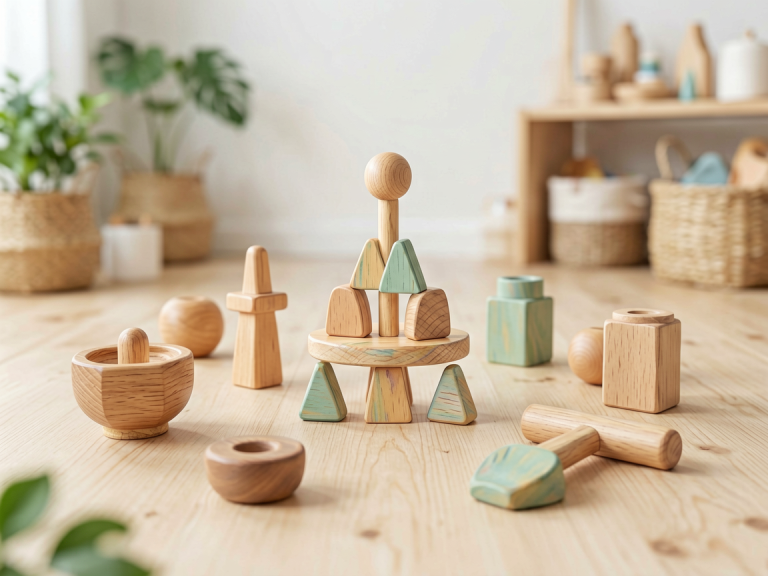
A marble run’s primary goal is predetermined: a marble must travel from a start point to an end point, often through a series of obstacles and transfers. This inherent *purposefulness* gives marble-run play a structure that resembles puzzle-solving or engineering design. The child faces a clear success criterion—does the marble reach the bottom?—and must iteratively adjust angles, heights, and connectors to achieve it. This guided focus can be highly satisfying for children who thrive on achieving tangible, repeatable outcomes. Conversely, building sets are the quintessence of open-ended play. A pile of blocks or magnetic tiles does not demand a specific finished product. The child may build a tower, a castle, a spaceship, or an abstract sculpture. There is no right or wrong outcome, only the child’s evolving vision. This freedom nurtures divergent thinking and encourages the child to see raw materials as a language for expressing ideas. While marble runs sometimes offer modular components that allow for reconfiguration, the constraint of “marble must roll” remains, whereas building sets lift almost all constraints from the imagination.
Cognitive Development: Physics in Action vs. Structural Understanding
From a cognitive standpoint, marble runs excel at teaching the intuitive physics of motion and gravity. As children experiment with steeper ramps producing faster descents, or as marbles are launched through loops requiring precise centripetal acceleration, they build an embodied knowledge of kinematics, potential and kinetic energy, friction, and even chaos theory as marbles may take slightly different paths each time. Research in early childhood education underscores that such hands-on physics experiences lay critical groundwork for later formal scientific reasoning. Marble runs also demand sequential thinking: the child must plan the entire path before placing pieces, or at least troubleshoot the sequence when a marble derails. Building sets, in contrast, foster spatial reasoning and load-bearing understanding. A child building a bridge must consider the distribution of weight, symmetry, and stability—concepts central to architecture and structural engineering. Building sets also develop fine motor skills and hand-eye coordination through precise placement of blocks, but they do not intrinsically incorporate dynamic motion. The static nature of most building projects means that the child’s learning is about form and structure rather than the interplay of forces over time.
Creativity and Problem-Solving: Constraints as Catalysts
At first glance, building sets might seem more creative because they allow infinite forms. Yet creativity often thrives under constraints. Marble runs impose a powerful constraint—every piece must ultimately serve the marble’s journey. This forces the child to think in terms of systems and cause-effect chains. For example, if a marble flies off a sharp turn, the child must invent a new curve, a guardrail, or a funnel. The problem is not simply aesthetic but functional. This type of iterative problem-solving is remarkably similar to real-world engineering design cycles: build, test, observe, revise. Building sets, by contrast, encourage a different kind of creativity—one of storytelling and representation. A structure built from blocks can represent a castle, a modern house, or a futuristic city. The child uses the blocks as symbols to externalize inner narratives. This narrative creativity is vital for language development and emotional expression. However, building sets do not typically provide feedback loops unless the structure collapses. When a tower falls, the lesson is about stability, but it lacks the rich, sequential feedback a marble run provides as the marble flows through each section.
Social Dynamics: Collaborative vs. Competitive Play
Both marble runs and building sets can be played with alone or in groups, but their social dynamics differ markedly. A marble run naturally lends itself to collaborative problem-solving: one child may design the high drop while another builds the funnel, and together they test the entire system. The shared goal of making the marble complete the course encourages communication, division of labor, and constructive argument over design choices. Children often take turns placing marbles and watching the results, which can also introduce an element of friendly competition—whose design makes the marble go faster? Who can add the most loops? Building sets, while also collaborative, often lead to parallel play or territorial battles over rare pieces. Cooperation in building sets usually focuses on constructing a common structure, such as a large castle, which requires negotiation over who places which block. However, building sets also offer more opportunities for solitary, immersive play where a child can lose themselves in construction without needing to coordinate with others. In group settings, marble runs may produce more focused joint attention because the marble’s trajectory provides a shared spectacle that naturally draws the eyes of all participants.
Age Appropriateness and Longevity
Marble runs typically appeal to children aged 4 and up, although simpler sets with larger marbles and fewer small pieces exist for toddlers. The complexity of marble runs increases with age: advanced sets include complex expansions, motorized lifts, and elaborate track switchers. However, marble runs often have a “ceiling” in terms of replay value. Once a child masters a particular configuration, the challenge diminishes unless they continuously redesign. The greatest longevity for marble runs comes from combining them with other construction toys like building sets to create custom supports or structures. Building sets, particularly interlocking bricks, are famously age-graded from toddler-sized Duplo to intricate LEGO Technic for teens and adults. The sheer variety of themes and the possibility of rebuilding into entirely different models mean that building sets can occupy a child from ages 2 to 18 and beyond. Many adults remain avid builders. In terms of long-term investment, building sets generally offer more value per dollar because they can be dismantled and recomposed endlessly. Marble runs, while durable, may feel repetitive after the novelty of watching marbles roll wears off unless the child is intrinsically motivated by the engineering challenge.
Physical Principles Explicit vs Implicit
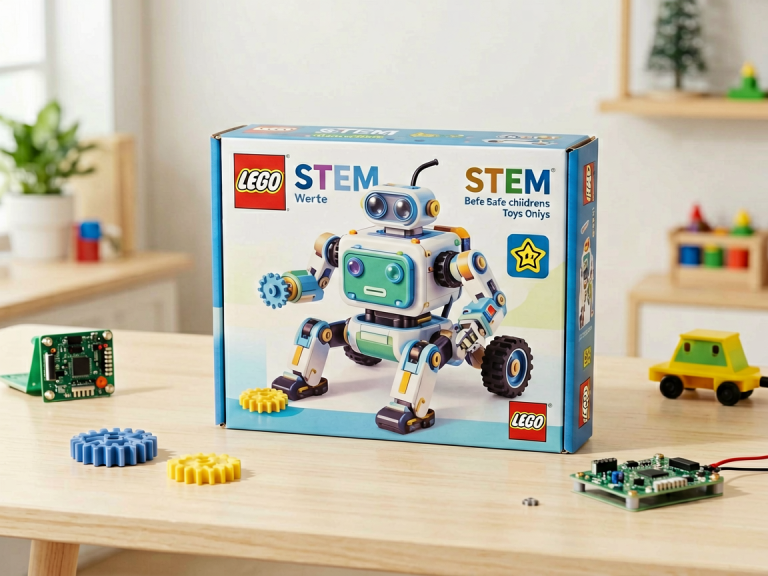
One remarkable aspect of marble runs is how they make abstract physical principles visible and satisfying. The conservation of energy is demonstrated as a marble slows down climbing a hill, then speeds up descending. The concept of momentum becomes tangible when marbles pass through loops. In contrast, building sets often teach structural physics implicitly. A child discovers that a tall tower requires a wide base, or that an arch distributes weight better than a flat beam. These lessons are valuable but often remain unconscious until a collapse forces reflection. Building sets that include gears, pulleys, and wheels (like LEGO Technic or certain magnetic sets) can bridge the gap, but even then, the moving parts are usually simpler than the continuous, ballistic motion of a marble run. For parents seeking a toy that explicitly demonstrates scientific concepts, marble runs are arguably superior. For those seeking a broader development of spatial, architectural, and storytelling skills, building sets are more comprehensive.
Conclusion: Complementary, Not Competing
Ultimately, the choice between marble runs and building sets is not an either/or proposition. The most enriching play environments incorporate both. Marble runs excel at teaching dynamic physics, sequential planning, and goal-oriented problem-solving, while building sets foster open-ended creativity, architectural thinking, and narrative expression. Children who play with both benefit from the synergy—they can use building blocks to construct custom elevated platforms for the marble run, or incorporate marble-run elements into a larger block-built city. In educational settings, alternating between the two types of play can develop different cognitive muscles: one day focusing on how and why things move, the next on what can be imagined and built. For families, the investment in a high-quality marble run plus a quality building set provides years of varied, intellectually stimulating play that grows with the child. As with any tool, understanding each toy’s unique strengths allows adults to guide children toward playful learning that is both joyful and profound. In the end, both marble runs and building sets affirm a timeless truth: that the act of construction—whether for motion or for form—is one of the most powerful catalysts for human creativity and understanding.