Science Toys vs Engineering Toys for Kids: Two Pathways to Discovery
—
Introduction: The Playground of Young Minds
From the moment a toddler stacks brightly colored blocks to the day a ten-year-old assembles a solar-powered rover, toys serve as the silent architects of childhood cognition. Among the vast universe of playthings, two categories often spark the most passionate debates among educators, parents, and child development experts: science toys and engineering toys. While the terms are sometimes used interchangeably, they represent fundamentally different approaches to learning. Science toys emphasize observation, questioning, and understanding natural phenomena—they invite children to ask “why.” Engineering toys, by contrast, focus on design, construction, and problem-solving—they challenge children to figure out “how.” This essay explores the distinct characteristics, cognitive benefits, and educational implications of each category, offering a nuanced perspective on how they shape young minds. Understanding the differences is not merely an academic exercise; it is a practical guide for parents and educators seeking to cultivate a well-rounded intellectual foundation. As we delve into the world of chemistry sets, coding robots, building blocks, and microscopes, we will uncover how these two genres of toys complement each other—and when one might be more appropriate than the other.
—
The Nature of Science Toys: Cultivating the Spirit of Inquiry
Science toys are designed to simulate the process of scientific investigation. They typically include tools for observation (magnifying glasses, telescopes, microscopes), experimentation (chemistry kits, crystal-growing sets, physics lab kits), and data collection (thermometers, scales, simple weather stations). The core objective is to introduce children to the scientific method: forming a hypothesis, conducting an experiment, recording results, and drawing conclusions. For instance, a classic “volcano” kit doesn’t just produce a fizzy eruption—it encourages a child to test different ratios of baking soda and vinegar, observe the reaction speed, and deduce why the mixture behaves as it does. Science toys often come with explanatory booklets that reveal the underlying principles of friction, buoyancy, photosynthesis, or magnetism. The emphasis is on discovery rather than creation. A child playing with a science toy is an explorer, not a builder. This distinction is critical: science toys nurture curiosity about the natural world and teach children that phenomena have causes that can be systematically understood. They are excellent for developing patience, attention to detail, and a respect for empirical evidence. However, they can sometimes feel passive if the child does not actively engage in the inquiry process. A pre-packed kit with a single, predetermined outcome may limit creativity unless parents or teachers prompt open-ended questions.
Sub-header: Cognitive Strengths of Science Toys
- Hypothetical Reasoning – Children learn to formulate “if-then” statements. For example, “If I add more yeast to the hydrogen peroxide, then the foam will rise faster.” This type of reasoning is foundational for logic and mathematics.
- Observation Skills – Using a microscope or a prism sharpens visual acuity and the ability to notice subtle changes. A child tracking the growth of a bean plant learns to record data over time, fostering patience.
- Conceptual Understanding – Science toys demystify abstract concepts. A simple circuit kit teaches voltage, current, and resistance through tangible light bulbs and wires, making electricity less mysterious.
- Critical Thinking – When an experiment fails—say, a crystal doesn’t form—the child must analyze what went wrong, adjusting variables like temperature or saturation. This iterative process is the essence of scientific thinking.
Yet science toys have a potential limitation: they often produce a single correct answer. The volcano can only erupt one way; the pH paper will only turn one color for a given liquid. While this teaches reproducibility, it may undercut the creative trial-and-error that drives innovation. For this reason, many educators argue that science toys are best paired with open-ended engineering challenges.
—
The Nature of Engineering Toys: Building the Blueprint of Innovation
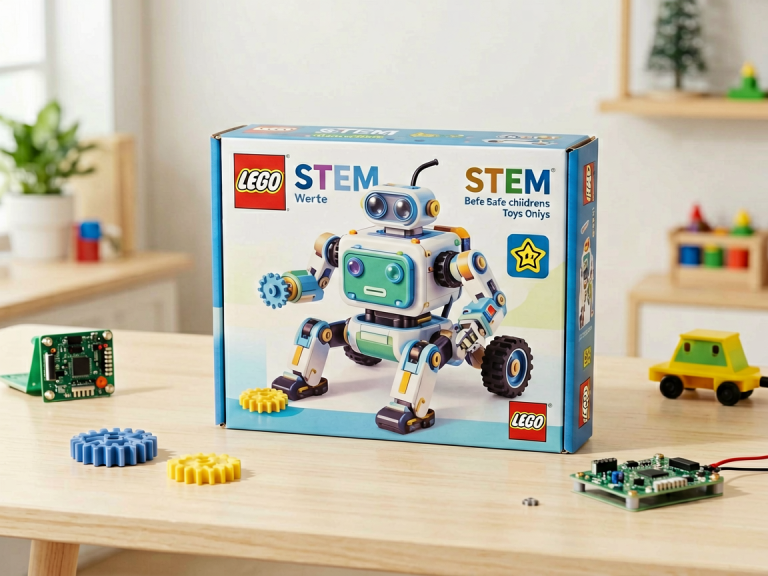
Engineering toys, in contrast, are rooted in design and construction. They include building sets (LEGO, K’NEX, Meccano), robotics kits (LEGO Mindstorms, VEX, Arduino-based projects), structural materials (geodesic dome kits, bridge-building sets), and even coding toys that require children to sequence commands to achieve a physical outcome. The central activity is creating something that works—a bridge that holds weight, a gear train that turns a wheel, a robot that navigates a maze. Engineering toys rarely have a single correct solution. Instead, they present a problem (e.g., “Build a tower that can support a book using only 30 blocks and a rubber band”) and invite multiple approaches. The process involves iterative design: plan, build, test, fail, modify, and rebuild. This cycle mirrors the real-world engineering design process and cultivates resilience, spatial reasoning, and practical problem-solving.
Sub-header: Cognitive Strengths of Engineering Toys
- Spatial Reasoning – Manipulating pieces in three dimensions enhances mental rotation ability, which is linked to performance in geometry, physics, and even surgical skills.
- Systems Thinking – Building a complex structure like a motorized crane requires understanding how gears, levers, pulleys, and motors interact. Children learn that changing one component affects the entire system.
- Grit and Perseverance – Engineering toys inherently involve failure. A bridge collapses, a robot falls over. The child must diagnose the flaw and try again, developing emotional resilience and a growth mindset.
- Creativity and Divergent Thinking – Unlike science toys that often converge on a correct answer, engineering toys reward novel solutions. A child might build a catapult using a spoon, a rubber band, and a popsicle stick—there are dozens of viable designs.
However, engineering toys can sometimes neglect the “why.” A child might successfully build a stable tower without understanding the physics of center of gravity or compression and tension. The learning is implicit rather than explicit. Without guided reflection, the engineering experience becomes purely procedural. This is why a balanced approach—mixing both science and engineering toys—offers the richest educational benefit.
—
Key Differences in Developmental Impact: Observation vs. Construction
At a deeper level, science toys and engineering toys engage different cognitive domains. Science toys primarily develop convergent thinking—the ability to narrow possibilities down to a single, evidence-based conclusion. Engineering toys foster divergent thinking—the ability to generate multiple viable solutions to an open-ended problem. Both are essential for a child’s intellectual growth, but they serve different stages of learning.
Consider a child exploring a prism. A science-oriented activity asks: “What colors appear when white light passes through the prism?” The answer is fixed: ROYGBIV. The child learns a law of optics. An engineering-oriented activity asks: “Can you design a device that uses prisms to create a rainbow on the wall?” The child must decide where to place the prisms, how to angle them, and whether to use mirrors. The focus shifts from understanding a phenomenon to applying that understanding creatively. In practice, the most successful educational interventions blend both. A child who uses a microscope (science) to observe pond water might then be challenged to build a simple filtration system (engineering) that removes particles from the water. The science provides the knowledge; the engineering provides the application.
Sub-header: When to Choose Which?
- Age and Stage: For toddlers and preschoolers, engineering toys (blocks, magnetic tiles, simple puzzles) are more intuitive because they involve gross and fine motor skills. Science concepts like density or evaporation are too abstract. Around ages 6-9, simple science kits (butterfly garden, rock tumbler, solar system models) become engaging. From ages 10 and up, both categories can be deepened with advanced robotics and chemistry.
- Learning Style: Children who are naturally curious about “how things work” may gravitate toward engineering toys. Those who ask “why is the sky blue?” may prefer science toys. Observing a child’s spontaneous questions can guide selection.
- Educational Goals: If the goal is to prepare a child for STEM careers, engineering toys offer more direct practice in design, iteration, and systems analysis. If the goal is to foster a love for nature and scientific inquiry, science toys are indispensable.
—
Educational Outcomes: Gaps and Synergies
Research from organizations like the National Association for the Education of Young Children (NAEYC) suggests that children who engage with both types of toys develop stronger executive function skills—specifically cognitive flexibility, working memory, and inhibitory control. A 2018 study published in *Journal of Research in Childhood Education* compared groups of 8-year-olds given either a science kit (growing crystals) or an engineering kit (building a rubber-band car) over four weeks. While the science group showed improved ability to explain causal relationships, the engineering group demonstrated higher scores on measures of planning and troubleshooting. Neither group outperformed the other in overall IQ or academic grades, but their thinking styles diverged markedly.
Another important consideration is gender dynamics. Historically, engineering toys like construction sets and electronics kits have been marketed more to boys, while science toys like chemistry sets and nature kits have been more gender-neutral. However, modern initiatives like GoldieBlox and LEGO Friends have attempted to bridge this gap. Parents should consciously offer both types to all children to avoid inadvertently narrowing their interests.
Sub-header: The Power of Integrated Play
The most potent learning occurs when science and engineering are combined. For example, a child using a DIY weather station (science: measuring temperature, humidity, and air pressure) can later engineer a small wind turbine (engineering: applying knowledge of aerodynamics to generate electricity). Similarly, building a simple robot (engineering) requires understanding of electrical circuits (science). Many modern educational toys, such as the Snap Circuits range, integrate both seamlessly. These hybrid toys are perhaps the ideal choice for parents seeking a holistic approach.
—
Practical Considerations for Parents and Educators
When selecting toys, consider the following guidelines:
- Open-endedness: Avoid toys with a single, prescribed outcome. The best science toys allow for multiple experiments (e.g., a chemistry set with dozens of possible reactions, not just one). The best engineering toys offer varied building challenges.
- Safety and Age Appropriateness: Science toys often involve chemicals, glass, or small parts. Always check age recommendations. Engineering toys with tiny gears or magnets can be choking hazards.
- Adult Involvement: Both categories benefit immensely from guided questioning. Instead of simply providing a kit, ask: “What do you think will happen if we change the angle?” or “How could we make the bridge stronger?” The adult’s role is to scaffold the child’s thinking.
- Cost vs. Quality: Many effective science and engineering toys can be made from household materials. A homemade catapult from spoons and marshmallows teaches engineering principles as well as a store-bought kit. Simple science experiments like baking soda and vinegar require no special purchase. Fancy kits are not necessary—thoughtful design is.
—
Conclusion: Two Sides of the Same Coin
The debate between science toys and engineering toys for kids is ultimately a false dichotomy. Both are indispensable for nurturing a child’s intellectual curiosity, problem-solving ability, and understanding of the world. Science toys equip children with the tools to ask meaningful questions and gather evidence; engineering toys empower them to create practical solutions and envision new possibilities. Rather than choosing one over the other, parents and educators should strive for a balanced diet of play that alternates between observation and construction, between theory and application. A child who grows up with a fossil kit and a set of gears is better prepared not only for STEM careers but for any field that requires critical thinking and creativity. In the end, the best toy is not the one that provides the most answers, but the one that inspires the most questions—and the confidence to build the answers.