Beyond the Screen: A Comparative Analysis of Screen-Free Toys vs. App-Based Toys
Introduction
In an era where digital technology permeates nearly every aspect of daily life, the debate over children’s playthings has taken on a new urgency. Parents, educators, and child development experts alike are grappling with a fundamental question: which is better for a child’s growth—traditional screen-free toys, such as wooden blocks, puzzles, and dolls, or modern app-based toys that rely on tablets, smartphones, and interactive software? The answer is far from straightforward, as each category offers distinct advantages and potential drawbacks. While app-based toys promise interactivity, adaptability, and educational content, screen-free toys champion hands-on creativity, sensory exploration, and unstructured social interaction. This article delves into the nuances of both worlds, examining their impacts on cognitive development, social skills, emotional well-being, and practical parenting considerations. By the end, it becomes clear that a thoughtful, age-appropriate balance—rather than an either-or choice—may be the healthiest path forward for children in a screen-saturated world.
—
The Allure of App-Based Toys: Interactivity and Personalization
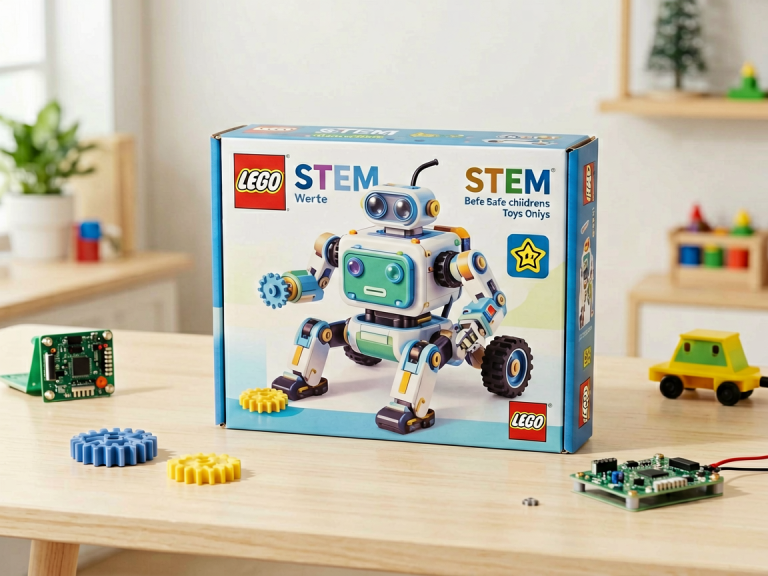
App-based toys, which include everything from digital puzzle games to augmented reality building sets, have surged in popularity over the past decade. Their primary strength lies in their ability to engage children through dynamic feedback, adaptive difficulty levels, and multimedia elements like sound, animation, and instant rewards. For example, an app-based math game might adjust problem complexity based on a child’s performance, offering hints or celebratory animations to maintain motivation. This personalization can be a powerful tool for targeted learning, especially in areas like literacy, numeracy, and foreign languages.
Moreover, app-based toys often incorporate storytelling and gamification to hold a child’s attention longer than static toys. A well-designed app can turn a mundane task—like practicing spelling—into an adventure, complete with characters, levels, and achievements. For parents who are short on time or who want to supplement school curricula, these digital tools offer convenience and measurable progress tracking. Some high-quality apps even align with educational standards and employ principles from cognitive science, such as spaced repetition and multisensory input.
However, the interactive nature of app-based toys comes with caveats. The very features that make them engaging—bright screens, rapid visual switching, and rewarding feedback loops—can also contribute to overstimulation and attention fragmentation. Research suggests that excessive exposure to fast-paced digital media may reduce a child’s ability to concentrate during slower, real-world activities. Additionally, many app-based toys are designed by commercial entities that prioritize “stickiness” (keeping children engaged for longer periods) over genuine developmental benefit. The risk is that children become passive consumers of content rather than active creators of play.
—
The Timeless Value of Screen-Free Toys: Sensory Richness and Unstructured Play
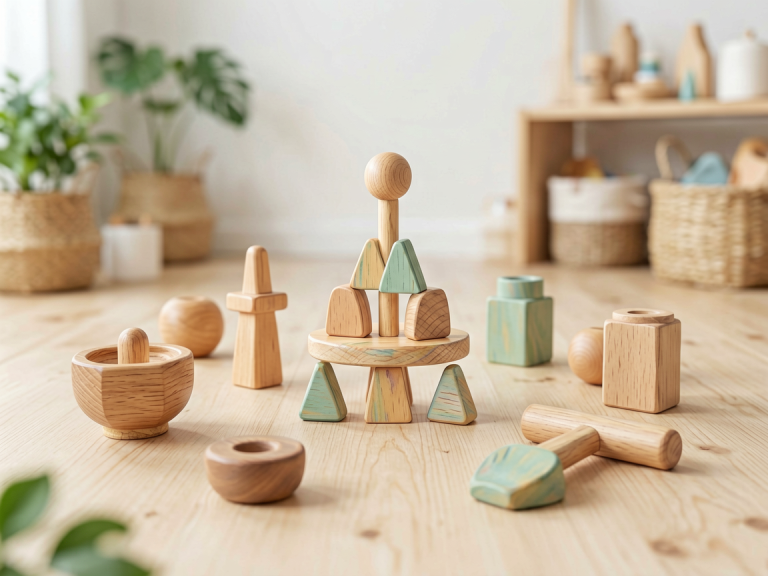
Screen-free toys encompass a vast spectrum, from simple rattles and building bricks to board games, art supplies, and outdoor play equipment. Their enduring appeal rests on a foundation of open-endedness and physical engagement. A set of wooden blocks, for instance, can become a castle, a spaceship, or a farm depending on the child’s imagination. This unstructured play builds executive functions—planning, problem-solving, and self-regulation—because children must invent rules, negotiate roles, and overcome physical constraints without external guidance.
Sensory stimulation is another critical advantage. Screen-free toys engage multiple senses simultaneously: the texture of clay, the weight of a wooden train, the sound of a bell inside a rattle. These tactile and proprioceptive experiences are essential for neural development in early childhood. Unlike app-based toys, which primarily engage vision and hearing, physical toys integrate the whole body and encourage fine and gross motor skills. For example, threading beads onto a string requires hand-eye coordination, patience, and bilateral movement—skills that cannot be replicated by tapping a screen.
Social interaction flourishes more naturally with screen-free toys. Two children playing with a set of puppets or building a fort together must communicate, share, and resolve conflicts in real time. These interactions teach empathy, turn-taking, and nonverbal cues that are often muted when children stare at individual screens. Even solitary play with a screen-free toy—like a jigsaw puzzle—promotes deep focus and a sense of accomplishment that comes from physical manipulation and tangible results.
Nevertheless, screen-free toys are not without limitations. They cannot adapt to a child’s changing skill level as seamlessly as an app can. A challenging puzzle might frustrate a child without step-by-step hints, and parents may need to actively scaffold the learning. Some traditional toys also lack the novelty that app-based toys can refresh daily. Consequently, children may lose interest more quickly if the toy does not evolve with their developing abilities.
—
Cognitive Development: A Head-to-Head Comparison
When comparing the cognitive benefits of screen-free and app-based toys, the research paints a nuanced picture. App-based toys excel in delivering structured, repetitive practice for specific skills. For instance, an app that teaches phonics through songs and animations can be highly effective for early readers, especially when combined with parental interaction. A 2019 meta-analysis published in *Educational Psychology Review* found that well-designed educational apps can significantly improve literacy and numeracy outcomes in preschoolers, particularly when they incorporate clear learning objectives and minimal distractions.
However, these gains often come at the expense of deeper cognitive processing. Screen-free toys promote what developmental psychologist Alison Gopnik calls “exploration-based learning” versus “exploitation-based learning.” When a child builds a tower with blocks, she must experiment with physics, gravity, and spatial relationships through trial and error. This process fosters creativity and divergent thinking because there is no single correct answer. In contrast, many app-based toys offer predetermined outcomes: correct or incorrect, level up or fail. This binary feedback can inadvertently discourage risk-taking and creative problem-solving.
Memory formation also differs. Physical interaction with objects creates stronger embodied memories because it involves multiple brain regions, including the motor cortex and somatosensory areas. A child who assembles a model airplane from foam pieces will likely recall the steps more vividly than one who watches a digital tutorial. For older children, board games like chess or Scrabble demand strategic thinking, memory recall, and social deduction—all skills that are practiced in a rich, interpersonal context that no app can fully replicate.
—
Social and Emotional Implications
Perhaps the most significant divergence between the two toy categories lies in their social and emotional impact. Screen-free toys naturally encourage collaborative play. A group of children playing with a train set must invent rules, assign roles, and negotiate conflicts. These interactions are the building blocks of social competence. Even a quiet activity like drawing alone can be a form of self-regulation and emotional expression, allowing children to process feelings through art.
App-based toys, by contrast, often isolate children. Even when an app claims to be “multiplayer,” the interaction is typically mediated through a screen, reducing the richness of face-to-face communication. A child who loses a digital game might simply restart without learning to cope with disappointment in a social context. Furthermore, the instant gratification of app-based rewards can undermine perseverance. A screen-free toy that does not yield immediate success teaches patience and frustration tolerance—a lesson that is becoming increasingly rare in the digital age.
Emotionally, screens can dysregulate children. The blue light and fast-paced visuals of app-based toys may overactivate the nervous system, making it harder for children to calm down before bedtime or transition to other activities. Screen-free toys, especially those involving repetitive motion (like rocking a doll or stacking rings), can be calming and grounding. Many occupational therapists recommend tactile sensory toys for children with anxiety or sensory processing disorders precisely because they help regulate arousal levels.
—
Parental Perspectives and Practical Considerations
From a practical standpoint, screen-free toys often require more active parental involvement. A parent may need to sit with a toddler to show how to fit shapes into a sorter, or to read a rulebook for a board game. This can be a burden for busy parents, but it also creates valuable bonding opportunities. App-based toys, on the other hand, can occupy a child while a parent cooks or works. However, this convenience comes with the risk of substituting genuine human interaction. The American Academy of Pediatrics strongly recommends that children under 18 months avoid all screens except video calls, and that older children’s screen time be limited and co-viewed with an adult.
Cost and sustainability are also factors. Many app-based toys require a subscription or in-app purchases, and they become obsolete as devices update. Screen-free toys, especially high-quality wooden or fabric toys, can last for decades and be passed down to siblings. They also do not contribute to electronic waste. Yet, app-based toys can offer a vast library of content in a single device, which may be more economical for families with diverse interests.
Ultimately, the best choice depends on the child’s age, temperament, and developmental stage. Infants and toddlers benefit overwhelmingly from screen-free toys that support sensorimotor exploration. Preschoolers can enjoy limited, high-quality app-based toys as a supplement, but not a replacement, for hands-on play. School-age children can use educational apps for deliberate practice, but they still need ample unstructured time with physical toys and nature.
—
Finding the Balance: A Hybrid Approach
Rather than declaring a winner, the most sensible conclusion is that screen-free and app-based toys serve different, and often complementary, purposes. The key is intentionality. Parents should ask: Does this toy encourage active participation or passive consumption? Does it foster creativity or merely reward rote answers? Does it connect children to others or isolate them? A healthy play diet might include a mix—say, 70% screen-free, 30% app-based for older children—with clear boundaries on screen time and a strong emphasis on adult co-engagement.
In practice, this could mean using an app to practice times tables for 15 minutes, followed by building a model bridge from cardboard to apply those mathematical concepts. Or using a digital storybook app as a springboard for acting out the tale with puppets. The goal is to ensure that technology serves as a tool, not a tyrant. As child psychologist Dr. Jane Healy once said, “Toys are not teachers; they are materials for learning.” Whether those materials are made of pixels or wood, what matters most is the quality of the interaction—between child and toy, and child and caregiver.
—
Conclusion
The debate between screen-free and app-based toys is not a battle that needs a single victor. Both have strengths and limitations that shift with a child’s age, context, and individual needs. Screen-free toys offer irreplaceable sensory richness, open-ended creativity, and robust social-emotional development. App-based toys bring personalization, engagement, and targeted skill-building into the modern home. The wisest approach is not to choose one camp over the other, but to curate a thoughtful ecosystem where physical play remains the foundation and digital tools are used sparingly and deliberately. In doing so, parents can empower their children to harness the best of both worlds—growing up with hands-on grit and digital fluency, but never losing touch with the real world that lies beyond the screen.
*(Word count: approximately 1,580)*