Building Blocks of Wonder: The Ultimate Guide to Choosing and Using Building Toys for 2-Year-Olds
—
Introduction
At the tender age of two, children stand at a remarkable crossroads of development. Their minds are like sponges, absorbing language, social cues, and physical skills at an astonishing rate. One of the most powerful tools to support this growth is the humble building toy. Far from being just a way to pass the time, building toys for two-year-olds lay the foundation for cognitive reasoning, fine motor control, spatial awareness, and creative expression. Yet not all building toys are created equal for this age group. Safety concerns, developmental appropriateness, and the need for open-ended play all demand careful consideration. This article explores the science and practice of selecting and using building toys with toddlers, offering a comprehensive guide for parents, educators, and caregivers.
—
Why Building Toys Matter at Age Two
The second year of life is characterized by rapid changes in motor skills and cognitive abilities. Two-year-olds are beginning to understand cause and effect, engage in symbolic play, and develop a sense of agency. Building toys tap directly into these emerging competencies. When a toddler stacks a block and watches it fall, they learn gravity and balance. When they fit a Duplo brick onto another, they practice hand-eye coordination and problem-solving. Additionally, building play encourages persistence—a key trait of later academic success. According to research published in the journal *Child Development*, constructive play in early childhood is linked to improved mathematical reasoning and executive function skills. For a two-year-old, the act of building is not just play; it is a form of research. They hypothesize, test, and refine—all while having fun.
—
Key Features of Safe and Effective Building Toys for Toddlers
Before diving into specific product recommendations, it is essential to understand the non-negotiable criteria that every building toy for a two-year-old must meet. Safety is paramount. At this age, children still explore objects with their mouths, so all pieces must be large enough to prevent choking hazards. The standard choke-tube test (pieces should be larger than 1.5 inches in diameter) is a good baseline. Moreover, materials should be non-toxic, free from sharp edges, and sturdy enough to withstand drops and bites. Bright colors and varied textures are beneficial because they stimulate sensory development. Ease of connection is another crucial factor. Toddlers lack the dexterity to snap together tight-fitting bricks; soft foam blocks, magnetic tiles with rounded corners, or large interlocking plastic pieces (like Mega Bloks First Builders) are ideal because they require minimal force. Finally, the toy should encourage open-ended play rather than a single predetermined outcome. A set that can become a tower one day and a castle the next fosters creativity far better than a kit that builds only one model.
—
Types of Building Toys Recommended for 2-Year-Olds
The market offers a bewildering array of building toys, but only a few categories consistently meet the developmental needs of two-year-olds. Below are the most effective options, each with its unique strengths.
1. Soft Foam Blocks
Soft foam blocks are the safest introduction to building. They are lightweight, quiet, and cannot hurt if knocked over. Many sets come in various shapes—cubes, cylinders, arches—and bright colors. They allow toddlers to stack and knock down without frustration. Some brands, such as Munchkin’s Foam Blocks, include textured surfaces that add tactile stimulation. These toys are particularly good for group play because they pose no risk of injury, making them ideal for daycare settings.
2. Large Plastic Interlocking Blocks
Megabloks and Duplo (Lego’s toddler line) are the gold standard for this age. Their pieces are large (roughly 2 inches across), easy to grip, and click together with just enough resistance to be satisfying but not frustrating. These blocks support vertical stacking, horizontal building, and simple symmetry. Studies show that playing with interlocking blocks enhances spatial visualization skills, which are critical for later geometry and engineering. For two-year-olds, the simplest sets—those with a handful of bricks and a few animal figures—work best.
3. Magnetic Tiles
Magnetic building tiles, such as Magna-Tiles or PicassoTiles, have become immensely popular—and for good reason. They rely on strong magnets embedded in clear or colored plastic shapes. Toddlers can attach them edge-to-edge with very little effort, allowing them to create 3D structures without the need for precise alignment. The transparent nature of the tiles also introduces concepts of light and color mixing. However, parents must check that the magnets are securely encased and that the pieces are large enough (typically 3 inches or more) to avoid swallowing. Magnetic tiles are excellent for collaborative play and can hold a toddler’s attention for extended periods.
4. Wooden Stacking Toys
Classic wooden stacking rings, nesting cubes, and simple geometric blocks (like the ever-popular Grimm’s rainbow stacker) have stood the test of time. Wood is durable, sustainable, and provides a pleasing weight. The challenge for two-year-olds comes from the need to balance and align pieces without the aid of magnets or interlocking mechanisms. This builds fine motor control and patience. Ensure that any wooden toy is finished with non-toxic paint and that edges are sanded smooth.
5. Cardboard and Recycled Material Kits
Surprisingly, some of the best building toys come from the recycling bin. Oversized cardboard blocks (often sold as “Imagination Blocks”) are lightweight and can be stacked into life-size forts. Two-year-olds love the thrill of knocking down a tower that is as tall as they are. Similarly, empty tissue boxes, paper towel rolls, and shoeboxes can be taped together by a parent to create custom building challenges. This type of play introduces the concept of repurposing materials, fostering environmental awareness even at a young age.
—
Developmental Benefits Across Domains
Building toys are not just about building; they are holistic developmental tools. Understanding the specific benefits can help parents appreciate why these toys deserve a central place in the toy box.
Fine Motor Skills and Hand Strength
Picking up a block, rotating it to align with another, and pressing it into place requires the coordinated use of small muscles in the hands and fingers. This activity strengthens the intrinsic muscles needed for future tasks like writing, buttoning, and using scissors. Soft blocks offer less resistance, while interlocking blocks provide more, allowing for progressive skill development.
Cognitive and Problem-Solving Abilities
Every act of construction involves planning. “Do I stack this block on top or next to the other one?” “What happens if I put the heavy block on the small one?” Toddlers learn through trial and error. When a tower falls, they experience a mini-lesson in physics and resilience. Over time, they begin to recognize patterns—for example, that a larger base supports a taller tower. These experiences lay the groundwork for mathematical thinking.
Language and Social Skills
Building is often a social activity. When a parent says, “Can you hand me the red block?” the child practices receptive language. When the child proudly says, “Look, my tower!” they use expressive language. In group settings, building toys promote sharing, negotiation, and cooperation. Two-year-olds may not yet have the vocabulary for complex negotiation, but they learn to gesture, take turns, and react to a peer’s actions.
Spatial Awareness and Geometry
Manipulating three-dimensional objects helps toddlers understand concepts such as “on top,” “under,” “beside,” and “inside.” They also begin to recognize shapes and sizes. Magnetic tiles, with their translucent faces, allow children to see how shapes combine to form new shapes—a precursor to understanding area and volume.
Creativity and Imagination
Unlike battery-operated toys that dictate a single play pattern, building toys are a blank canvas. A set of blocks can become a house for a stuffed animal, a bridge for a toy car, or a mountain for a dinosaur. This open-endedness encourages divergent thinking—the ability to generate multiple solutions to a problem. In a world increasingly focused on standardized tests, creativity is a crucial skill for innovation.
—
How to Choose the Right Building Toys for Your Toddler
With so many options available, making a selection can be overwhelming. Here are practical guidelines to streamline the process.
Prioritize Safety First
Check product labels for age recommendations. Choose toys that explicitly state “for ages 18 months+ ” or “2+.” Avoid anything with small parts that could come loose. For magnetic toys, verify that the magnets are not accessible if the casing cracks. Also, consider potential pinch points: some interlocking blocks have very tight joints that can catch a toddler’s skin.
Think About Storage and Longevity
Building toys often come with many pieces. A large set may be overwhelming for a two-year-old and frustrating to clean up. Start with a small set (20–30 pieces) and add more as the child’s skills grow. Storage bins with lids are essential; consider ones that double as a play surface. Also, think about whether the toy will still be engaging at age three or four. Duplo and Magna-Tiles, for example, grow with the child, offering more complex building possibilities later.
Consider Your Child’s Interests
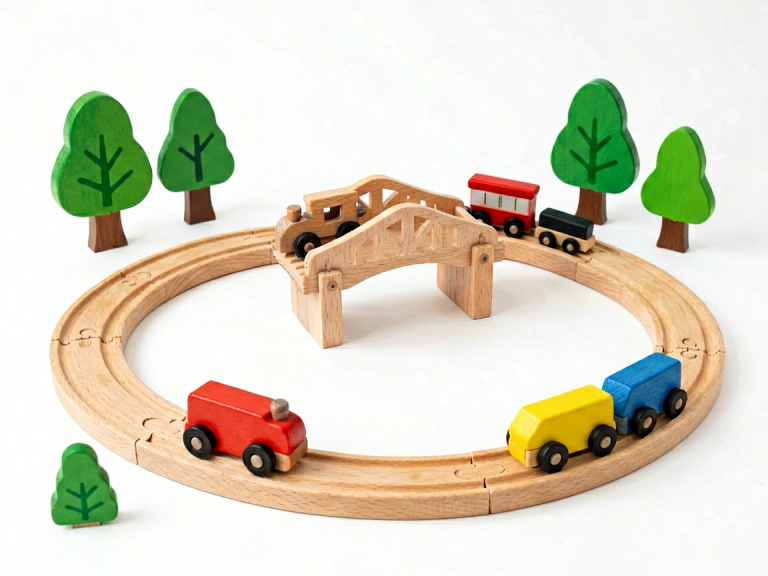
Some toddlers love things that move; for them, a set that includes wheeled bases or train tracks (like Brio’s wooden railway starter set) might be more engaging than static blocks. Others are fascinated by animals or people figures; look for block sets that include themed pieces. Matching the toy to the child’s current obsession dramatically increases the likelihood of sustained play.
Look for Sensory Variety
Two-year-olds are sensory learners. A mix of textures—smooth plastic, rough wood, soft foam—keeps play interesting. Some building toys incorporate lights or sounds, but these can be overstimulating. For most toddlers, simple, quiet blocks are preferable because they allow the child to focus on their own ideas rather than reacting to a toy’s features.
Involve the Child in the Selection
If possible, bring your toddler to a store or show them pictures online. Watch how they react. Do they reach for the bright magnetic tiles? Do they try to stack the foam blocks? Their natural curiosity will guide you. Remember, the best building toy is the one the child actually wants to play with.
—
Tips for Engaging Your Toddler in Building Play
Even the best toy can gather dust if not introduced properly. Two-year-olds may need a little guidance to get started. Here are practical strategies for parents and caregivers.
Model Building Without Taking Over
Sit on the floor with your child and start building a simple tower or a wall. Narrate your actions: “I am putting the blue block on top of the red one.” Then invite your child to add a block. If they knock it down, laugh and say, “Boom! Let’s build it again!” The goal is to scaffold their learning—offer just enough assistance so they feel successful but not so much that they feel controlled.
Give Specific Praise Instead of General
Instead of saying “Good job,” try “You balanced that block right in the center—that was tricky!” or “I love how you used two square blocks to make a rectangle!” This type of feedback helps the child understand what they did well and encourages them to repeat the strategy.
Create Challenges That Are Just Right
If the child can easily stack three blocks, challenge them to build a tower that is four blocks tall. If they are still struggling to connect two Duplo bricks, don’t rush them. Break the task into smaller steps: help them align the bumps and then push together. The “zone of proximal development”—a concept by psychologist Lev Vygotsky—reminds us that learning happens best when tasks are slightly above the child’s current ability level.
Incorporate Play Themes
Two-year-olds love pretend play. Turn building into a story: “Let’s build a house for the teddy bear. What color blocks should we use for the roof?” Or, “Oh no, the elephant needs a garage for his car!” The narrative gives purpose to the building and extends attention span.
Allow Mess and Chaos
Toddlers sometimes just want to throw blocks or scatter them across the room. That is okay. Sensory exploration and gross motor movement are also part of learning. Set clear boundaries (“Blocks stay on the floor, not at the window”), but give them freedom to experiment. The tower may never rise, but the process itself is valuable.
Take it Outside
Building blocks can be taken to a sandbox or grassy area. The change of environment sparks new ideas. Large foam or lightweight cardboard blocks are especially good for outdoor play, where spills and tumbles are less worrisome.
—
Conclusion
Building toys for two-year-olds are far more than simple distractions. They are instruments of growth, unlocking cognitive, motor, and social milestones that serve as the foundation for lifelong learning. The right toys—safe, appropriately sized, open-ended—can transform playtime into a rich laboratory of discovery. By understanding the developmental needs of a toddler, selecting toys with care, and engaging with them actively, parents and caregivers can nurture a love of construction that will blossom into creativity, resilience, and problem-solving skills. As the toddler stacks the first block, they are not just building a tower; they are building a mind. And in that simple act of creation lies the wonder of childhood itself.