From Fun to Fundamentals: The Transformative Power of Coding and Robot Toys
In an age dominated by screens, algorithms, and artificial intelligence, the concept of "play" has undergone a quiet revolution. No longer confined to dolls, action figures, or simple building blocks, the modern toy box is increasingly filled with devices that teach children how to think like programmers, engineers, and problem-solvers. Coding toys and robot toys have emerged as more than just fleeting trends; they are now foundational tools in early childhood education, bridging the gap between entertainment and essential 21st-century skills. This article explores the evolution, benefits, types, and future of these remarkable learning instruments, offering a comprehensive look at how they are reshaping the way children interact with technology.
The Evolution of Play: From Building Blocks to Bots
The story of coding and robot toys is, in many ways, the story of our relationship with technology itself. Traditional toys like wooden blocks, puzzles, and construction sets have long been valued for their ability to foster spatial reasoning, creativity, and fine motor skills. However, the digital age introduced a new layer: interactivity. Early electronic toys such as the Speak & Spell or simplistic handheld games offered basic feedback but lacked genuine "intelligence." The real shift began in the late 1990s and early 2000s with the launch of products like LEGO Mindstorms, which allowed users to build physical robots and program them using a visual interface. This was a groundbreaking moment—it united the tactile joy of building with the abstract logic of coding.
Since then, the market has exploded. Companies like Wonder Workshop (maker of Dash and Dot), Sphero (creator of BB-8 and the Bolt), and Makeblock (with mBot) have turned coding toys into household names. Meanwhile, screen-free options such as Fisher-Price’s Code-a-Pillar and Primo Toys’ Cubetto have made programming accessible even to toddlers. The evolution reflects a deeper understanding: children learn best when they can see, touch, and manipulate. By embedding computational thinking into physical objects, these toys make abstract concepts concrete. A child who might struggle with lines of text on a screen can readily grasp the idea of a sequence by arranging physical blocks that guide a robot’s movements.
Coding Toys: Unlocking Computational Thinking Without a Screen
One of the most significant branches of this toy category is dedicated entirely to coding—without requiring a computer, tablet, or smartphone. These screen-free coding toys are particularly valuable for younger children, offering a gentle introduction to logical reasoning without the distractions and potential eye-strain of digital devices.
Take, for example, the Cubetto, a wooden robot that moves in response to a sequence of colored blocks placed on a control board. Children as young as three can learn the basics of algorithms, debugging, and sequencing by guiding Cubetto through a series of maps and challenges. Similarly, the Code-a-Pillar from Fisher-Price consists of segments that children can arrange in different orders to make the caterpillar move forward, turn left, or make sounds. This simple act—reordering the segments to achieve a desired outcome—is a direct analog of programming a function. These toys strip coding down to its essence: cause and effect, order, and logical progression.
Why is this important? Research in early childhood education consistently shows that computational thinking—the ability to break down problems, recognize patterns, and formulate step-by-step solutions—is a foundational skill for academic success, regardless of whether a child later pursues a career in technology. By introducing these concepts through play, coding toys demystify technology and build confidence. Children who master a screen-free coding toy are far more likely to approach a full-fledged programming language with enthusiasm rather than fear. Moreover, these toys encourage collaboration; siblings or classmates often work together to solve puzzles, discussing possible sequences and learning from mistakes in a safe, low-pressure environment.
Robot Toys: Hands-On Learning in STEM
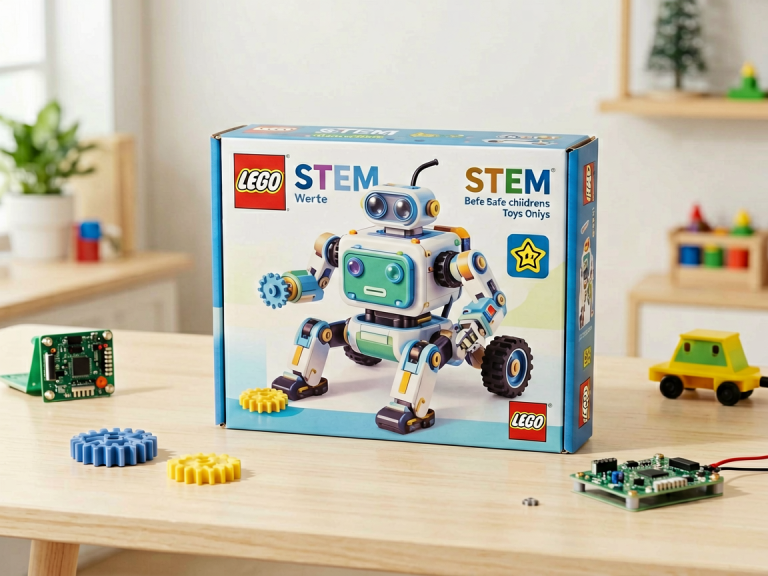
While coding toys focus primarily on logic and sequencing, robot toys expand the experience into the broader realm of STEM—science, technology, engineering, and mathematics. These are physical, often autonomous or semi-autonomous machines that respond to commands, sensors, and environmental inputs. The most well-known examples include LEGO Mindstorms, Sphero BOLT, Ozobot, and the Cozmo robot. Each offers a unique blend of hardware and software engagement.
LEGO Mindstorms, now in its fifth generation (Robot Inventor kit), allows users to build complex robots from LEGO bricks and then program them using a drag-and-drop interface based on Scratch. Children can create robots that shoot balls, navigate mazes, or even play musical instruments. The process inherently teaches engineering principles—gearing, torque, structural stability—alongside coding concepts like loops, conditionals, and variables. Similarly, Sphero BOLT is a spherical robot that can be programmed via a smartphone app to roll, change colors, and sense its surroundings. Its built-in compass, light sensor, and gyroscope introduce children to the world of sensors and data collection. They might program the robot to follow a light source or navigate a black-line track, understanding how real autonomous cars work in the process.
These robot toys are particularly powerful because they provide immediate, tangible feedback. When a child writes a program and the robot moves as intended, the result is a burst of pride and accomplishment. When it fails—perhaps crashing into a wall or spinning in circles—the child can physically see the error and debug it. This trial-and-error process is the heart of learning. Furthermore, many robot toys are designed to grow with the child. Beginners might use simplified block-based programming (like Scratch), while older children can transition to text-based languages such as Python (supported by Sphero and some LEGO kits). This scalability ensures that the toy remains challenging and relevant for years, providing exceptional value.
The Cognitive and Social Benefits: More Than Just Code
The value of coding and robot toys extends far beyond technical skills. Educators and psychologists have documented a wide range of cognitive and social-emotional benefits that arise from their regular use.
Cognitively, these toys foster systematic thinking. Children learn to deconstruct a complex task into smaller, manageable steps—a process known as decomposition, a key tenet of computational thinking. They also develop pattern recognition by noticing that certain sequences of commands produce consistent results. Perhaps most importantly, they learn to persist through failure. Programming a robot rarely works on the first try. Children must revisit their instructions, identify errors (bugs), and try again. This resilience is a vital life skill, far more valuable than any specific coding syntax.
Socially, coding and robot toys often encourage collaboration. In classrooms and homes, children frequently work in pairs or small groups to solve challenges. They must communicate their ideas, listen to others, and negotiate solutions. For instance, a group building a LEGO Mindstorms rover might divide tasks: one child works on the chassis, another on the motor system, and a third on the code. Such role-playing mirrors real-world engineering teams. Additionally, these toys can be particularly engaging for children who may struggle with traditional academic subjects. A child who dislikes writing essays might excel at designing a robot’s path, discovering a new avenue for self-expression and achievement.
Another often-overlooked benefit is the demystification of technology. Many children grow up viewing computers and smartphones as magical black boxes. By programming a physical robot, they learn that technology is built on logical rules—that it can be understood, controlled, and even improved. This empowerment is especially crucial for girls and underrepresented minorities who might otherwise feel excluded from the tech world. When a child successfully commands a robot to dance or solve a puzzle, they internalize the message: "I can do this. Technology is for me."
Choosing the Right Toy: Age, Interest, and Learning Goals
Given the abundance of options, selecting the perfect coding or robot toy can feel overwhelming for parents and educators. A few guiding principles can simplify the decision.
First, consider the child’s age and developmental stage. For ages 3–6, screen-free coding toys like Cubetto, Code-a-Pillar, or Robot Turtles (a board game) are ideal. They require no reading and rely on simple, sequential logic. For ages 6–9, products like Dash from Wonder Workshop or Botley the Coding Robot offer more complexity while remaining intuitive. Dash responds to voice commands and can be programmed using a tablet, but the interface is visual and playful. For ages 9–14, LEGO Mindstorms, Sphero BOLT, or Makeblock mBot provide deeper engineering challenges and can transition to text-based coding. Teenagers may enjoy advanced kits like the NVIDIA Jetson Nano-based robots or the Arduino-compatible robots that require soldering and custom circuitry.
Second, match the toy to the child’s interests. A child who loves animals might be inspired by a robotic pet like Cozmo or Vector, which has a personality and can express emotions. A future engineer might prefer a build-from-scratch kit like the ElecFreaks Micro:bit Smart Robot Car. A child fascinated by space might enjoy programming a robot to simulate a Mars rover mission. Many manufacturers offer theme-based expansion packs to sustain interest.
Third, evaluate the learning ecosystem. The best coding and robot toys are supported by robust curricula, online tutorials, and active communities. Sphero’s app, for example, includes hundreds of STEAM activities aligned with educational standards. LEGO Mindstorms has an extensive online community where users share designs and code. Consider the availability of teacher guides, lesson plans, and customer support—especially if the toy is intended for classroom use.
Finally, assess the balance between open-ended play and guided challenges. Some toys, like Ozobot, are designed for free-form creativity (children can draw paths with markers that the robot follows). Others, like the educational robots from VEX Robotics, are structured around competitions and specific tasks. A mix of both is often best: the child can follow structured lessons to build foundational skills and then apply them in imaginative ways.
The Future of Coding and Robot Toys: AI, Customization, and Inclusion
As technology advances, so do coding and robot toys. Several trends are shaping the next generation of these products.
First, artificial intelligence is becoming more integrated. Early robot toys, like Cozmo, already showcased limited AI capabilities—facial recognition, emotional responses, and adaptive behaviors. Future robots will likely incorporate more sophisticated machine learning models, allowing them to learn from a child’s interactions and offer personalized challenges. Imagine a robot that notices a child struggles with loops and automatically provides additional exercises on that topic. Such adaptive learning could revolutionize home education.
Second, customization and modularity are expanding. The rise of 3D printing enables children to design and print their own robot parts, while platforms like Micro:bit and Raspberry Pi allow infinite hacking. This aligns with the "maker movement," encouraging children to become creators rather than consumers. Companies like Makeblock and CircuitMess offer kits that teach electronics along with coding, blurring the line between toy and tool.
Third, inclusivity is a growing priority. New coding toys are being designed with accessibility in mind—for children with visual impairments, hearing loss, or motor difficulties. For example, some robots use tactile feedback (vibration) instead of visual cues, and apps include text-to-speech and high-contrast modes. Non-English-native speakers also benefit from toys that use universal icons and minimal text. The goal is to ensure that every child, regardless of background or ability, can participate in the joy of coding and robotics.
Finally, the line between physical and digital is fading. Augmented reality (AR) and mixed reality (AR/VR) are merging with physical robot toys. A child might use an AR headset to see virtual obstacles that a real robot must navigate, combining the tangibility of a physical object with the flexibility of a digital environment. This hybrid approach could make learning even more immersive and engaging.
Conclusion: Building a Generation of Thinkers, Not Just Users
Coding toys and robot toys represent a profound shift in how we prepare children for an uncertain future. They are not merely gimmicks or expensive gadgets; they are tools that teach the language of the 21st century—the language of logic, creativity, and perseverance. By transforming abstract code into concrete actions, they empower children to become active creators of technology rather than passive consumers. As parents, educators, and designers continue to refine these tools, one thing becomes clear: the best toy is not the one that entertains the most, but the one that teaches the most while still feeling like play. In an era defined by rapid technological change, giving a child a coding or robot toy is an investment in their ability to think, to adapt, and to shape the world around them. And that is the most fundamental lesson of all.