Coding Toys vs. Robot Toys: A Comparative Exploration of Learning through Play
Introduction
In the rapidly evolving landscape of children’s education, toys have transcended their traditional roles as mere sources of entertainment. Today, they serve as powerful tools for cognitive development, skill acquisition, and early exposure to STEM (Science, Technology, Engineering, and Mathematics) concepts. Among the most intriguing categories are coding toys and robot toys. While these two types of playthings often overlap in marketing and public perception, they represent distinct approaches to introducing children to computational thinking and engineering principles. This article aims to dissect the differences and similarities between coding toys and robot toys, examining their unique educational benefits, target age groups, mechanisms of engagement, and overall impact on a child’s development. By comparing these two categories, parents, educators, and hobbyists can make more informed decisions about which type of toy best aligns with a child’s interests, learning style, and developmental stage.
Defining Coding Toys and Robot Toys
Before delving into a detailed comparison, it is essential to establish clear definitions for each category.
*Coding toys* are designed primarily to teach the fundamentals of programming logic, sequencing, loops, conditionals, and debugging—without necessarily requiring a physical robot to execute commands. These toys often take the form of board games, app-connected blocks, physical coding cards, or screen-based environments where children drag and drop instructions. Examples include Code-a-Pillar, Osmo Coding, and the classic ScratchJr app. The core experience revolves around constructing a sequence of instructions that produce a visible outcome, such as a character moving on a screen or lights blinking in a pattern. The emphasis is on the abstract process of coding itself, often using tangible or visual interfaces to make the logic accessible to young learners.
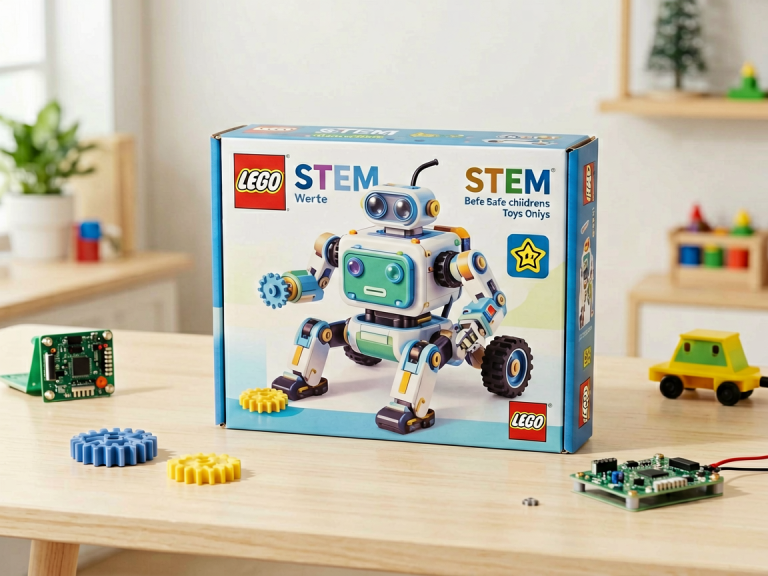
*Robot toys*, on the other hand, center on a physical, programmable robot that children can build, customize, or control. These toys typically involve assembling mechanical parts, sensors, motors, and sometimes a central processing unit. Once assembled, the robot can be programmed using a variety of methods—from simple push-button commands to more advanced block-based or text-based coding languages. Popular examples include Lego Mindstorms, Sphero, Dash and Dot, and the more recent mBot. The robot itself is the tangible result of the child’s efforts, and the programming aspect often serves as a means to make the robot move, respond to the environment, or perform specific tasks. The experience is inherently multisensory: children see, hear, and touch the physical manifestation of their code.
The key distinction lies in the medium: coding toys prioritize the abstract logic of programming, often with minimal or no physical embodiment, while robot toys integrate coding as a tool to control a physical machine. This distinction has profound implications for how children engage with each type of toy.
Educational Benefits: Cognitive Skills and Conceptual Understanding
Both categories foster essential 21st-century skills, but they target different aspects of learning.
*Coding toys* excel at building foundational computational thinking. Because they strip away the complexity of mechanical assembly and sensor calibration, children can focus purely on the logical structure of code. They learn to break down a problem into smaller steps (decomposition), recognize patterns (pattern recognition), create step-by-step sequences (algorithm design), and identify errors (debugging). For instance, a child using a coding board game must arrange cards in the correct order to guide a character through a maze. This activity directly mirrors the process of writing a program, but in a simplified, visual, and highly motivating format. Moreover, coding toys often provide immediate, non-physical feedback—such as a screen animation or a sound effect—that reinforces correct logic without the frustration of a robot failing to move due to a loose wire. This makes them ideal for early learners (ages 3–7) who are just beginning to understand cause-and-effect relationships.
*Robot toys*, in contrast, offer a richer, more integrated learning experience that combines coding with engineering, physics, and design. When a child assembles a robot, they must consider structural integrity, weight distribution, gear ratios, and motor placement. This hands-on construction process teaches spatial reasoning and mechanical intuition. Once the robot is built, programming it involves not only logical sequencing but also an understanding of how software commands translate into physical actions. For example, programming a robot to follow a line requires an understanding of sensor input, feedback loops, and real-world variables like surface texture and lighting conditions. This multidisciplinary approach is particularly valuable for older children (ages 8–14) who are ready to explore the intersection of hardware and software. Robot toys also naturally introduce troubleshooting: if the robot veers off course, the child must consider both the code and the mechanics—was the command wrong, or is the wheel slipping? This dual-layer problem-solving is a powerful learning opportunity.
Creativity, Open-Ended Play, and Engagement
Creativity flourishes differently in the two domains.
*Coding toys* often provide structured templates or predefined challenges (e.g., “Get the cat to the mouse using exactly six steps”). While some allow for open-ended creation, the primary mode is puzzle-like. This structure is beneficial for building procedural fluency but can sometimes limit creative expression. However, many modern coding toys, such as ScratchJr, offer a blank canvas where children can create their own stories, animations, or games. This allows for a high degree of creative freedom within a purely digital space. The downside is that the output remains virtual; there is no physical artifact to hold or show off.
*Robot toys* tend to foster more tangible creativity. A child can design a robot that looks like a dragon, a car, or a helper for household tasks. The act of building itself is a creative endeavor, and the programming can be directed toward unique goals—programming a robot to dance, to draw, or to navigate an obstacle course made of books and pillows. Because the robot moves and interacts with the physical world, the results are highly visible and shareable. This can be deeply motivating for many children, especially those who are kinesthetic or visual learners. Additionally, robot toys often support greater customization: adding sensors, lights, or even 3D-printed parts allows children to modify their robot over time, encouraging iterative design and experimentation.
In terms of engagement, both types of toys can captivate children for extended periods, but the nature of engagement differs. Coding toys are more likely to engage children who enjoy puzzles, logic games, and screen-based interaction. Robot toys appeal to children who love building, tinkering, and seeing physical action. Many children enjoy both, but preferences often emerge based on personality and learning style.
Age Appropriateness and Developmental Considerations
Age plays a critical role in determining which category is more suitable.
For children aged 3–6, *coding toys* are generally more appropriate. Their abstract, screen-based or card-based interfaces avoid the fine motor demands of assembling small robot parts. They also prevent the frustration that can arise when a robot fails to function due to a loose connection—a common issue even for older children. At this age, the goal is to build a conceptual foundation: understanding that instructions have consequences. Toys like the Fisher-Price Code-a-Pillar or the Cubetto (a wooden coding robot that does not require screens) are excellent choices. They are durable, large, and safe, and they introduce sequencing without overwhelming young minds.
For children aged 7–10, the line blurs. Many children at this age have the manual dexterity and patience to build simple robots. Entry-level robot kits like the Dash robot (which is pre-assembled) or the makeblock mTiny (which uses tangible code blocks) bridge the gap between coding toys and robot toys. These products allow children to focus on programming without the stress of construction, yet they still provide a physical robot that responds. As children progress, they can move to more complex kits like Lego Boost, which requires assembly and introduces basic block-based coding.
For pre-teens and teenagers (ages 11–14), *robot toys* become particularly powerful. Advanced kits like Lego Mindstorms Robot Inventor, VEX IQ, or Arduino-based robots offer deep challenges in engineering and programming. Children can learn text-based languages like Python or C++ in the context of robotics. At this stage, coding toys may seem too simplistic or abstract; the tangible feedback loop of a moving robot is more compelling. Furthermore, robot toys naturally lead to participation in robotics competitions (e.g., FIRST Lego League, VEX Robotics), which foster teamwork, project management, and perseverance.
Social Interaction and Collaborative Learning
Both types of toys can be used individually or in groups, but robot toys often lend themselves more naturally to collaborative projects. Building and programming a robot is a task that benefits from division of labor—one child focuses on software, another on hardware, and a third on testing and debugging. This mirrors real-world engineering teams. Coding toys, especially those on tablets or computers, are more often solitary activities, though many have multiplayer modes or can be used in classroom settings for collaborative problem-solving.
Robot toys also invite more physical interaction: children can race their robots, have them compete in sumo wrestling, or cooperate in a rescue mission. These activities naturally promote communication, negotiation, and peer learning. Coding toys can also be social when used in a board game format, but the level of physical collaboration is typically lower.
Cost, Accessibility, and Longevity
Price points vary widely within both categories, but general trends exist. Coding toys, especially those that are purely app-based or card-based, tend to be more affordable. Many high-quality coding apps are free or low-cost. Physical coding toys like Osmo or Code-a-Pillar cost between $30 and $80. Robot toys, on the other hand, often require investment in motors, sensors, and structural components. Entry-level robots like Sphero Mini cost around $50, while advanced kits like Lego Mindstorms can exceed $300. However, robot toys often have higher replay value because they can be rebuilt in different configurations, programmed in increasingly complex ways, and used for years as the child’s skills grow. Coding toys, especially puzzle-based ones, may be completed once and then lose their appeal, though open-ended platforms like ScratchJr can be used indefinitely.
Accessibility is another factor. Coding toys require minimal setup and can be used immediately, often out of the box. Robot toys may require batteries, assembly time, and sometimes a computer or tablet for programming. For busy families, the lower barrier to entry of coding toys can be appealing. However, for children who crave hands-on making, the extra effort of robot toys is part of the reward.
Conclusion: A Complementary Relationship
Rather than viewing coding toys and robot toys as competitors, it is more productive to see them as complementary stages in a child’s STEM journey. Coding toys provide the conceptual foundation—the “grammar” of programming—in a safe, accessible, and highly structured environment. They are ideal for early learners who need to grasp abstract ideas without the distraction or frustration of mechanical failure. Robot toys then build on that foundation, adding the rich context of physical creation, engineering design, and real-world interaction. Together, they form a continuum that can guide a child from simple cause-and-effect games to sophisticated robotics programming.
For parents and educators, the best choice depends on the child’s age, interests, and prior experience. A five-year-old will benefit most from a coding toy; a ten-year-old with some coding background will thrive with a robot kit. Offering both types over time ensures that children develop a balanced set of skills—logical reasoning, creativity, perseverance, and technical literacy. In the end, the goal of both coding toys and robot toys is the same: to ignite curiosity, empower young minds, and prepare children for a future where computational thinking is as fundamental as reading and writing. By understanding the strengths and limitations of each category, we can harness their power to make learning an adventure.