Building Minds or Sparking Curiosity? A Parent’s Guide to Science Kits vs. Building Toys for Kids
Introduction: The Great Toy Debate
Every parent has faced the same dilemma while browsing the aisles of a toy store or scrolling through endless online listings: should I buy that colorful chemistry set with test tubes and glowing liquids, or the classic wooden block tower that promises hours of imaginative construction? On the surface, both science kits and building toys seem to promote learning through play. But beneath the packaging, they represent fundamentally different approaches to childhood development. Science kits are designed to guide children through structured experiments, teaching them the “how” and “why” of natural phenomena. Building toys, from simple LEGO bricks to complex magnetic tiles, emphasize open-ended creation, spatial reasoning, and persistence. Which one is better for your child? The answer, as we will see, depends on your child’s age, temperament, and developmental goals. This article explores the unique benefits and potential drawbacks of each category, offering evidence-based insights to help parents make informed choices.
1. The Core Philosophy: Structured Learning vs. Free Exploration
Science Kits: The Laboratory in a Box
Science kits are meticulously curated to deliver a specific educational outcome. A typical kit might include instructions for building a volcano, growing crystals, or assembling a simple circuit. The underlying philosophy is one of guided discovery. Children follow step-by-step procedures, record observations, and often discuss results with an adult. This structure mirrors real scientific methodology—hypothesis, experiment, analysis, conclusion. For example, a pH-testing kit teaches children that vinegar turns litmus paper red while baking soda turns it blue, reinforcing concepts of acidity and alkalinity. The child is not inventing a new type of chemistry but rather replicating known phenomena. This can be enormously satisfying for youngsters who crave clear answers and immediate, tangible results. The structured nature also reduces frustration: if a child follows the instructions correctly, the experiment works. Failure is often due to a missed step, which teaches attention to detail.
Building Toys: The Architect’s Studio
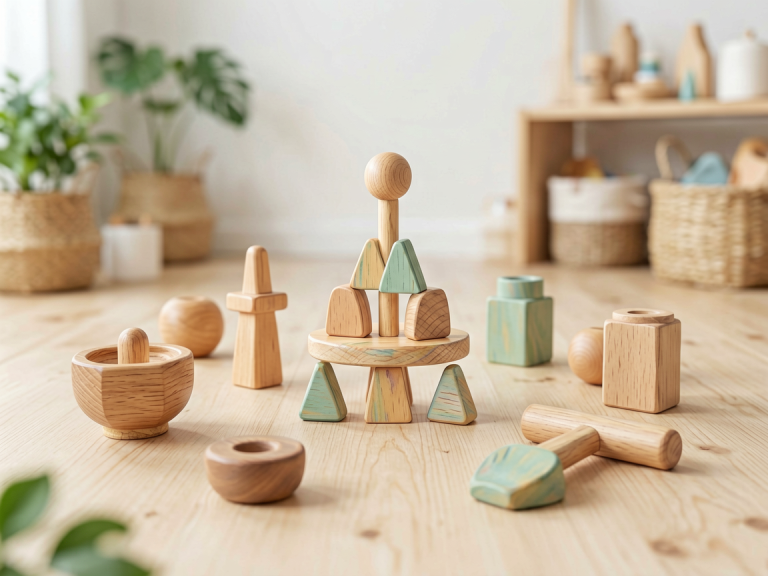
Building toys, in contrast, offer a blank canvas. A set of 200 wooden blocks, a collection of magnetic rods and spheres, or a bucket of interlocking plastic bricks comes with no manual (or only a few inspiring examples). The child must decide what to build, how to build it, and what to do when it collapses. This is the essence of constructivist learning—the idea that children build knowledge through active problem-solving. A child stacking blocks learns about balance and gravity not from a textbook but from the wobbling tower that falls for the tenth time. A child connecting magnetic tiles to form a castle experiments with angles, symmetry, and structural integrity. The process is iterative, messy, and deeply personal. While science kits often have a defined “success” (the volcano erupts, the crystal grows), building toys have a fluid definition of success: maybe the tower stands for five seconds, or maybe it becomes a spaceship instead of a house. This freedom nurtures creativity, resilience, and independent thinking.
2. Cognitive Skill Development: Two Paths to the Same Goal?
Science Kits and Scientific Thinking
Science kits excel at teaching domain-specific knowledge and procedural logic. When a child uses a microscope kit to examine onion cells, they are learning about biology, magnification, and careful observation. They also practice following multi-step directions—a critical executive function skill. Many kits require measuring, timing, and recording data, which reinforces basic math and literacy. For example, a weather station kit might ask children to chart temperature and rainfall daily, teaching data collection and graphing. Moreover, science kits often involve safety rules (wearing goggles, handling chemicals carefully) that instill responsibility. However, a potential downside is that too much structure can limit curiosity if the child feels they must “complete” the experiment rather than explore variations. Some kits are also one-time-use—once the chemicals are consumed or the crystals grown, the magic fades.
Building Toys and Spatial Cognition
Building toys are arguably unmatched in developing spatial reasoning, a skill strongly correlated with later success in STEM fields. A 2017 study published in *Developmental Science* found that children who engaged with construction blocks showed improved mental rotation abilities—the capacity to visualize objects from different angles. This is the same skill that helps engineers design bridges and surgeons navigate organs. Furthermore, building toys promote trial-and-error persistence. A child who wants to build a bridge that can hold a toy car must experiment with different pillar placements, arch shapes, and material distribution. Failure is not a dead end but a learning opportunity. Unlike a failed chemistry experiment (which might produce a mess and require adult intervention), a collapsed block tower can be rebuilt instantly. This low-stakes environment encourages risk-taking and iterative design. Additionally, building toys are reusable and adaptable—the same set of LEGO bricks can become a castle today, a robot tomorrow, and a geometric sculpture next month.
3. Emotional and Social Growth: Solo Experiments vs. Collaborative Constructions
Science Kits: The Bonding Catalyst
Many science kits are designed for adult-child collaboration. A parent and child mixing baking soda and vinegar together to make a “lava lamp” enjoy shared wonder and conversation. This guided interaction can strengthen the parent-child relationship and build a positive association with learning. For siblings, science kits can be a structured group activity, with one child measuring and another pouring. However, the prescribed nature of the activity can sometimes stifle peer negotiation. If two children disagree on who gets to add the final drop of food coloring, the experiment’s sequence might break down. Science kits also tend to be quieter, more focused activities—ideal for a rainy afternoon but less conducive to the loud, dynamic play that some children crave.
Building Toys: The Social Sandbox
Building toys, particularly large sets like giant foam blocks or magnetic tiles, excel at group play. When multiple children build together, they must negotiate roles, share resources, and resolve conflicts. “I’ll hold the base while you add the top!” This collaborative problem-solving teaches communication and empathy. Even solitary building has emotional benefits: it can be meditative and calming, allowing a child to retreat into a world of their own making. The open-ended nature also means that children with different skill levels can play together—a five-year-old might stack blocks while a ten-year-old builds a complex crane, yet both feel competent. In contrast, a 10-year-old and a 5-year-old using the same chemistry kit might struggle because the older child will dominate the procedure, leaving the younger one as a passive observer.
4. Age Considerations: When to Introduce Each Type
Toddlers and Preschoolers (Ages 2–5)
For the youngest children, building toys are almost always superior. Safety is a primary concern—science kits often contain small parts, liquids, or sharp objects unsuitable for mouthy toddlers. Large, soft blocks, Duplo, and magnetic tiles allow them to practice gross motor skills, cause-and-effect (put a block on top, it may fall), and basic spatial vocabulary (“up,” “down,” “on the side”). Science kits for this age are rare, but simple nature exploration kits (magnifying glasses, bug viewers) can introduce observation without risky materials.
Early Elementary (Ages 5–8)
This is the sweet spot for both categories. Children can follow simple instructions and have enough dexterity to handle test tubes or small bricks. Kits like “snap circuits” or “crystal growing” are popular because they deliver dramatic results. Building toys now include more complex sets like LEGO Creator or K’NEX, which require reading diagrams and planning ahead. Parents should balance both: a child who leans toward building might enjoy a “bridge-building” kit that combines engineering with science, while a child fascinated by volcanoes might appreciate a construction toy that allows them to build a volcano model before the eruption.
Older Children (Ages 9+)
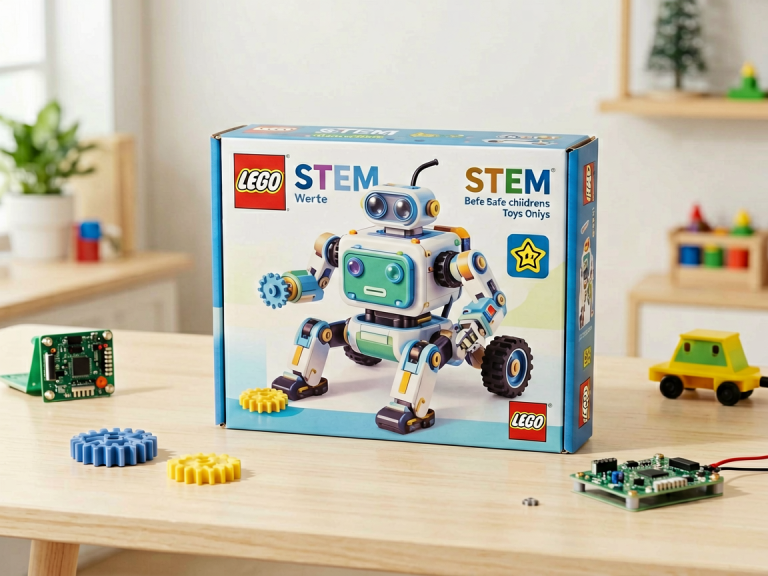
As children approach adolescence, science kits can become more sophisticated—robotics kits (like LEGO Mindstorms or Makeblock), coding kits, and chemistry sets with real lab equipment. These kits teach rigorous skills like programming, systematic troubleshooting, and lab safety. Building toys for this age include architectural sets, marble runs, and advanced engineering toys like Meccano. The distinction blurs: many “science kits” now incorporate building (e.g., a solar-powered car kit where you assemble the chassis and connect the motor). The key is to follow the child’s passion. A child who loves building will benefit from a structure that adds a scientific goal (e.g., “build a car that travels exactly one meter”), while a child who loves science may enjoy a building challenge that demands creativity (e.g., “use these blocks to demonstrate how a lever works”).
5. Practical Considerations: Cost, Space, and Longevity
Science Kits: High Initial Cost, Single-Use Components
A high-quality science kit can cost between $20 and $150. Some kits, like chemistry sets, include consumable materials (powders, acids, seeds) that are used up after one or two experiments. Others, like a microscope or a telescope, are durable but require additional purchases (slides, filters). Kits also often need adult supervision, which can be a time commitment. On the plus side, they offer a “complete experience” with all necessary materials, reducing the need to hunt for household items.
Building Toys: Higher Upfront Investment, Infinite Replayability
Building toys from reputable brands (LEGO, Magna-Tiles, Kapla blocks) are expensive initially—a large set can cost $100 or more. However, they last for years. Unlike science kits, they don’t run out of ingredients. A child can build the same set dozens of times in different ways. Additionally, building toys encourage free play that complements other activities, such as storytelling (building a castle for a doll) or math (counting blocks, comparing sizes). The space requirement is significant: a collection of blocks or magnetic tiles can take up a whole shelf or bin. But many families find the investment worthwhile because the toys grow with the child—a 3-year-old stacks; a 7-year-old builds symmetrical structures; a 12-year-old designs complex machines.
6. Conclusion: The Best Choice Is No Choice at All
After examining both categories, one conclusion becomes clear: science kits and building toys are not rivals but allies. A child who only plays with building toys may develop strong spatial and creative skills but miss out on learning about the natural world through structured inquiry. A child who only uses science kits may become a skilled procedural thinker but lack the imagination to solve open-ended problems. The ideal playroom—or the ideal childhood—includes both. Let a child build a tower with magnetic tiles, then light it up with an LED circuit from a science kit. Let them grow crystals in a jar, then use the same jar as a “treasure chest” in a block castle. The synergy between the two types of play mirrors the real world of science and engineering, where discovery and creation go hand in hand. So the next time you are torn between the chemistry set and the construction set, remember: buy both. Your child’s brain—and their joy—will thank you.