Science Kits vs. Building Toys: Which Sparks Greater Learning and Creativity?
Introduction
For decades, parents, educators, and toy manufacturers have debated a fundamental question: when it comes to children’s development, are science kits or building toys more beneficial? On one side, science kits promise to ignite a passion for discovery, offering hands-on experiments that teach chemistry, physics, and biology. On the other, building toys like LEGO, wooden blocks, and magnetic tiles champion open-ended creativity, spatial reasoning, and engineering intuition. The debate is not merely academic—it shapes purchasing decisions, classroom curricula, and even how we define “productive play.” This article provides a comprehensive comparison of the two categories, examining their educational strengths, cognitive impacts, creative potential, and practical considerations. By the end, you will understand that neither is universally superior; rather, the choice depends on the child’s age, personality, and learning goals. However, the deeper truth may be that the most powerful development occurs when both types of toys are used in tandem.
The Nature of Play: Structured Discovery vs. Open-Ended Creation
At their core, science kits and building toys embody two fundamentally different philosophies of play. Science kits typically follow a predetermined sequence: the child receives a box containing materials, instructions, and a specific outcome—a volcano that erupts, a crystal that grows, or a circuit that lights a bulb. The process is guided, and success is measured by whether the experiment works as intended. This structure provides a clear framework for learning cause and effect, following procedures, and experiencing the thrill of a reproducible result. For a child who craves clear goals and immediate feedback, science kits can be deeply satisfying.
Building toys, in contrast, thrive on ambiguity. A set of interlocking bricks or wooden planks has no prescribed endpoint. The child decides what to build—a tower, a spaceship, a castle, or an abstract sculpture. The only limit is imagination (and sometimes gravity). This open-endedness fosters divergent thinking, problem-solving under constraints, and the ability to revise plans when a structure collapses. While science kits teach “what happens if I mix this with that,” building toys teach “what happens if I change the shape?” Both are valuable, but they engage different cognitive muscles. A child who loves order and predictability may lean toward science kits; a child who delights in endless possibilities may gravitate toward building toys.
Cognitive Development: Scientific Thinking vs. Spatial Reasoning
From a cognitive perspective, science kits and building toys stimulate distinct but complementary skill sets. Science kits are excellent for developing the scientific method: observation, hypothesis formation, experimentation, and conclusion drawing. When a child mixes baking soda and vinegar and sees a fizzy reaction, they are absorbing basic chemistry. More advanced kits introduce variables, controls, and data recording—skills that underpin STEM education. Additionally, science kits often include explanatory manuals that link the activity to real-world phenomena, building a foundation of factual knowledge.
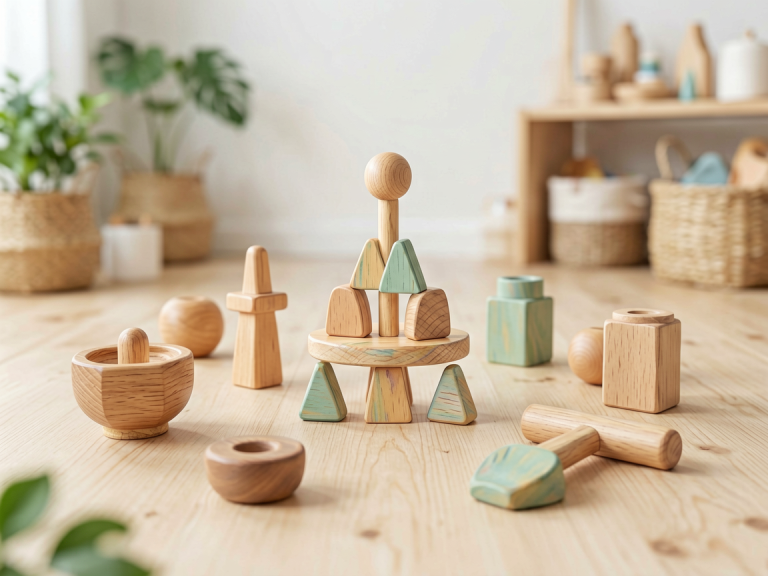
Building toys, on the other hand, are powerhouses for spatial reasoning and early engineering concepts. Constructing a stable bridge requires an intuitive understanding of balance, symmetry, and load distribution. When a child realizes that a taller tower needs a wider base, they are internalizing principles of structural engineering. Research consistently shows that children who play with construction toys perform better on tasks involving mental rotation, geometry, and visual-spatial working memory. These skills are crucial not only for STEM fields but also for art, design, and everyday navigation. Moreover, building toys often involve iterative trial-and-error—a key component of the engineering design process. While science kits teach the “why” behind natural phenomena, building toys teach the “how” of creating functional forms.
Creativity and Imagination: Guided Experiments vs. Freeform Construction
Creativity is often cited as a distinguishing factor in this debate, but the relationship is more nuanced than a simple binary. Science kits can be criticized for limiting creativity because the experiments are pre-designed. However, this ignores the creativity involved in modifying an experiment, asking “what if” questions, or designing new variations. A child who wonders, “What happens if I use lemon juice instead of vinegar?” is exercising creative scientific thinking. Furthermore, many modern science kits include open-ended challenges that encourage customization, such as building a solar-powered car that can be redesigned for speed.
Building toys are traditionally seen as the champions of freeform creativity. A child can transform a pile of bricks into anything: a fantasy world, a vehicle, or a functional machine. This process nurtures narrative thinking, aesthetic sensitivity, and the ability to visualize outcomes before constructing them. However, not all building play is equally creative. When a child simply follows the instructions for a model spaceship, they engage in replicative building rather than invention. The true creative value emerges when they deviate from the plan, combine sets, or build from scratch. Thus, both toy types can foster creativity—science kits through divergent inquiry, building toys through divergent design—provided the child is encouraged to explore beyond the obvious.
Age Appropriateness and Long-Term Engagement
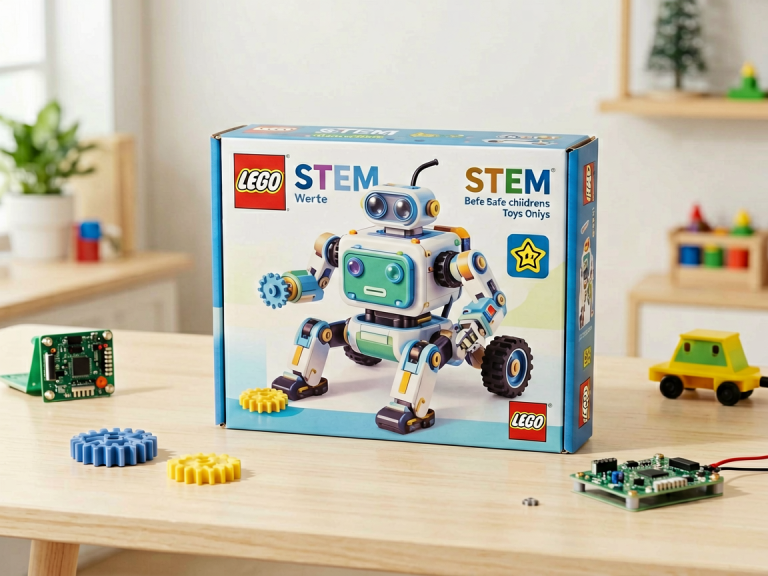
Age is a critical factor in deciding which toy is “better.” For toddlers and preschoolers, building toys (especially large blocks or magnetic tiles) are ideal because they require minimal reading, develop fine motor skills, and pose no risk of chemical spills. Science kits designed for this age group exist but often rely on adult supervision and simplified concepts like color mixing or sink/float experiments. By contrast, school-age children (6–12) can benefit enormously from both. Science kits become more sophisticated—snap-circuit electronics, chemistry sets with test tubes, and biology kits with microscopes—offering a depth that building toys may lack. Yet building toys also scale up: complex LEGO Technic sets teach gears, levers, and pneumatics, blurring the line between construction and science.
Long-term engagement is another consideration. Many science kits are single-use: once the chemicals are consumed or the crystal has grown, the kit is exhausted. This can be frustrating for parents who want reusable play. Building toys, by contrast, are inherently reusable; a single set of bricks can fuel years of play, often supplemented by new pieces. However, science kits that focus on reconfigurable components—like microscope slides, circuit boards, or programmable robotics—can offer similar longevity. The key is to choose quality over novelty. A cheap science kit with flimsy materials will be quickly abandoned; a well-designed building toy with limited parts may also bore a child. Both categories have their disposable and durable versions.
Social and Collaborative Aspects
Play is often a social activity, and both science kits and building toys lend themselves to group work, albeit in different ways. Science kits are excellent for collaborative experimentation: children can take turns measuring, observing, and recording data. A volcano eruption is more fun when three friends crowd around, shouting predictions. Science kits also naturally encourage discussion about results, which builds communication and scientific reasoning skills. However, too many participants can lead to chaos, and some experiments require careful individual attention.
Building toys, especially large-scale constructions, can be profoundly collaborative. A group of children building a city with blocks negotiates roles, shares resources, and resolves conflicts when a tower falls. This type of play fosters teamwork, compromise, and collective problem-solving. Moreover, building projects can be ongoing—a towering castle constructed over several days becomes a shared narrative. Both types of toys thus promote social skills, but building toys may have an edge in fostering sustained group projects that require long-term cooperation.
Practical Considerations: Cost, Complexity, and Reusability
From a practical standpoint, parents and educators must weigh cost, complexity, and mess. Science kits can range from a few dollars for a simple reaction set to hundreds for a full chemistry lab. The per-use cost can be high, especially for consumable kits. Additionally, some science kits require adult supervision, which can be a barrier for busy families. They may also produce messes—spills, stains, or odors—that some parents find troublesome. On the positive side, a good science kit can provide a structured, educational activity that a child might not otherwise encounter at home.
Building toys, especially classic plastic bricks, have a higher upfront cost but lower long-term expenditure because they are reused endlessly. They require no special clean-up (though loose bricks on the floor are a tripping hazard) and can be engaged with independently even by young children. However, complex building sets (like motorized models) may demand patience and dexterity, and pieces can be lost easily. Another practical factor is storage: a collection of bricks takes up space, while a science kit often fits in a compact box. Ultimately, the “better” choice depends on a family’s budget, tolerance for mess, and willingness to supervise.
Conclusion: A Synergistic Approach
So, which is better—science kits or building toys? The answer is that both are powerful tools for child development, but they serve different purposes. Science kits excel at introducing structured inquiry, factual knowledge, and the thrill of predictable results. Building toys shine in fostering open-ended creativity, spatial reasoning, and perseverance. A child who only uses science kits may become expert at following procedures but might struggle with freeform problem-solving. Conversely, a child who only builds may miss out on understanding the scientific principles behind their creations.
The most effective strategy is to combine them. A child who builds a tower and then asks, “Why did it fall?” can be guided to a science kit that explores balance and gravity. A child who conducts a chemistry experiment can then use building toys to construct a model of a molecule or a laboratory. Many modern educational toys already blur the lines—robotics kits that combine building with programming, or architecture sets that teach physics. In the end, the best toy is the one that sparks a child’s curiosity, sustains their engagement, and adapts as they grow. Rather than choosing one over the other, invest in both, and let the child discover the joy of learning through play in all its forms.