Magnetic Tiles vs. Building Blocks: Which Toy Better Nurtures a Child’s Mind?
Introduction
For decades, the humble wooden block has been a cornerstone of early childhood play. Its simplicity, tactile warmth, and endless stacking possibilities have earned it a permanent spot on nursery shelves. Yet in the last ten years, a sleek, colorful newcomer has stormed the toy industry: magnetic tiles. These translucent, geometric pieces snap together with satisfying clicks, allowing children to build cubes, castles, and even complex 3D structures that defy gravity. Parents, educators, and toy reviewers now face a genuine dilemma: which is better for my child? The answer, however, is not a simple choice of one over the other. Both magnetic tiles and building blocks offer distinct developmental benefits, and understanding their differences—and their unique strengths—can help families make informed decisions that align with a child’s age, temperament, and learning goals. This essay will explore the cognitive, motor, creative, and social advantages of each toy, comparing them across multiple dimensions to determine which might be “better” in specific contexts, while ultimately arguing that the ideal choice often involves integrating both into a child’s playroom.
The Case for Classic Building Blocks
1. Motor Skills and Spatial Reasoning
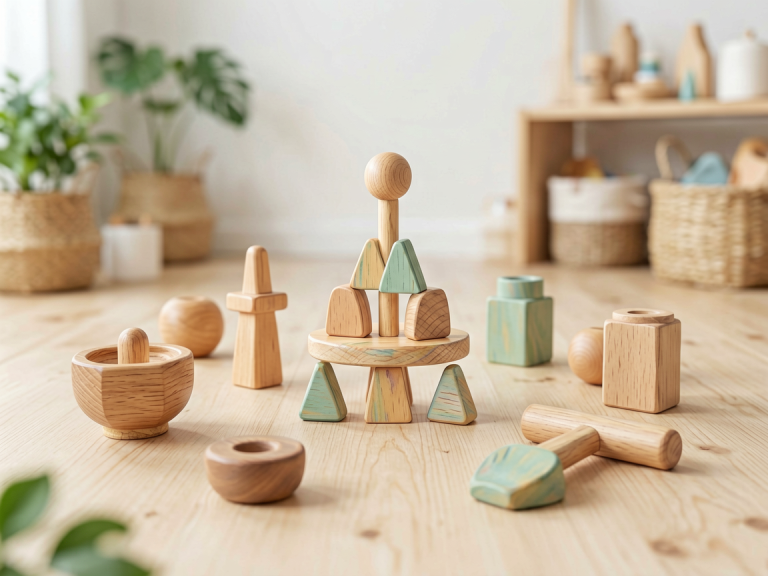
Traditional building blocks, whether made of wood, plastic, or foam, require precise motor control. A child must carefully align a block on top of another, judging distance, weight distribution, and balance. This process hones fine motor skills as small fingers grasp, rotate, and place each piece. Unlike magnetic tiles, which snap into place with minimal effort, blocks demand a level of spatial reasoning that is both challenging and rewarding. When a toddler stacks two cubes and they topple, the child learns cause and effect: “If I place this block too far to the edge, it falls.” This trial-and-error feedback loop is fundamental to developing an intuitive understanding of physics—gravity, stability, and equilibrium. Moreover, building blocks come in many shapes (rectangles, cylinders, arches, triangles) that force children to think about geometry in a concrete way. Can a cylinder support a flat square? Why does a triangular prism roll but a cube does not? These are questions that magnetic tiles, with their uniform edges, do not naturally provoke.
2. Open-Ended Creativity and Imitation
Blocks are almost infinitely open-ended. With a set of 50 wooden blocks, a child can build a tower, a house, a bridge, a wall, or even a pretend city. They can also be used as props for imaginative play—a block becomes a phone, a sandwich, or a stepping stone. This versatility encourages symbolic thinking, a cornerstone of cognitive development. Magnetic tiles, by contrast, often lead children toward specific structural patterns (like a cube or a pyramid) because the magnets naturally align in certain ways. While magnetic tiles also support creativity, the magnetic force subtly guides construction toward symmetry and enclosed shapes, whereas blocks offer no such guidance. For a child who loves to build irregular, asymmetrical structures (a leaning tower of Pisa, a crooked castle), blocks are the superior medium.
3. Durability and Sensory Experience
Wooden blocks are extraordinarily durable. They can be dropped, chewed, thrown, and even used as drumsticks without breaking. Their natural texture—the grain of the wood, the slight weight, the smooth or rough finish—provides rich sensory input that plastic magnetic tiles cannot replicate. For babies and toddlers who explore the world through mouthing and touching, wooden blocks are safer and more satisfying. Magnetic tiles, especially those with thin edges or small magnets, can pose a choking hazard if a tile breaks, and the clicking sound, while fun, lacks the warm, organic feel of wood. Furthermore, blocks do not require any cleaning of magnets or worrying about demagnetization. They are straightforward and timeless.
The Case for Modern Magnetic Tiles
1. Instant Success and Frustration-Free Play
One of the greatest advantages of magnetic tiles is the low barrier to entry. A three-year-old who lacks the fine motor control to stack blocks can simply bring two magnetic tiles close together, and they will snap into place. This instant gratification builds confidence and keeps a child engaged longer. For children with developmental delays or those who easily become frustrated, magnetic tiles can be a game-changer. The strong magnets hold structures together, allowing kids to build tall towers, bridges, and even cantilevers that would be impossible with loose blocks. This capability encourages exploration of engineering principles: a child can design a roof that stays up without a central support column, or a bridge that spans two tables. The “wow” factor of creating a stable, floating structure is deeply motivating.
2. Geometric and Mathematical Learning
Magnetic tiles are inherently mathematical. They come in squares, equilateral triangles, rectangles, and sometimes hexagons or pentagons. As children combine them, they learn about symmetry, angles, and tessellation. Building a cube requires four squares for the sides, but a child soon realizes that a cube can also be made from six squares arranged in a cross pattern. Magnetic tiles make these spatial relationships visible and tangible. A common activity is to build a 3D shape and then “flatten” it to see its net, or to compare the number of tiles needed for a pyramid versus a cube. Teachers have even used magnetic tiles to teach fractions (how many small triangles fill a larger square?) and area. Building blocks, while also useful for math, do not offer the same clarity because they are not transparent and do not snap into exact alignments. The magnetic connection forces a child to match edges perfectly, reinforcing precision.
3. Light and Color Exploration
Because magnetic tiles are translucent, they become magical when placed near a window or over a light source. Children can create stained-glass-like patterns, mix colors by layering tiles, and experiment with light and shadow. This aesthetic dimension adds a layer of scientific inquiry: “What happens when I put a blue tile over a yellow one? Why does the shadow change shape?” This kind of sensory play is less about construction and more about discovery, and it is entirely unique to magnetic tiles. Building blocks, being opaque, do not offer this feature.
Head-to-Head Comparison: Key Factors
Age Appropriateness
- For infants (6–18 months), building blocks (large, soft, or wooden) are safer and better for grasping, mouthing, and simple stacking. Magnetic tiles are not recommended due to small magnets and hard edges.
- For toddlers (18 months–3 years), magnetic tiles gain an edge because they allow even clumsy hands to create satisfying structures. However, blocks remain excellent for practicing balance and fine motor control.
- For preschoolers (3–5 years), both toys shine. Blocks encourage imaginative play and storytelling (e.g., building a farm with animals), while magnetic tiles spark engineering and geometric thinking.
- For older children (5+ years), magnetic tiles can support complex projects like geodesic domes, ball runs (with special add-ons), and even architectural models. Building blocks may become less engaging unless they are part of a themed set (like LEGO, but that is a different category).
Social and Collaborative Play
Both toys encourage cooperative play, but in different ways. With building blocks, children often negotiate about who places which block, and towers inevitably fall, leading to shared laughter or frustration that teaches emotional regulation. With magnetic tiles, collaboration involves designing a structure together and ensuring the magnets hold. The clicking sound and bright colors attract groups, and children often work in teams to build larger creations, such as a castle with multiple rooms. However, magnetic tiles can be more prone to “mine” conflicts because each piece is identical and desirable; blocks, with their varied shapes, can be divided more easily.
Cost and Longevity
A quality set of magnetic tiles (e.g., Magna-Tiles or PicassoTiles) is more expensive than a basic set of wooden blocks—typically $50–$150 for a starter set versus $20–$50 for a good block set. But magnetic tiles often hold children’s interest for years because they can be combined with other sets (e.g., adding wheels, balls, or track pieces). Wooden blocks, while cheaper, may be outgrown faster unless they are part of a larger system like unit blocks, which are used in Montessori classrooms through elementary school. In terms of longevity, magnetic tiles may have a slight advantage because they appeal to older children who enjoy engineering challenges.
Educational Value in STEM vs. General Development
If your goal is to introduce science, technology, engineering, and math (STEM) concepts, magnetic tiles are arguably superior. They teach symmetry, magnetism, structural stability, and geometry in a hands-on way. Many schools use them in math centers. On the other hand, building blocks support broader developmental areas: social-emotional skills (taking turns, dealing with frustration), language development (describing what you are building), and physical growth (gross motor if using large blocks, fine motor if using small). Neither toy is “smarter” than the other; they serve different educational purposes.
Creativity Constraints
A common criticism of magnetic tiles is that they “force” certain types of builds. Because magnets only attract when oriented correctly, children are limited to constructions that connect at right angles or specific angles (60° for triangles). Blocks, being friction-based, allow any orientation: a block can be set at a slant, balanced on a corner, or used as a wedge. For children who think outside the box, blocks offer more freedom. Conversely, magnetic tiles provide a scaffold for children who need structure—they can easily copy designs from instruction booklets or YouTube videos, which can be both a benefit (learning to follow instructions) and a drawback (reducing original creativity).
Conclusion: Which Is Better?
The question “which is better” ultimately depends on the child’s age, personality, and developmental stage—and on the parent’s educational priorities. There is no universal winner. For a toddler learning to grasp and stack, nothing beats classic wooden blocks. For a kindergartener fascinated by building tall towers and learning about shapes, magnetic tiles are a revelation. For a child with sensory processing issues, the snap of magnets might be overstimulating, while the weight of wood might be grounding. For a family on a budget, blocks offer more quantity for less money. For a family that values open-ended play, blocks win; for a family that wants to encourage early engineering, magnetic tiles lead.
In an ideal world, every child should have access to both. The two toys complement each other beautifully: blocks teach patience and manual dexterity, while magnetic tiles teach geometry and provide instant gratification. Together, they cover the full spectrum of developmental benefits—from physical to cognitive to creative. Research in early childhood education suggests that variety in materials enhances neural connections; the brain benefits from switching between different types of problem-solving. So rather than choosing one over the other, consider adding both to your child’s toy collection. Start with a set of safe wooden blocks for infancy, then introduce magnetic tiles around age two or three. By age five, your child will be able to combine them: using blocks as supports and magnetic tiles as roofs, or using tiles to create a base and blocks to add irregular decorations. The true magic happens not in one toy or the other, but in the infinite creative combinations that children discover for themselves. In the end, the best toy is the one that inspires the most laughter, the most questions, and the most “look what I made!” moments—and that toy could be either, depending on the child holding it.