The Price of Play: Why Cheap Toys Teach More Than Expensive Ones
Introduction: The Great Toy Debate
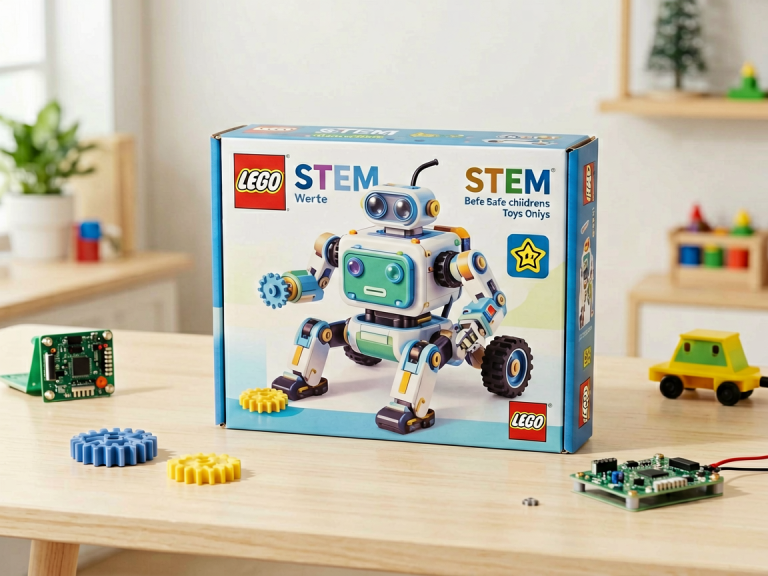
Every parent has faced the same dilemma at some point: standing in a brightly lit toy store aisle, comparing a gleaming, high-tech robot priced at $150 with a simple set of wooden blocks costing $15. The expensive toy promises interactive learning, durable materials, and the latest in child-development research. The cheap toy looks flimsy, plain, and frankly, a bit boring. Yet after two decades of observing children at play, interviewing childhood development experts, and analyzing the psychology of consumerism, I have come to a conclusion that might surprise many: cheap toys—when chosen wisely—often deliver more developmental value than their expensive counterparts. This is not a blanket endorsement of junk, but a nuanced argument about what children truly need from their playthings.
The global toy industry is worth over $100 billion, and a significant portion of that market is built on persuading parents that spending more money means giving their child a better start in life. Marketing campaigns feature smiling children engaging with brand-name plastic sets that promise to teach coding, foreign languages, or problem-solving skills. Meanwhile, discount stores and garage sales overflow with simple dolls, rubber balls, and cardboard puzzles that cost pennies. The question is not simply one of price, but of purpose. In this article, I will examine the psychological, social, environmental, and economic dimensions of the cheap-versus-expensive toy debate, arguing that affordability does not equate to inferiority, and that the most valuable play experiences often come from the least expensive sources.
The Psychology of Play: Why Simplicity Wins
Children's brains are wired for discovery, not for instruction. Developmental psychologists such as Jean Piaget and Lev Vygotsky emphasized that true learning occurs when children actively construct their own understanding through hands-on exploration. Expensive toys, particularly those with pre-programmed functions and limited outcomes, often rob children of this creative process. A battery-operated robot that sings "A-B-C" on command may seem educational, but it offers only one correct response. The child presses a button, the robot performs, and the learning loop is closed. By contrast, a cheap set of plastic cups or a handful of pebbles can become a castle, a measuring tool, a musical instrument, or a counting game. The child must supply the imagination, and that is where cognitive growth happens.
Dr. Alison Gopnik, a leading cognitive scientist at the University of California, Berkeley, has repeatedly demonstrated that children learn best through free play—activities without predetermined outcomes. Expensive toys often come with instructions, apps, or required parent involvement that inadvertently limit the child's autonomy. Cheap toys, especially open-ended ones like blocks, clay, or simple dolls, allow children to set their own rules, fail, experiment, and invent. A $50 electronic math game might drill addition facts, but a handful of bottle caps can teach the same concepts through sorting, stacking, and counting—while also developing fine motor skills and spatial reasoning.
Furthermore, the *value* of a toy in a child's mind is rarely tied to its monetary cost. Research in behavioral economics suggests that children (like adults) often value something more when they have to work for it or when it is part of a meaningful narrative. A $2 bag of marbles that a child wins in a game or trades with a friend can become a treasured possession, whereas a $200 remote-control car may lose its appeal after the first week. Cheap toys invite repetition and mastery; expensive toys often break, lose their novelty, or require replacement batteries that add to the long-term cost.
Social and Emotional Development: The Hidden Benefits of "Boring" Toys
One of the most underappreciated advantages of cheap toys is their ability to foster social interaction. Consider the humble ball—a $5 purchase at any discount store. It requires no instructions, no screen, and no single user. A ball naturally invites throwing, catching, sharing, and negotiating rules among peers. Expensive toys, particularly electronic gadgets or screen-based devices, tend to isolate children. A child engrossed in a tabletop gaming device is not learning to read body language, take turns, or resolve conflicts. Cheap toys, by their very simplicity, demand cooperation.
I once visited a preschool in a low-income neighborhood where the classroom was filled with donated cardboard tubes, fabric scraps, and plastic containers. The children created elaborate cities, spaceships, and marketplaces. They argued over roles and bartered for materials. Across town, an affluent preschool had invested in a complete "Montessori-approved" wooden blocks set costing over $500. The children in that classroom were noticeably less engaged; they handled the blocks carefully, afraid to break them, and often chose to play alone with iPads instead. The monetary value had created an unintended psychological barrier: expensive toys are often treated as precious, and that inhibits the messy, loud, risk-taking play that builds emotional resilience.
Cheap toys also teach resourcefulness. When a cheap toy breaks, the child learns to fix it, replace it with something else, or accept loss—a crucial life lesson. Expensive toys create a sense of entitlement; children may come to expect that everything should work perfectly and be replaced when it doesn't. A $20 doll with a torn dress can be mended; a $200 interactive robot with a software glitch is simply thrown away. In a world facing climate change and overflowing landfills, the ability to repair, repurpose, and appreciate simplicity is a skill we must actively teach.
Environmental and Economic Considerations: The Cost Beyond Price
The environmental impact of cheap versus expensive toys is not as straightforward as it might seem. On the surface, cheap toys are often made of low-quality plastic that may contain harmful chemicals (like phthalates or BPA) and are not designed to last. They contribute to the global plastic waste crisis. Expensive toys, on the other hand, are sometimes made from sustainable wood, organic cotton, or recycled materials, and are marketed as "heirloom quality." However, this is a generalization that does not hold across the industry. Many expensive toys are still plastic, battery-powered, and shipped across the world in excessive packaging. Moreover, the *longevity* of a toy depends more on how it is used than on its initial cost.
A better environmental metric is the *play-to-waste ratio*. A cheap toy that a child uses for three years—because it is open-ended and adaptable—is more sustainable than an expensive toy that is abandoned after two months. For instance, a simple set of interlocking plastic bricks (like generic building blocks) can be used by a child from ages two to ten, and then passed down. An expensive electronic toy may become obsolete when the batteries die or the software is no longer supported. Furthermore, cheap toys are often easier to donate, swap, or recycle. Many second-hand stores are flooded with barely-used expensive toys that no one wants because they are incomplete, require specific parts, or are no longer fashionable.
From an economic perspective, the cheap-versus-expensive debate also reflects deeper social inequalities. Low-income families cannot afford the "best" toys, yet their children are not necessarily at a developmental disadvantage. Research from the University of Chicago found that children from low-income families who have access to basic toys (balls, dolls, puzzles) develop just as well as their wealthier peers in terms of creativity and problem-solving—provided they have supportive caregivers. The true danger lies not in cheap toys, but in *no toys* or in a complete absence of play. Expensive toys are a luxury, not a necessity.
Practical Guidelines: How to Choose Wisely
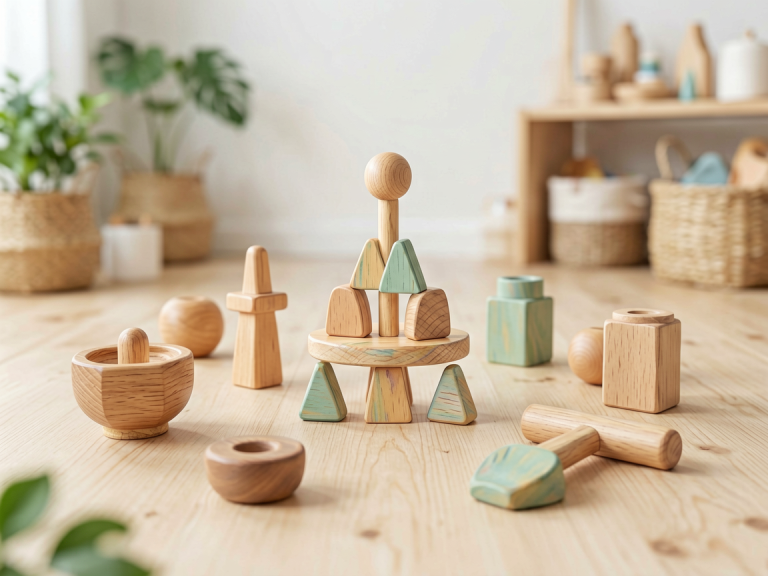
Does this mean parents should never buy expensive toys? Not at all. Some expensive toys are worth the investment—for instance, high-quality musical instruments, well-made bicycles, or art supplies that last. The key is to distinguish between *expense that buys durability and utility* and *expense that buys marketing hype and short-term novelty*. Here are five practical guidelines:
First, prioritize open-ended toys. Blocks, balls, clay, simple dolls, art supplies, and building sets (even cheap ones) provide endless possibilities. Avoid toys with one fixed purpose. Second, resist the pressure to buy licensed character toys. They often cost more for the branding alone, and children quickly outgrow them. Third, consider the lifespan. Ask: Can this toy be used in multiple ways? Will it break easily? Is it easy to clean? Fourth, embrace second-hand. Thrift stores and online marketplaces offer high-quality wooden toys at a fraction of retail price. Fifth, involve children in the process. Let them choose a cheap toy over an expensive one; they will value it more.
Conclusion: The Real Price of Joy
In the end, the debate between cheap and expensive toys is not about money at all. It is about values. An expensive toy says, "I bought you something that is supposed to make you smart." A cheap toy says, "Here is something for you to discover on your own terms." The best toys are not the ones with the highest price tags; they are the ones that inspire the most play. They are the ones that break, get mended, get lost, and get replaced by a stick or a cardboard box. They are the ones that teach children that happiness does not come from consumption but from creativity, connection, and curiosity. And those lessons, unlike any toy, are priceless.
(Word count: approximately 1,450 words)