STEM Toys vs. Montessori Toys: A Comparative Analysis of Two Educational Paradigms
In the modern landscape of early childhood education, parents and educators are constantly seeking the most effective tools to foster cognitive development, creativity, and problem-solving skills. Among the myriad options available, two distinct categories of educational toys have risen to prominence: STEM toys and Montessori toys. While both aim to support learning through play, they are rooted in fundamentally different philosophies, target different skill sets, and appeal to different developmental stages. This article offers a comprehensive comparison of STEM toys and Montessori toys, examining their origins, core principles, typical characteristics, benefits, limitations, and practical applications. By understanding the nuances of each approach, caregivers can make informed decisions that align with their children’s unique needs and learning styles.
Understanding the Foundations: Philosophy and Origins
The STEM Movement: Science, Technology, Engineering, and Mathematics
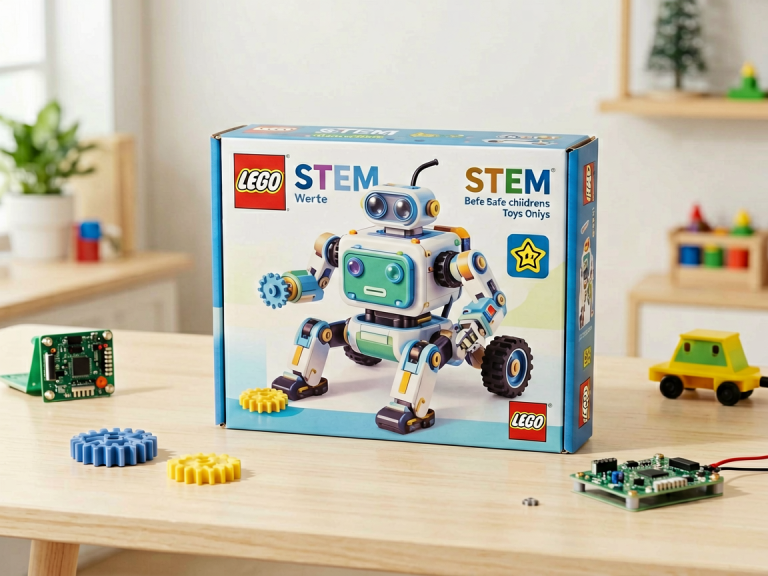
STEM toys are a product of the broader STEM education movement that gained momentum in the early 21st century, driven by a global concern about students’ proficiency in science, technology, engineering, and mathematics. These toys are explicitly designed to introduce children to concepts from these disciplines in an engaging, hands-on manner. The underlying philosophy is that early exposure to STEM principles—such as coding, robotics, physics, and logical reasoning—can build a strong foundation for future academic and career success in an increasingly technology-driven world. STEM toys often incorporate elements of problem-solving, experimentation, and systematic thinking. They are typically structured around specific learning outcomes, such as understanding cause and effect, learning basic programming logic, or exploring mechanical principles through building kits.
The Montessori Method: Child-Led, Holistic Development
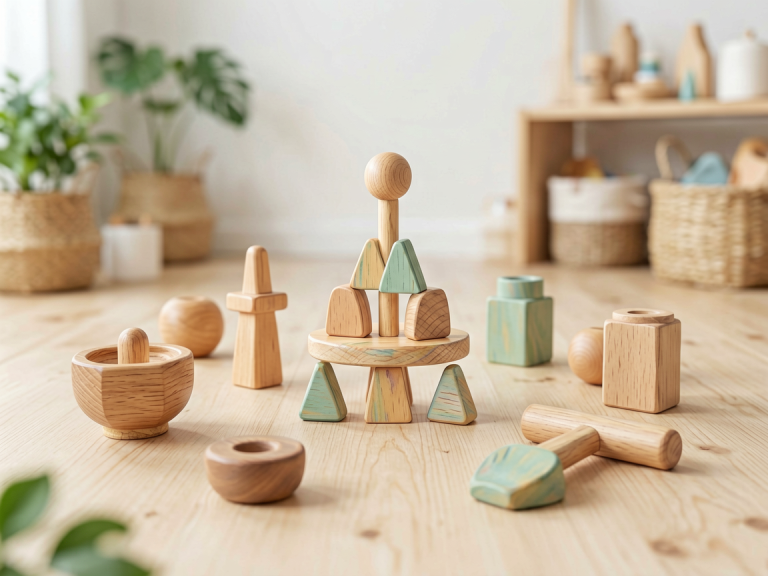
Montessori toys, on the other hand, are derived from the educational philosophy developed by Dr. Maria Montessori in the early 1900s. The Montessori method emphasizes self-directed activity, hands-on learning, and collaborative play. Montessori toys are not designed to teach specific academic subjects in isolation; rather, they aim to support the whole child—cognitive, social, emotional, and physical development. Central to this approach is the belief that children are naturally curious and capable of initiating their own learning when provided with an appropriately prepared environment. Montessori toys are typically simple, made from natural materials (such as wood), and designed to isolate a single skill or concept. They encourage concentration, fine motor coordination, order, and independence. Unlike STEM toys, which often have a clear “right answer” or predetermined outcome, Montessori toys allow for open-ended exploration within a structured framework.
Characteristics and Typical Examples
What Defines a STEM Toy?
STEM toys are characterized by their focus on disciplinary knowledge and skill-building. They often include electronic components, programmable elements, or construction materials that require following instructions or solving specific challenges. Common examples include:
- Coding robots (e.g., Botley, Sphero, or LEGO Boost) that teach basic programming through commands and sequences.
- Science experiment kits (e.g., crystal-growing sets, volcano models, or circuit-building kits) that introduce chemistry and physics.
- Building sets like K’Nex or LEGO Technic that demonstrate mechanical principles such as gears, levers, and pulleys.
- Math manipulatives (e.g., pattern blocks, geometric puzzles) that reinforce spatial reasoning and numerical concepts.
STEM toys are often marketed with age ranges and skill levels, and many come with instruction manuals or app-based guidance. They tend to be goal-oriented: the child builds a model, completes a circuit, or successfully codes a robot to move through a maze.
What Defines a Montessori Toy?
Montessori toys are minimalist in design and intentionally free from flashy colors, lights, or sounds. They are usually made of natural materials like wood, metal, or cotton, and each toy focuses on one developmental skill at a time. Classic Montessori materials include:
- The Pink Tower (a set of ten graduated wooden cubes) that teaches size discrimination and visual-spatial awareness.
- Sandpaper letters that allow children to trace the shape of letters while hearing their sounds, integrating tactile and auditory learning.
- Practical life activities such as pouring, spooning, or buttoning frames that develop fine motor skills and independence.
- Sensorial materials like the geometric cabinet or the binomial cube, which help children classify and understand the world through their senses.
Montessori toys are designed to be self-correcting; for example, a puzzle piece will only fit in its correct place. They encourage repetition and concentration, and there is no external reward or competition. The child chooses the activity freely and works at their own pace.
Comparing Learning Outcomes: Skills and Mindsets
STEM Toys: Cultivating Analytical Thinking and Technical Proficiency
The primary learning outcomes of STEM toys are cognitive and technical. Children who engage regularly with STEM toys tend to develop:
- Problem-solving skills: Many STEM activities require trial and error, debugging, and iterative thinking.
- Logical reasoning: Coding and engineering kits teach sequencing, conditional logic, and systematic approaches.
- Spatial awareness: Building and assembling models enhance understanding of three-dimensional geometry.
- Persistence and resilience: STEM challenges often involve failure before success, teaching children to cope with setbacks.
- Early technical literacy: Familiarity with basic concepts of robotics, programming, and engineering provides a head start in these fields.
However, STEM toys can sometimes lead to a narrow focus on measurable outcomes. A child who becomes frustrated with a coding challenge may lose interest, and the structured nature of many STEM kits can limit open-ended creativity. Additionally, the emphasis on screens and electronics (in many modern STEM toys) raises concerns about excessive screen time for young children.
Montessori Toys: Fostering Independence, Concentration, and a Love for Learning
Montessori toys aim to cultivate a different set of abilities:
- Concentration and focus: Because each activity isolates a specific skill and is designed to be engaging, children often enter a state of deep concentration (what Montessori called “normalization”).
- Fine motor coordination: Practical life activities like threading, pouring, and using tweezers refine hand-eye coordination and dexterity.
- Order and sequencing: Many Montessori materials involve arranging objects in a specific order, which builds executive function skills.
- Intrinsic motivation: Without external rewards or grades, children learn to find satisfaction in the task itself, fostering a lifelong love for learning.
- Self-discipline and independence: The prepared environment allows children to choose their own work, set it up, complete it, and put it away independently.
The limitation of Montessori toys is that they do not explicitly introduce modern technological concepts. A child who only uses Montessori materials may not encounter coding, robotics, or advanced engineering principles until much later. Furthermore, the simplicity of the materials might seem “boring” to children accustomed to the instant gratification of electronic toys.
Age Appropriateness and Developmental Stages
STEM Toys: Best for Older Preschoolers and School-Aged Children
Many STEM toys are recommended for children aged 4 and up, and some are suitable only for ages 8+. This is because they require a certain level of fine motor control, reading ability, and abstract reasoning. For example, a simple coding robot might be accessible to a 5-year-old with adult guidance, but a complex robotics kit is better suited for a 10-year-old. STEM toys can be excellent for children who show early interest in how things work, but they may overwhelm younger toddlers who are still developing basic sensory and motor skills.
Montessori Toys: Spanning Infancy to Early Elementary
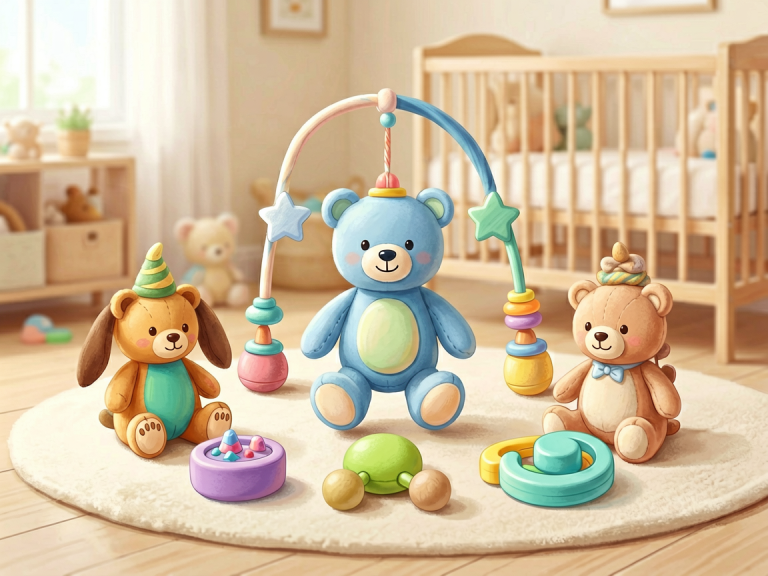
Montessori materials are carefully designed for specific developmental stages, from infancy (e.g., grasping toys and mobiles) through age 6 and beyond. Infants and toddlers can use simple objects that stimulate the senses and promote movement, such as a wooden rattle or a stacking ring. Preschoolers engage with more complex sensorial and practical life materials. Older children (ages 6–9) can use Montessori math beads to learn addition and multiplication concretely before moving to abstraction. The beauty of the Montessori approach is that it grows with the child, providing a continuous pathway of increasingly challenging, self-directed work.
Practical Considerations: Cost, Durability, and Space
STEM Toys: Often More Expensive and Technology-Dependent
High-quality STEM toys can be costly, especially those that involve robotics, programmable components, or subscription-based apps. Moreover, they may require batteries, charging cables, or ongoing software updates. The materials are often plastic, which may not be as durable as wood, and parts can get lost easily. Storage can also be a challenge, as many kits come with many small pieces.
Montessori Toys: Generally More Durable and Minimalist
Montessori toys are typically made from solid wood, metal, or fabric, designed to last for years and be passed down. They are often more expensive upfront but have excellent longevity. Because each toy serves a single purpose and is kept on a low, open shelf, storage is straightforward and visually calming. There are no batteries or screens involved, which reduces electronic waste and distractions.
Integrating the Two Approaches: A Hybrid Model
While STEM and Montessori toys may seem philosophically opposed, they are not mutually exclusive. A thoughtful parent or educator can combine the best of both worlds. For example:
- Use STEM building kits (like magnetic tiles or simple gear sets) as part of a Montessori-like prepared environment, where the child chooses the activity freely without pressure.
- Introduce coding concepts through unplugged, tactile activities before moving to screen-based robots. For instance, using a wooden “coding grid” with arrows and command cards aligns with Montessori’s emphasis on concrete learning.
- Follow the Montessori principle of “following the child”: if a child shows keen interest in technology, offer high-quality STEM toys (such as a microscope or a simple circuit set) while ensuring the environment remains calm and ordered.
- Avoid toys that are overly prescriptive or have loud, gimmicky features. Choose STEM toys that encourage open-ended exploration rather than those that simply reward correct answers.
Conclusion: Which Is Better?
The question “STEM toys vs. Montessori toys: which is better?” does not have a one-size-fits-all answer. STEM toys excel at building specific technical skills and preparing children for a technology-rich future, but they risk being too structured, screen-based, and narrowly focused. Montessori toys excel at nurturing independence, concentration, and holistic development, but they may not offer explicit exposure to modern STEM concepts. The most effective educational environment is one that respects the child’s developmental stage, interests, and individual learning style. For a toddler learning to pour water, a Montessori pitcher is ideal. For an eight-year-old fascinated by how a motor works, a STEM circuit kit can be transformative. By understanding the strengths and limitations of each category, caregivers can curate a balanced collection of toys that support both the heart and the mind—fostering not just academic readiness, but a lifelong love of discovery.