STEM Toys vs. Montessori Toys: Which Fosters Better Early Childhood Development?
Introduction
In the world of early childhood education, few debates ignite as much passion among parents and educators as the choice between STEM toys and Montessori toys. Both approaches have passionate advocates who swear by their effectiveness in nurturing young minds. STEM toys—those focused on science, technology, engineering, and mathematics—promise to equip children with problem-solving skills and a head start in an increasingly digital world. Montessori toys, rooted in the philosophy of Dr. Maria Montessori, emphasize self-directed, hands-on learning that respects a child’s natural developmental pace. But which is truly better? The answer, as we shall explore, is far from straightforward. It depends on the child’s age, temperament, learning style, and the goals parents or educators hope to achieve. This article provides a comprehensive comparison to help you make an informed decision.
Understanding STEM Toys
Defining the Category
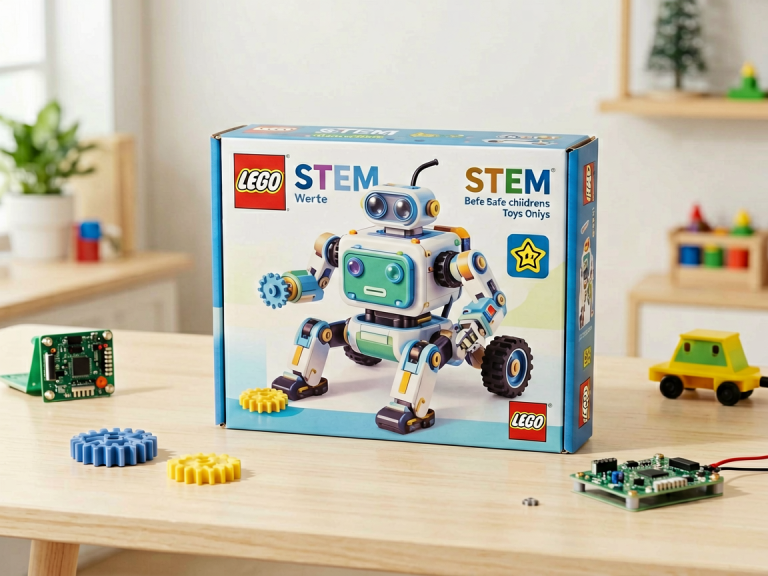
STEM toys are designed to introduce children to concepts in science, technology, engineering, and mathematics through playful, interactive experiences. They range from simple building blocks with gears and pulleys to sophisticated robotics kits, coding games, chemistry sets, and programmable drones. The key characteristic of a STEM toy is that it explicitly teaches or reinforces a specific scientific or mathematical principle while encouraging exploration and experimentation.
Educational Philosophy Behind STEM Toys
The underlying philosophy of STEM toys is that children learn best by doing—by building, testing, failing, and iterating. This aligns well with constructivist learning theories, which argue that knowledge is actively constructed by the learner rather than passively received. STEM toys also aim to develop “21st-century skills” such as critical thinking, creativity, collaboration, and digital literacy. Many are designed to spark an early interest in careers that are increasingly in demand in our technology-driven economy.
Common Examples
- LEGO Boost or LEGO Mindstorms: Robotics kits that teach programming and mechanical engineering.
- Snap Circuits: Electronics kits that allow children to build working circuits, radios, and alarms.
- Osmo Coding Kits: Interactive games that teach coding logic without a screen (or with limited screen use).
- K’NEX or Meccano: Construction sets that introduce physics concepts like leverage and torque.
- Microscope and Telescope Kits: Tools for scientific observation, often paired with guided experiments.
Strengths of STEM Toys
STEM toys excel at building logical reasoning, spatial awareness, and systematic problem-solving. They often provide immediate feedback—a circuit lights up when wired correctly, a robot moves when programmed accurately. This tangible cause-and-effect relationship is highly motivating for many children. Moreover, many STEM toys grow with the child: a simple building set can become more complex as the child’s skills develop. They also introduce vocabulary and concepts that might not appear in everyday conversation (e.g., “circuit,” “algorithm,” “force”).
Weaknesses of STEM Toys
One major criticism is that STEM toys can be overly prescriptive. Many come with step-by-step instructions that leave little room for open-ended creativity. If a child deviates from the instructions, the toy may not work as intended, leading to frustration. Additionally, some STEM toys rely heavily on screens or apps, which can reduce hands-on, tactile learning. There is also the risk that parents or teachers push STEM too early, turning play into a performance-driven activity rather than a joyful exploration. Finally, many STEM toys are expensive and require batteries, replacement parts, or ongoing subscriptions.
Understanding Montessori Toys
Defining the Category
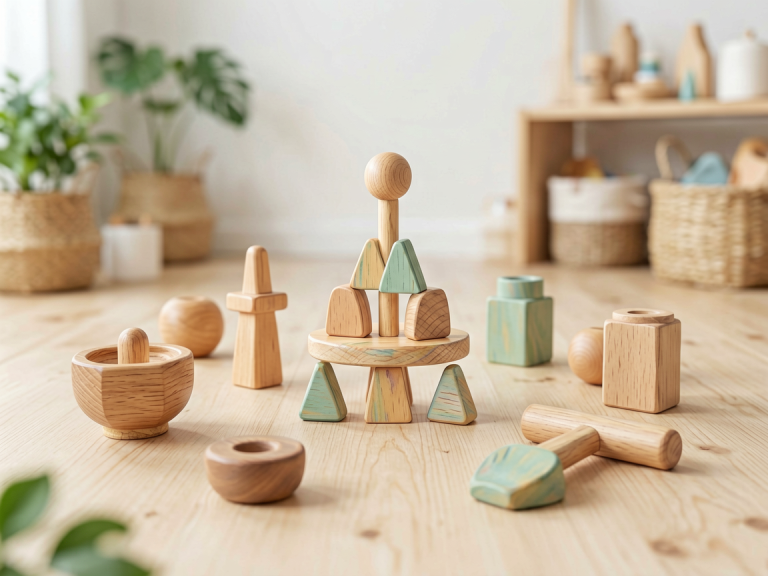
Montessori toys are based on the educational method developed by Dr. Maria Montessori in the early 20th century. These materials are typically simple, natural, and self-correcting. They are designed to isolate one specific skill or concept—such as size differentiation, color matching, or fine motor coordination—and allow the child to explore it independently, at their own pace. Common materials include wooden puzzles, stacking rings, sensorial bins, sandpaper letters, and bead chains for math.
Educational Philosophy Behind Montessori Toys
Montessori education is built on the belief that children have an innate desire to learn and that the environment should be prepared to support their natural development. The adult acts as a guide, not a teacher. Toys are carefully chosen to be “auto-didactic,” meaning they provide their own feedback. For example, a cylinder block has only one correct place for each cylinder; if a child inserts one incorrectly, it won’t fit, prompting self-correction without adult intervention. This fosters concentration, independence, and a sense of accomplishment.
Common Examples
- Pink Tower: Ten wooden cubes of decreasing size that teach visual discrimination of dimensions.
- Sandpaper Letters: Rough-textured letters that children trace with their fingers, combining tactile and visual learning to prepare for writing.
- Binomial Cube: A wooden puzzle that visually and physically represents the algebraic formula (a+b)³.
- Practical Life Materials: Pouring jugs, tongs, button frames, and dressing frames that teach self-care and coordination.
- Moveable Alphabet: Individual letter tiles that children use to form words, enabling early writing before the fine motor skills for pencil grip are fully developed.
Strengths of Montessori Toys
Montessori toys promote deep concentration, autonomy, and intrinsic motivation. Because they are self-correcting, children learn to work independently without constant praise or correction from adults. This builds resilience and a growth mindset. The materials are often made from natural materials like wood, which are aesthetically pleasing, durable, and safe. They also encourage sensory integration, as many involve touch, sight, and even sound. Another strength is that Montessori toys are usually open-ended in a different way: while each material teaches a single concept, the child decides how to use it, when to repeat an activity, and when to move on. This respects the child’s individual learning rhythm.
Weaknesses of Montessori Toys
Montessori toys can be expensive due to their high-quality materials—wood, metal, and sometimes ceramics. They are also less flashy and may not immediately capture a child’s attention in a world saturated with bright plastic and digital screens. Some critics argue that the Montessori approach lacks explicit emphasis on modern skills like coding or digital literacy, which could put children at a disadvantage in a tech-oriented world. Additionally, the method requires a prepared environment and knowledgeable adults to guide effectively; simply buying a few Montessori toys without understanding the philosophy may not yield the desired benefits.
Comparative Analysis: STEM vs. Montessori
Learning Goals
- STEM toys target specific academic and technical skills: coding, engineering principles, mathematical reasoning. The goal is often to produce measurable outcomes, such as completing a robot or understanding a scientific concept.
- Montessori toys aim for holistic development: concentration, independence, sensory refinement, and practical life skills. Academic learning emerges naturally from these foundational abilities.
Role of the Adult
- STEM toys often require adult guidance, especially for younger children who may need help reading instructions or troubleshooting. Some kits are designed for supervised use.
- Montessori toys are designed for independent use. The adult’s role is to observe, prepare the environment, and step back unless help is needed.
Encouragement of Creativity
- STEM toys can be both creative and constrained. Building a model from instructions is more convergent thinking, while using the same pieces to invent something new is divergent. However, many children stick to the instructions because the toy’s reward system (lights, movement) depends on following them.
- Montessori toys are inherently open-ended within their scope. A child can repeat the Pink Tower activity 20 times or invent a game of stacking in a different order—though the self-correcting nature might discourage deviation that leads to error.
Age Appropriateness
- STEM toys are often best for children aged 4 and up, with many requiring reading or fine motor skills that develop later. Some simple building blocks can be used earlier, but the more complex kits are for school-age children.
- Montessori toys are designed for specific sensitive periods. For example, the Pink Tower is for ages 2.5–3.5, while the binomial cube is for ages 4–5. They are carefully sequenced to match developmental stages.
Cost and Accessibility
- STEM toys vary widely in price. Simple ones like pattern blocks are cheap, but robotics kits can cost hundreds of dollars. Batteries and replacements add ongoing costs.
- Montessori toys tend to be expensive initially (often $30–$100 per material), but they are durable, last for years, and can be passed down. However, authentic Montessori materials are not sold in most big-box stores.
Which is Better? It Depends on the Child
The question “which is better” cannot be answered universally. The right choice depends on the child’s personality, developmental stage, and the learning environment at home or school.
For a child who thrives on challenges, loves tinkering, and has good frustration tolerance, STEM toys can be incredibly stimulating. They offer clear goals and tangible rewards that boost confidence. Children who are naturally curious about how things work—why a light bulb glows or how a robot follows a line—will likely engage deeply with STEM kits.
On the other hand, a child who is easily overwhelmed, or who needs calm, repetitive activities to develop concentration, may benefit more from Montessori toys. The predictable, self-correcting nature of these materials builds a strong foundation for later academic learning. Children who are sensitive to frustration or who prefer solitary, focused play often thrive in a Montessori environment.
Another factor is the parents’ educational philosophy. Some families prioritize academic acceleration and see STEM as a way to give their child a competitive edge. Others value the development of character traits like independence, persistence, and love of learning for its own sake, which Montessori emphasizes.
Can They Be Combined?
In practice, many parents and educators successfully combine elements from both approaches. For example, a Montessori-inspired home can incorporate simple STEM toys like wooden ramps and magnet sets that encourage scientific exploration without rigid instructions. Likewise, a STEM-focused classroom can use Montessori principles such as allowing free choice time and providing self-correcting materials.
The key is to avoid overload. A child’s playroom filled with dozens of expensive, flashy toys—whether STEM or Montessori—can lead to distraction and shallow play. Both philosophies advocate for quality over quantity. A few well-chosen materials that align with the child’s current interests and developmental needs are far more valuable than a large collection.
Conclusion
Neither STEM toys nor Montessori toys are inherently superior. STEM toys excel at teaching technical skills, logical reasoning, and adaptability in a technology-rich world. Montessori toys excel at building independent, self-motivated learners with strong concentration and sensory awareness. The best choice for your child will depend on their unique temperament, your educational priorities, and the balance you wish to strike between structured skill-building and open-ended exploration.
Ultimately, the most important factor is not the label on the toy, but the quality of the interaction it promotes. A child who engages deeply with a simple set of wooden blocks learns more than a child who passively follows instructions on a screen. Whether you choose STEM, Montessori, or a blend, the goal remains the same: to nurture a lifelong love of learning. And in that pursuit, there is no single right answer—only the joy of watching your child discover the world through play.