Top Educational Toys for 10-Year-Olds: Inspiring Curiosity, Creativity, and Critical Thinking
Introduction: Why the Right Toys Matter at Age 10
At ten years old, children stand at a remarkable crossroads of development. They have outgrown the simple cause-and-effect play of early childhood, yet they still possess an infectious enthusiasm for hands-on discovery. Their cognitive abilities are rapidly expanding: they can grasp abstract concepts, follow multi-step instructions, and engage in strategic planning. Their social world is widening, and their sense of identity is beginning to crystallize. This is precisely the age when educational toys can make a profound and lasting impact — not by forcing lessons on reluctant learners, but by channeling their natural curiosity into meaningful, self-directed exploration.
The best educational toys for 10-year-olds do not lecture; they invite. They challenge without frustrating, reward persistence, and spark questions that lead to deeper understanding. Whether through building, coding, experimenting, or creating, these toys transform abstract ideas into tangible experiences. In this article, we will explore a carefully curated selection of the best educational toys for 10-year-olds, organized by the key skills they develop. From STEM and coding to strategy games and artistic expression, this guide will help you choose toys that nurture both intelligence and joy.
STEM and Engineering Sets: Building the Foundation of Scientific Thinking
At age ten, children are ready to move beyond simple building blocks and into sophisticated engineering challenges. STEM (Science, Technology, Engineering, and Mathematics) toys that require planning, testing, and iterative problem-solving are particularly powerful. One standout category is modular construction kits that incorporate gears, motors, sensors, and programmable elements.
Snap Circuits remains a classic for a reason. With over 100 projects in many kits, children can build real working circuits — a light that turns on when they clap, a fan that spins when they press a button, an alarm that sounds when the circuit is broken. The components snap together easily on a plastic grid, so no soldering is required. For a ten-year-old, the thrill of causing a light bulb to glow or a motor to whir is genuinely electrifying. More importantly, they learn foundational concepts about electricity, resistance, and series versus parallel circuits. The sense of accomplishment when a project works on the first try — or the detective work required when it doesn’t — teaches resilience and methodical thinking.
Another exceptional choice is LEGO Technic or LEGO Mindstorms. While standard LEGO bricks are great for younger children, the Technic line introduces beams, pins, gears, and pneumatic systems that mimic real mechanical principles. Building a working crane, a steering car, or a transmission system demands careful reading of complex instructions and spatial reasoning. For a more advanced experience, the LEGO Mindstorms Robot Inventor kit allows children to build five different robot models and program them using a drag-and-drop coding interface based on Scratch. The robot can be programmed to navigate obstacles, pick up objects, or respond to voice commands. This merges mechanical engineering with computer science, giving ten-year-olds a taste of both disciplines in one exhilarating package.
Coding and Robotics: Teaching Logic Through Play
Coding has become an essential skill, but for ten-year-olds, the best approach is through play, not lectures. Toys that combine physical building with coding logic are ideal because they make abstract concepts like loops, conditionals, and variables visible and interactive.
Sphero BOLT is a shining example. This app-enabled robotic ball is encased in a durable shell and contains a programmable LED matrix, sensors, and a compass. Children can drive it manually using a smartphone or tablet, but the real magic begins when they program it. Using the Sphero Edu app, they can create programs by dragging and dropping code blocks, or even writing in JavaScript for a more advanced challenge. They can program the BOLT to draw shapes on the floor, follow a maze they build from tape, or change colors based on ambient light. The immediate feedback — the robot rolling exactly as instructed — makes debugging a concrete and rewarding process. It’s not just about coding; it’s about seeing code come to life.
Another stellar option is Osmo Genius Kit for tablets. Osmo uses a reflective camera attachment to blend physical play with digital interaction. For example, in the “Coding Awbie” game, children place physical coding blocks on the table in a sequence, and the on-screen character Awbie follows their commands. They learn sequencing, loops, and cause-and-effect without ever feeling like they are studying. Other Osmo games teach math, spelling, and problem-solving. The tangible nature of the blocks makes coding accessible even to children who might be intimidated by a screen-only environment.
Strategy and Logic Games: Sharpening Critical Thinking
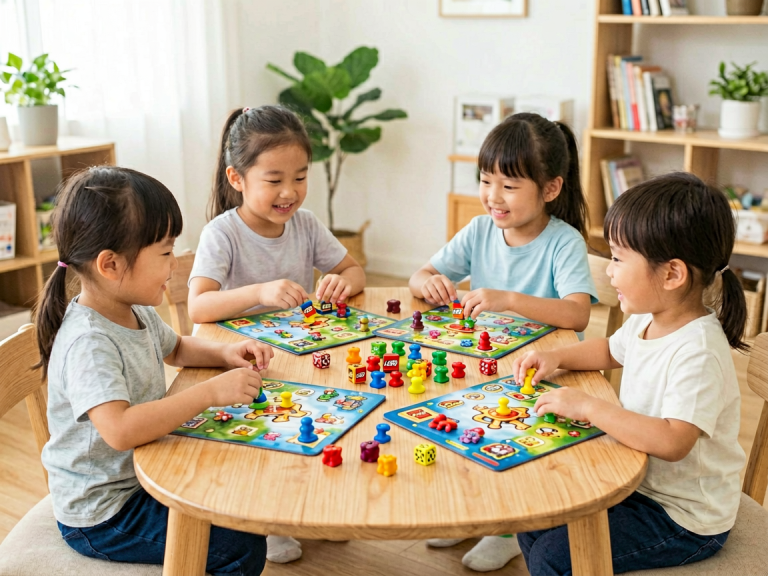
While digital tools are powerful, there is immense value in unplugged play. Board games and puzzles that require strategic planning, deduction, and flexible thinking are among the best educational toys for 10-year-olds. They also foster social skills, patience, and graceful sportsmanship.
Gravity Maze by ThinkFun is a spectacular marble run logic game. The player is given a challenge card that shows a target configuration of towers. They must arrange colored towers on the grid in such a way that a marble, when released from a starting point, follows a path that takes it to the target. The catch: the towers have internal tunnels and ramps that redirect the marble. This is a pure exercise in spatial reasoning, planning, and trial-and-error. Each puzzle offers a satisfying “aha!” moment when the marble cascades perfectly to its destination. There are 60 challenges that increase in difficulty, so this game can grow with the child.
Chess also deserves a prominent place. While not a toy in the traditional sense, a high-quality chess set — perhaps with a board that folds into a box for storage — can provide years of intellectual growth. Chess teaches forward thinking, pattern recognition, and the ability to evaluate multiple possibilities before acting. Many ten-year-olds are ready to grasp intermediate concepts like forks, pins, and endgame technique. Playing with a parent or a friend builds relationship skills and focus. There are also apps that allow children to play against an AI of adjustable difficulty, making practice convenient.
Rush Hour is another classic logic game that challenges children to slide cars and trucks out of a gridlocked traffic jam. The goal is to move the player’s car to the exit, while other vehicles block the path. Each puzzle has a single solution, and players must think ahead several moves to avoid dead ends. This game develops sequential thinking, flexibility (since one wrong move might require backtracking), and patience. The compact size makes it ideal for travel.
Creative and Artistic Kits: Fostering Imagination and Design Thinking
Academic skills are crucial, but creativity and artistic expression are equally important for a well-rounded development. The best educational toys for 10-year-olds also nurture the right brain, providing outlets for self-expression, design, and craftsmanship.
Klutz LEGO Chain Reactions kits are a brilliant hybrid of engineering and creativity. The kit includes a book with instructions to build ten mechanical machines that perform chain reactions — a lever that drops a ball, a ramp that sends a marble into a rolling pin, etc. Children follow the instructions to build the machines, but then they are encouraged to connect them in their own sequences and invent new contraptions. This teaches both following directions and creative improvisation. The satisfaction of designing a Rube Goldberg-style chain that works perfectly is enormous.
Pottery wheels or clay modeling kits also provide rich tactile experiences. For example, a child-safe pottery wheel with air-dry clay allows ten-year-olds to form bowls, cups, or sculptures. The process teaches patience, hand-eye coordination, and an understanding of form and structure. When they paint and seal their finished piece, they experience the entire cycle of creation from raw material to finished artwork.
Stop-motion animation kits are another exciting option. With a simple app like Stop Motion Studio and a set of modeling clay or action figures, children can create their own short films. They learn about storytelling, sequencing, timing, and the painstaking patience required to produce even a few seconds of animation. This combines technology, art, and narrative in a way that appeals to many ten-year-olds. Some kits even include a background stage and adjustable lighting. The final product can be shared with family, giving a huge boost to confidence.
Hands-On Science Kits: Encouraging Inquiry and Experimentation
Ten-year-olds are natural scientists. They ask “why” constantly and love to see surprising results. Science kits that involve real experiments — with actual chemicals, crystals, or small-scale reactions — are incredibly engaging.
The Thames & Kosmos Chem C1000 Chemistry Set is a comprehensive introduction to chemistry. It includes over 125 experiments, from making invisible ink to growing crystals to testing pH levels. The manual explains the underlying scientific principles in clear language, and the safety equipment (safety goggles, measuring cups, test tubes) makes the experience feel authentic. Children learn to follow procedures carefully, record observations, and understand that science requires precision. The thrill of seeing a color change or a gas bubble form is timeless.
Another excellent choice is the National Geographic Break Open Geodes kit. Geodes are ordinary-looking rocks that contain sparkling crystal cavities inside. Children use a hammer (safely) to crack them open, revealing hidden beauty. This kit teaches geological concepts such as mineral formation and crystal structures. It also fosters a sense of wonder about the natural world. Each geode is unique, so every opening is a small adventure.
Science and Nature Exploration Tools: Connecting with the World Beyond the Screen
In an era of digital saturation, toys that encourage outdoor exploration and connection with nature are more important than ever. They cultivate observation skills, patience, and ecological awareness.
A high-quality binoculars or a portable microscope can open a whole new world. For instance, the Celestron Kid’s Microscope is designed with durable ergonomics and a focus knob that is easy for small hands. Children can collect pond water, examine leaves, or look at salt crystals. Pairing the microscope with a field guide or a notebook turns it into a tool for scientific journaling. Similarly, a nature identification kit with laminated cards for birds, insects, and plants encourages children to become naturalists in their own backyard.
The KiwiCo Tinker Crate subscription box is also worth mentioning. Each month, children receive a new project that combines science and engineering — for example, building a hydraulic claw, a trebuchet, or a solar-powered car. The crate includes all materials and a step-by-step guide that also explains the underlying physics. The anticipation of a new project each month sustains a long-term interest in learning.
Conclusion: Choosing the Right Toy for Your 10-Year-Old
Selecting the best educational toys for a ten-year-old is not about buying the most expensive or the most popular item. It is about matching the toy to the child’s interests, temperament, and current developmental stage. A child who loves building might thrive with a LEGO Technic set, while a child who asks endless “whys” might be captivated by a chemistry set. A shy child might benefit from a cooperative board game that encourages verbal interaction, while an energetic child might love a robotics kit that lets them physically interact with their creation.
The common thread among all the toys discussed in this article is that they are active, not passive. They require the child to think, create, experiment, fail, try again, and eventually succeed. They teach that learning is not a chore but a journey of discovery. They build confidence, resilience, and a sense of accomplishment that no screen time can replicate.
Moreover, the best educational toys are those that facilitate connection — between parent and child, between friends, between the child and the world. Watching a marble roll through a tower you designed, seeing a robot execute your code perfectly, or examining a crystal you grew yourself — these moments become memories that shape a child’s attitude toward learning for years to come. So whether you choose a coding robot, a chemistry kit, or a simple strategy game, remember that the real gift is not the toy itself, but the curiosity and joy it unlocks. Choose wisely, play together, and watch your ten-year-old grow.