Wooden Toys vs. Plastic Toys for 6-Month-Olds: A Comprehensive Guide for Modern Parents
Introduction: The Great Toy Debate
When a baby reaches the six-month mark, the world suddenly becomes a fascinating place. Little hands begin to reach, grasp, and explore with an intensity that astonishes every parent. This developmental milestone often prompts caregivers to ask a crucial question: what kind of toys should I offer my six-month-old? The debate between wooden toys and plastic toys is not merely a matter of aesthetics or nostalgia—it touches on safety, sensory development, environmental impact, and even long-term cognitive growth. For parents navigating the overwhelming aisles of baby products, understanding the distinct advantages and limitations of each material is essential. This article delves deep into the science, practicality, and philosophy behind choosing toys for babies at this critical age, offering evidence-based insights to help you make an informed decision.
The Developmental Needs of a Six-Month-Old
Before comparing materials, it is vital to understand what a half-year-old infant actually needs from a toy. At six months, babies are typically in a phase of rapid sensory-motor development. They are learning to sit with support, roll over consistently, and transfer objects from one hand to another. Mouthing is the primary way they explore—the mouth contains more nerve endings per square millimeter than any other part of the body, making oral exploration a biologically driven necessity. According to pediatric occupational therapists, toys for this age should:
- Stimulate multiple senses (sight, sound, touch, and sometimes taste)
- Be safe for chewing and gnawing
- Be easy to grasp, with appropriate weight and texture
- Encourage cause-and-effect understanding
- Support developing hand-eye coordination
Both wooden and plastic toys can theoretically fulfill these criteria, but they do so in fundamentally different ways.
Safety Considerations: A Non-Negotiable Priority
The most immediate concern for any parent is safety. For a six-month-old who will inevitably put everything in their mouth, the physical properties of the toy material matter enormously.
Wooden Toys: Natural but Not Flawless
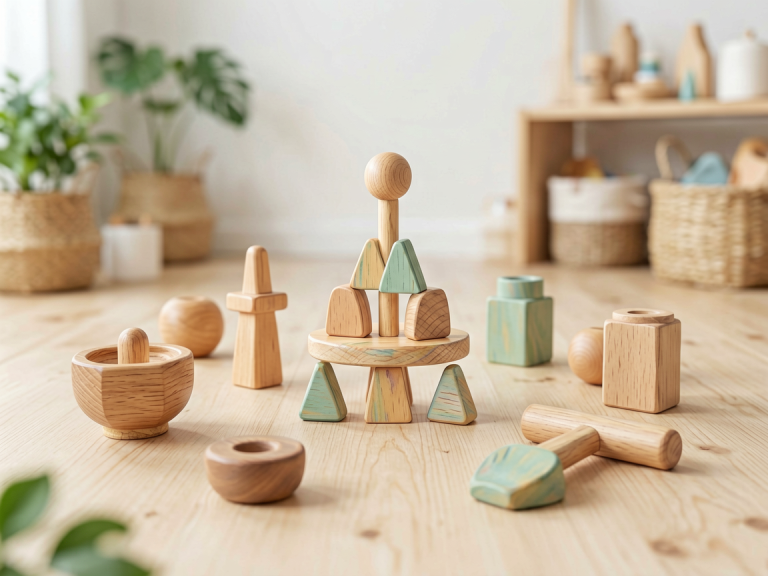
High-quality wooden toys, when properly manufactured, offer excellent safety credentials. They are typically made from solid hardwoods like beech, maple, or rubberwood, and finished with non-toxic, water-based paints or oils. Unlike some plastics, wood does not off-gas volatile organic compounds (VOCs) under normal conditions. It is also naturally antimicrobial—studies have shown that bacteria survive for shorter periods on wood surfaces compared to plastic. However, parents must be vigilant about splinters, rough edges, and small parts. A poorly sanded wooden block can cause mouth injuries. Additionally, wood is porous and can absorb moisture, potentially harboring mold if left wet. Therefore, wooden toys require regular inspection and proper drying after washing.
Plastic Toys: Convenience with Hidden Risks
Plastic toys dominate the market for a reason: they are inexpensive, durable, and easy to clean. For a six-month-old, many plastic toys are designed with rounded edges, bright colors, and built-in rattles or squeakers. Yet parents must scrutinize the type of plastic. The most concerning issue is the presence of bisphenol A (BPA), phthalates, and other endocrine-disrupting chemicals. While regulations in many countries have banned BPA in baby bottles and teethers, not all plastic toys are regulated equally. Furthermore, plastic can break into sharp fragments, and some cheap toys contain small magnets or button batteries that pose choking or internal injury hazards. Soft plastic teethers may also trap bacteria in their textured surfaces. The convenience of tossing a plastic toy into the dishwasher is appealing, but repeated high-temperature cleaning can accelerate the breakdown of plastic compounds, potentially leaching chemicals.
Verdict on Safety
For a six-month-old, both materials can be safe if they meet rigorous standards. Wood requires careful craftsmanship and non-toxic finishes; plastic requires BPA-free, phthalate-free certification and sturdy construction. However, from a chemical exposure standpoint, solid wood with natural finishes has a slight edge for the most cautious parents.
Sensory and Motor Development: Which Material Better Supports Learning?
Texture and Weight
Wooden toys provide a uniquely rich tactile experience. The natural grain of wood varies in smoothness and temperature; it feels different against the tongue and gums compared to plastic. This variability stimulates the somatosensory cortex more effectively than the uniform feel of injection-molded plastic. Moreover, wood is denser than plastic, giving it a satisfying heft. For a six-month-old learning to grasp and lift, a wooden rattle of about 50–80 grams offers clear feedback: the baby can feel when they have successfully gripped it because of the weight. Lightweight plastic rattles may not provide the same proprioceptive input, which is essential for developing body awareness.
Sound and Visual Stimulation
Plastic toys often incorporate bright, high-contrast colors and loud, high-pitched sounds—features that undeniably capture a baby's attention. However, some child development experts caution that overly stimulating plastic toys can overwhelm an infant's developing nervous system. The Montessori philosophy, for example, favors wooden toys with gentle, natural sounds (such as a wooden bell or a simple xylophone) over electronic plastic toys that flash lights and blare music. For a six-month-old, the goal is not entertainment but focused exploration. A wooden block dropped on a tray produces a clear, predictable sound; a plastic light-up toy offers a chaotic sensory barrage that may interfere with causal learning.
Mouthing and Teething
Teething typically begins around six months, so babies are especially inclined to gnaw on toys. Wood is a forgiving material for sore gums—it is firm enough to provide resistance but not as hard as some plastics, which can feel uncomfortably rigid. Some teething rings made of food-grade silicone are arguably better than either, but comparing wood and plastic, wood has a slight advantage in safe chewability provided it is untreated and smooth. Plastic teethers often contain water or gel inside, which can leak if punctured, creating a choking hazard.
Environmental and Economic Impact
Sustainability
Parents increasingly consider the planet their child will inherit. Wood, as a renewable resource, has a lower carbon footprint than plastic, which is derived from fossil fuels. Sustainable forestry practices ensure that responsible wooden toy manufacturers replant trees and minimize waste. Moreover, wooden toys can last for decades, often becoming family heirlooms passed down through generations. Plastic toys, by contrast, are frequently discarded quickly, contributing to the staggering amount of plastic waste in landfills. A single plastic toy may take 500 years to decompose. While some plastic toys are recyclable, the mixed materials and small electronics in many baby toys make recycling impractical.
Cost and Longevity
Plastic toys are undeniably cheaper upfront. A pack of plastic stackable cups costs a few dollars, whereas a similar set of wooden blocks can be ten times the price. However, consider durability: a well-made wooden toy can survive multiple children, while plastic toys often crack, fade, or break within months. For a six-month-old who will outgrow toys quickly, the initial investment in wood may be offset by resale value or hand-me-down potential. Additionally, wooden toys often have more open-ended play possibilities—a set of simple wooden blocks can be used from infancy through preschool, while many plastic toys are single-purpose (e.g., an electronic piano that only plays pre-recorded tunes).
Practical Parenting Considerations
Cleaning and Hygiene
This is where plastic triumphs. A plastic teether or rattle can be washed with soap and water, boiled, or run through the dishwasher. Wood cannot withstand high heat or prolonged moisture; it should be wiped with a damp cloth and mild soap, then dried immediately. For a six-month-old who drops toys on the floor constantly, this extra step can be frustrating. Parents with limited time may prefer plastic for its low-maintenance sanitation. However, note that wood's natural antimicrobial properties mean thorough daily wiping is usually sufficient, whereas plastic may require more frequent deep cleaning to prevent biofilm buildup in crevices.
Weight and Portability
Lightweight plastic toys are easier for a baby to lift and carry, especially as they begin to crawl and cruise. A large wooden block might be too heavy for a six-month-old to hold securely. On the other hand, wooden toys are more likely to stay put during tummy time, whereas plastic rattles can slide away easily. For outings, plastic wins again—a small plastic ring is easy to clip to a diaper bag, while a chunky wooden object adds weight.
Conclusion: A Balanced Approach
After analyzing safety, developmental benefits, environmental impact, and practical concerns, no single material emerges as universally superior for six-month-olds. The wisest approach is a curated blend that leverages the strengths of both. Invest in a few high-quality wooden toys—a smooth wooden rattle, a set of simple blocks, a teething ring made from untreated beechwood. These provide rich sensory input, durability, and peace of mind regarding chemicals. Complement them with plastic toys that serve specific functions: a colorful plastic stacking tower for visual engagement, a soft plastic book for chewing, or a lightweight plastic toy for car rides. Avoid any plastic that smells strongly of chemicals, is overly shiny, or contains batteries.
Most importantly, observe your baby. At six months, the best toy is not the one made of wood or plastic, but the one that sparks a genuine moment of curiosity—whether that is a wooden spoon from the kitchen drawer or a plastic cup from the bathtub. The material matters, but the connection matters more. By making informed choices and prioritizing safety, simplicity, and open-ended play, you set the stage for a lifetime of joyful exploration.